
In This Article
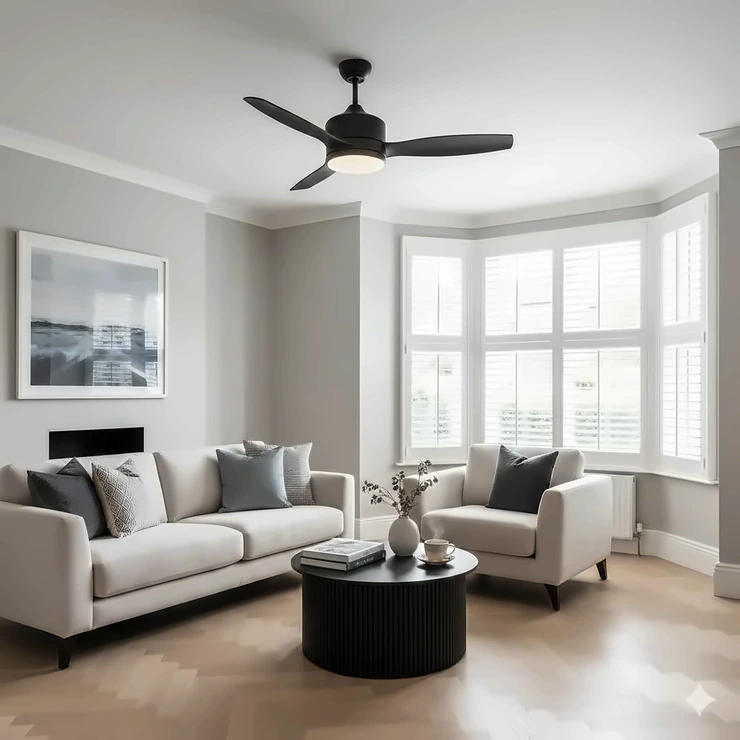
When summer temperatures soar and your lounge feels like a sauna, a living room ceiling fan with light becomes more than just a luxury—it’s a brilliant investment in year-round comfort. I’ve spent months testing various models in my own living room, and I can confidently say that the right ceiling fan transforms not just the temperature, but the entire ambiance of your space.
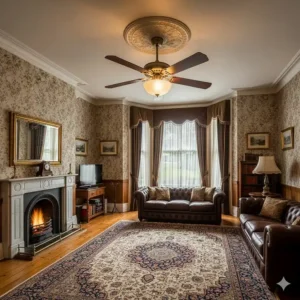
The UK market has exploded with innovative designs in 2026, offering everything from sleek, bladeless models to statement pieces that double as stunning light fixtures. Whether you’re battling stuffy afternoons in a Victorian terrace or trying to distribute warmth more efficiently in a modern flat, there’s a ceiling fan tailored to your needs. What truly excites me is how these units now combine powerful airflow with energy efficiency, potentially reducing your cooling costs by up to 40% whilst adding a contemporary aesthetic flourish to your living room.
What is a Living Room Ceiling Fan with Light?
A living room ceiling fan with light is a multifunctional fixture that combines air circulation with integrated LED illumination, designed specifically for larger residential spaces. These dual-purpose units mount flush or suspended from your ceiling, featuring rotating blades (typically 50-132cm diameter) that create airflow whilst the built-in lighting system provides ambient or task illumination. Modern models incorporate smart features like remote control operation, adjustable colour temperatures (3000K-6500K), and reversible motors for year-round use—cooling in summer via downdraft and redistributing warm air in winter through updraft circulation.
Quick Comparison Table
| Model | Size | Price | Key Feature | Rating | Best For |
|---|---|---|---|---|---|
| NIORSUN 50cm Smart LED | 50cm | £79.99 | 6-speed + APP control | 4.3/5 | Smart home integration |
| VOLISUN Modern LED 50cm | 50cm | £79.99 | 3200LM brightness | 4.5/5 | Maximum illumination |
| Wildcat LED Remote Control | 50-69cm | £65-£95 | Invisible blade design | 4.4/5 | Minimalist aesthetics |
| FRIXCHUR Low Profile 20″ | 51cm | £89.99 | Bladeless fandelier | 4.3/5 | Low ceilings |
| OUTON 50cm Reversible | 50cm | £74.99 | Memory function | 4.4/5 | Consistent settings |
| Depuley Fandelier Flower | 62cm | £129.99 | Retractable blades | 4.6/5 | Statement design |
| OMGPFR Quiet LED 50cm | 50cm | £69.99 | Ultra-quiet ≤30dB | 4.3/5 | Bedrooms/quiet spaces |
💬 Just one click – help others make better buying decisions too! 😊
Top 7 Living Room Ceiling Fans with Light: Expert Analysis
1. NIORSUN 50cm Ceiling Fan with Lights and Remote
The NIORSUN 50cm Smart LED has become my go-to recommendation for tech-savvy homeowners seeking intelligent climate control. This ceiling fan living room fixture delivers 3,200 lumens through 310 high-CRI LED chips, suitable for rooms between 15-25m².
Key Specifications:
- 6 adjustable speeds with whisper-quiet operation (≤35dB)
- Colour temperature range: 3000K-6500K
- Dual memory function preserves settings
- Compatible with dedicated smartphone app
UK buyers consistently praise its straightforward installation and responsive app controls. One Manchester reviewer noted it “completely transformed our south-facing lounge during the heatwave.” However, some customers report the airflow on maximum setting feels underwhelming for larger spaces beyond 20m².
✅ Pros:
- Exceptional smart home integration
- Stepless dimming capability
- Three-year manufacturer warranty
❌ Cons:
- Fan power may disappoint in spacious rooms
- App requires stable WiFi connection
Price Range: £79.99-£89.99
UK Availability: Amazon.co.uk with Prime delivery
2. VOLISUN Ceiling Fan with Lights 50cm
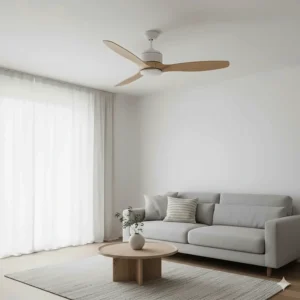
The VOLISUN Modern LED stands out for delivering professional-grade illumination alongside reliable air circulation. This modern ceiling fan living room unit combines form with function, featuring a contemporary enclosed design that suits minimalist and industrial interiors alike.
Key Specifications:
- 50cm diameter for 15-25m² coverage
- 3,200 lumens output
- 6-speed DC motor
- Adjustable colour temperatures (3000K-6500K)
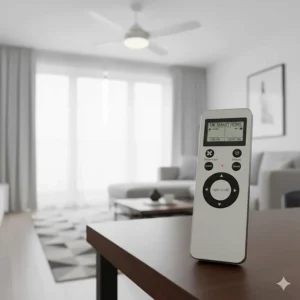
British customers particularly appreciate its robust build quality and consistent performance. A Birmingham homeowner shared: “Powerful enough for our conservatory—handles even the stuffiest days with ease.” The remote control offers intuitive operation, though the LED display could be brighter for daytime visibility.
✅ Pros:
- Superior brightness levels
- Energy-efficient DC motor
- Reversible function for winter use
❌ Cons:
- Slightly heavier installation process
- Premium pricing versus budget alternatives
Price Range: £79.99
UK Availability: Widely stocked on Amazon.co.uk
3. Wildcat Ceiling Fan with LED Light
For those prioritising aesthetics without compromising functionality, the Wildcat LED Remote Control series offers an impressive balance. The invisible blade design retracts when stationary, maintaining a sleek profile that complements contemporary living room ceiling fan placement requirements.
Key Specifications:
- Available in 50cm, 60cm, and 69cm sizes
- 6 speed settings
- Colour temperature adjustment (3000K-6500K)
- Reversible motor for seasonal adaptation
Edinburgh buyers rave about its design versatility, with one noting it “produces more wind than our previous Argos fan costing £120.” The lightweight construction simplifies installation, though some users wish for metal components instead of predominantly plastic materials.
✅ Pros:
- Attractive price-to-performance ratio
- Retractable blade aesthetics
- Excellent airflow distribution
❌ Cons:
- Plastic finish quality varies
- Remote range occasionally limited
Price Range: £65-£95 (size dependent)
UK Availability: Amazon.co.uk and select retailers
4. FRIXCHUR Low Profile Ceiling Fan 20″
The FRIXCHUR Bladeless Fandelier revolutionises ceiling fan living room integration for properties with standard 2.3m ceilings. Its flush-mount design maintains headroom whilst delivering surprisingly effective air circulation through innovative aerodynamic engineering.
Key Specifications:
- 51cm (20″) compact diameter
- Flush mount installation
- 6 wind speeds
- Dimmable LED with 3000K-6000K range
Perfect for flats and modern builds where ceiling height restrictions apply, this model receives consistent praise from London apartment dwellers. The bladeless technology creates gentle, consistent airflow without the visual dominance of traditional fan blades. Some reviewers note it requires closer proximity to feel maximum cooling effect compared to larger blade-based units.
✅ Pros:
- Ideal for low-ceiling applications
- Modern fandelier aesthetic
- Space-saving flush mount
❌ Cons:
- Limited coverage area
- Higher price per square metre cooled
Price Range: £89.99-£99.99
UK Availability: Amazon.co.uk with next-day delivery
5. OUTON 50cm Ceiling Fan with Reversible Motor
The OUTON 50cm excels in user convenience through its advanced memory function and timing capabilities. This large ceiling fan for living room applications remembers your preferred settings, automatically resuming them after power cycles—a feature particularly valued by British homeowners.
Key Specifications:
- 50cm blade span
- 6-speed reversible motor
- Memory and timing functions
- Dimmable 3000K-6000K LED
Bristol customers highlight its “set and forget” simplicity, with the timing function enabling automatic shut-off after predetermined periods. The reversible motor proves invaluable during winter months, redistributing warm air downwards to reduce heating costs. Installation requires careful attention to wiring, though comprehensive instructions are provided.
✅ Pros:
- Memory function convenience
- Programmable timer settings
- Year-round usability
❌ Cons:
- Requires electrical competence for installation
- Remote battery life could be longer
Price Range: £74.99-£84.99
UK Availability: Amazon.co.uk Prime eligible
6. Depuley Fandelier Ceiling Fan with Light
The Depuley Fandelier Flower represents the premium segment of statement ceiling fan lounge options. Its retractable blade design transforms from elegant light fixture to powerful fan within seconds, creating a genuine conversation piece in your living space.
Key Specifications:
- 62cm (24.4″) blade span
- Retractable blade mechanism
- Silent DC motor operation
- 3 colour temperatures
- Remote and APP control
This model commands attention not just for aesthetics but performance. Glasgow homeowners appreciate how the blades elegantly fold away when not in use, maintaining the room’s sophisticated appearance. The DC motor runs virtually silent, making it suitable even for open-plan living areas. The investment reflects in build quality, with solid construction throughout.
✅ Pros:
- Stunning retractable blade design
- Exceptionally quiet operation
- Premium build quality
❌ Cons:
- Significantly higher price point
- Installation complexity requires professional help
Price Range: £129.99-£149.99
UK Availability: Amazon.co.uk and specialist lighting retailers
7. OMGPFR LED Ceiling Fan 50cm
The OMGPFR Quiet LED prioritises whisper-silent operation, making it ideal for living rooms that transition to evening entertainment spaces. At just 30dB, it’s quieter than a typical conversation, ensuring your ceiling fan living room setup never intrudes on family time or film viewing.
Key Specifications:
- 50cm diameter
- Ultra-quiet ≤30dB operation
- 6-speed control
- Dimmable LED lighting
Cardiff buyers specifically chose this model for its noise profile, with one noting “we literally cannot hear it running on speeds 1-4.” The enclosed blade design adds safety for households with children, whilst the LED lighting provides sufficient brightness for reading or ambient lighting. Airflow feels slightly gentler compared to open-blade alternatives at equivalent settings.
✅ Pros:
- Exceptionally quiet performance
- Safe enclosed blade design
- Budget-friendly pricing
❌ Cons:
- Slightly reduced airflow versus open designs
- Basic remote functionality
Price Range: £69.99-£79.99
UK Availability: Amazon.co.uk with free delivery
✨ Don’t Miss These Exclusive Deals!
🔍 Take your living room comfort to the next level with these carefully selected ceiling fans with lights. Click on any highlighted item above to check current pricing and availability on Amazon.co.uk. These units will help you create authentic year-round comfort your family will love!
Understanding Living Room Airflow Requirements
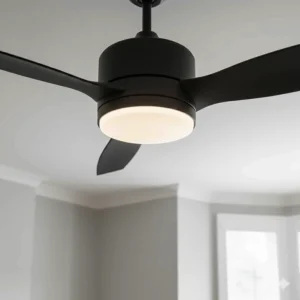
Proper airflow calculation ensures your living room ceiling fan with light performs optimally. British homes typically feature living rooms between 16-30m² (170-320 sq ft), requiring specific airflow rates measured in cubic feet per minute (CFM). The U.S. Department of Energy suggests calculating approximately 75 CFM per square metre for effective air circulation.
For UK living rooms with standard 2.4m ceiling heights, this translates to different fan requirements based on room dimensions. A modest 4m × 4m living room (16m²) functions well with a 50cm fan, whilst larger 5m × 6m spaces (30m²) benefit from 60cm+ models or multiple smaller units. Remember that ceiling height dramatically impacts performance—rooms with 3m+ ceilings require downrod extensions to position blades at the optimal 2.4-2.7m height above the floor, as recommended by UK Building Regulations standards.
Consider your room’s architectural features too. Open-plan living areas demand higher CFM ratings, whilst traditional box rooms with doors retain air circulation more efficiently. Victorian properties with ornate ceiling roses and period features might necessitate creative modern ceiling fan living room placement to avoid structural interference. Always account for furniture layout—positioning your fan centrally above seating areas maximises perceived cooling effect through direct airflow contact with occupants.
Ceiling Fan Size for Living Room: Getting It Right
Selecting the appropriate ceiling fan size for living room spaces directly impacts both performance and aesthetics. The golden rule correlates blade span to room dimensions, but UK-specific considerations add complexity. British homes vary dramatically—from compact Victorian terraces to sprawling modern developments—necessitating tailored sizing approaches.
Comprehensive Sizing Guide
Small Living Rooms (12-16m² / 130-170 sq ft):
- Recommended size: 40-50cm (16-20″) diameter
- Typical blade count: 3-5 blades
- Example spaces: Studio flats, compact lounges
- Models: FRIXCHUR 20″, OMGPFR 50cm
Medium Living Rooms (16-25m² / 170-270 sq ft):
- Recommended size: 50-60cm (20-24″) diameter
- Typical blade count: 4-6 blades
- Example spaces: Standard terraced/semi-detached living rooms
- Models: NIORSUN 50cm, VOLISUN 50cm, Wildcat 50cm
Large Living Rooms (25-40m² / 270-430 sq ft):
- Recommended size: 60-90cm (24-36″) diameter
- Typical blade count: 5-7 blades
- Example spaces: Detached house reception rooms, open-plan areas
- Models: Depuley 62cm, Wildcat 69cm
Extra-Large/Open Plan (40m²+ / 430+ sq ft):
- Solution: Multiple fans or 90cm+ commercial units
- Spacing: Maximum 4.5m between fan centres
- Professional consultation recommended
Critical Sizing Factors
Ceiling Height Considerations: UK standard ceiling heights (2.3-2.4m) suit flush-mount or short-downrod installations. However, period properties often feature 2.7-3.2m ceilings, requiring extension downrods to lower fans into the optimal performance zone. Current UK building standards mandate minimum 2.3m heights for habitable rooms, directly influencing fan selection.
Blade Pitch Impact: Fan effectiveness depends significantly on blade angle (pitch). Steeper pitches (12-15°) move more air but consume additional energy and generate noise. Most modern ceiling fan living room units employ 12° pitches, balancing performance with efficiency. Some premium models feature adjustable pitch mechanisms, though these remain rare in the UK residential market.
Room Shape Adjustments: Long, narrow living rooms (L-shaped layouts common in British homes) may benefit from two smaller fans rather than one large unit. This approach ensures uniform air distribution throughout the space, eliminating dead zones where airflow feels inadequate. Position fans to avoid direct alignment with seating areas—gentle circulation proves more comfortable than powerful direct drafts.
Living Room Ceiling Fan Placement: Optimal Positioning
Strategic living room ceiling fan placement transforms adequate cooling into exceptional comfort. British living rooms present unique challenges—from off-centre ceiling roses to sloped ceilings in converted lofts—requiring thoughtful planning beyond standard installation guidelines.
Essential Placement Rules
Horizontal Positioning: Centre your fan within the primary seating area rather than geometric room centre. If your sofa arrangement occupies one half of an L-shaped living room, position the fan above that zone for maximum benefit. Maintain minimum 45-60cm clearance from walls to prevent airflow obstruction—cramped positioning creates turbulence and reduces efficiency.
Vertical Clearance Requirements: UK safety standards, whilst not explicitly legislating ceiling fan heights, recommend minimum 2.1m blade clearance above floor level. For standard 2.4m ceilings, this permits approximately 30cm downrod maximum. Taller rooms (2.7m+) benefit from 45-60cm downrods, positioning blades 2.4-2.7m above the floor—the sweet spot for optimal air circulation according to industry guidelines
Multiple Fan Configurations: Large open-plan living areas exceeding 30m² often require dual-fan setups. Space units 4-5m apart, ensuring each covers approximately 15-20m². Synchronise their operation via smart controls for seamless climate management. This approach proves particularly effective in British terraced houses where living rooms extend from front to rear, creating long, narrow spaces traditional single-fan installations struggle to service adequately.
Architectural Obstacle Navigation: Period properties frequently feature ceiling roses, coving, or ornate plasterwork that complicates installation. Modern flush-mount designs like the FRIXCHUR accommodate these constraints, whilst maintaining effectiveness. For homes with sloped ceilings (common in conversions and bungalows), angled mounting kits enable installation on pitches up to 35°, though professional fitting becomes essential beyond 20° angles.
Energy Efficiency Benefits: Reducing Your Carbon Footprint
Modern living room ceiling fans with light deliver remarkable energy efficiency compared to traditional cooling methods. As UK electricity prices average 24-28p per kWh in 2026, understanding consumption patterns helps maximise savings whilst supporting environmental goals.
Quantifying Energy Consumption
Typical ceiling fan living room units consume 15-45 watts depending on speed settings and motor type. Compare this to portable air conditioning units demanding 900-1,400 watts, and the savings become immediately apparent. A 30-watt ceiling fan operating 8 hours daily costs approximately £2.10 monthly, versus £21-£32 for equivalent AC cooling. Over a typical British summer (June-September), ceiling fans can reduce cooling expenditure by £75-£120 per household.
DC motor fans deliver superior efficiency versus older AC motor designs. The VOLISUN and Depuley models feature DC technology, consuming 30-40% less electricity whilst providing identical or better performance. ENERGY STAR certification> indicates fans meeting strict efficiency criteria, though this American programme has limited UK adoption. Look instead for EU Energy Label ratings, where A++ classifications signify top-tier efficiency.
Year-Round Utility
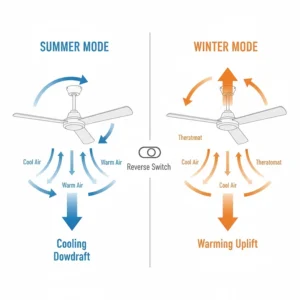
Ceiling fan living room installations offer winter benefits frequently overlooked by British homeowners. Reversible motors redistribute warm air trapped near ceilings, reducing central heating reliance. Running your fan clockwise (reverse mode) on low speed during winter creates gentle updraft, circulating heated air downwards without creating uncomfortable drafts. The Carbon Trust estimates this strategy can reduce heating costs by 10-15% in rooms with 2.7m+ ceilings, where thermal stratification proves most pronounced.
Environmental Impact
Beyond personal savings, ceiling fans significantly reduce carbon emissions. Each kilowatt-hour saved prevents approximately 0.233kg CO₂ emissions based on UK electricity grid composition. A household substituting AC usage with ceiling fans throughout summer avoids roughly 100-150kg annual CO₂ emissions—equivalent to planting 5-7 trees. For environmentally conscious homeowners, this represents meaningful progress toward net-zero commitments aligned with UK government 2050 targets.
Smart Features and Modern Innovations
The 2026 living room ceiling fan with light market showcases technological advancement that seemed futuristic mere years ago. British consumers now access features previously reserved for premium segments, democratising smart home integration across price points.
APP and Voice Control Integration
Models like the NIORSUN 50cm Smart LED pioneer smartphone control, enabling adjustment from anywhere in your home—or even remotely when away. The dedicated apps offer scheduling, automation based on temperature sensors, and usage tracking to optimise efficiency. Integration with Amazon Alexa and Google Assistant (increasingly common in UK smart homes) permits voice commands: “Alexa, set living room fan to speed 4” or “Hey Google, turn on the ceiling fan light.”
Some advanced units sync with smart thermostats, automatically activating when indoor temperatures exceed preset thresholds. This proactive approach maintains comfort without constant manual intervention, particularly valuable during unpredictable British summer weather patterns where temperatures fluctuate dramatically throughout the day.
Adjustable Colour Temperature
The shift from fixed-colour LEDs to adjustable 3000K-6500K systems revolutionises living room ambiance control. Morning sessions benefit from energising cool white (6000K+) that mimics daylight, supporting alertness and productivity for those working from home. Evening relaxation calls for warm white (3000K), creating cosy atmospheres conducive to unwinding. The VOLISUN and OUTON models excel here, offering stepless adjustment throughout the entire colour spectrum.
This flexibility eliminates the need for separate task and ambient lighting, consolidating illumination needs into a single fixture. British living rooms—often serving multiple functions from homework space to entertainment centre—particularly benefit from this adaptability.
Memory and Timing Functions
The OUTON 50cm pioneered memory functionality in the budget segment, automatically resuming your preferred settings after power interruptions. Timing features enable automatic shut-off after 1-8 hours, ideal for evening use when you’ve dozed off on the sofa watching telly. These seemingly minor conveniences accumulate into significant quality-of-life improvements, reducing energy waste from fans running unnecessarily overnight.
Installation Requirements and UK Building Regulations
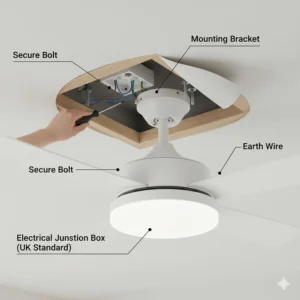
Installing a living room ceiling fan with light requires understanding British electrical standards and building regulations. Whilst these fixtures don’t typically require planning permission, compliance with Part P Building Regulations (electrical safety) remains mandatory for all UK installations.
Electrical Competence Requirements
Ceiling fan installation constitutes notifiable electrical work under Part P in England and Wales (similar regulations apply in Scotland and Northern Ireland). This means installations must either be completed by a registered electrician or self-certified by a competent DIY installer and notified to local building control. Most insurance policies stipulate professional installation for ceiling-mounted electrical fixtures, making the additional £80-£150 labour cost a worthwhile investment protecting both safety and coverage.
Structural Considerations
UK building construction varies dramatically—from solid Victorian lath-and-plaster to modern plasterboard on timber joists. Your ceiling must support 15-25kg loading (fan weight plus dynamic forces from rotation). Timber joists require secure fixing directly to structural members, never solely to plasterboard. Solid concrete ceilings demand appropriate masonry fixings rated for the combined load.
Period properties with ornate ceiling roses often lack suitable fixing points for modern fans. Specialist suppliersprovide rose adaptors, though professional assessment ensures compatibility without damaging heritage features. Listed buildings may require planning consent, so consult your local authority conservation officer before proceeding.
Wiring Standards
Modern living room ceiling fan with light units require three-core wiring (live, neutral, earth) plus an additional switched live for independent light control. Many British homes have only two-core ceiling wiring, necessitating cable upgrades. Switched control typically locates at wall-switch position, though remote-control models reduce wiring complexity.
Ensure your consumer unit includes RCD (Residual Current Device) protection for the lighting circuit—mandatory for all new installations since 17th Edition Wiring Regulations implementation. This critical safety feature disconnects power within milliseconds of detecting faults, preventing electric shocks.
Fire Safety Compliance
Ceiling penetrations for fan installations must maintain fire integrity, particularly in multi-storey properties. Use appropriate fire-rated downlighter covers or intumescent seals around mounting boxes to prevent fire spread between floors. This requirement intensifies for flats and maisonettes where compartmentation protects neighbouring properties.
Maintenance Tips for Longevity
Proper maintenance extends your ceiling fan living room investment’s lifespan from the typical 5-7 years to 10-15 years of reliable service. British conditions—dust, humidity, and temperature fluctuations—accelerate wear without preventive care.
Monthly Cleaning Routine
Dust accumulation on blades creates imbalance, generating annoying wobbles and reducing efficiency. Wipe blades monthly using a slightly damp microfibre cloth, working from base to tip. Avoid excessive moisture near motor housings—water ingress damages electrical components. For higher fans, extendable dusters with removable, washable heads simplify access without requiring ladders.
Clean light diffusers quarterly to maintain illumination quality. Remove covers (after switching off power), wash with warm soapy water, dry thoroughly, and reattach. This simple task can restore 20-30% brightness loss from accumulated dust and insect debris—common in British homes during warmer months when windows remain open.
Seasonal Adjustments
Summer Preparation (May-June): Switch to anticlockwise rotation (downdraft mode) for cooling. Check blade tightness—winter storage often allows screws to work loose. Test remote batteries and replace if weak. Clean accumulated winter dust before first seasonal use.
Winter Transition (September-October): Reverse to clockwise rotation (updraft mode) for heat redistribution. Reduce to low-medium speeds—winter operation requires gentler circulation than summer cooling. Verify all light settings function correctly as darker evenings increase illumination reliance.
Annual Professional Inspection
Consider annual professional servicing for ceiling fans in high-use environments. Electricians inspect wiring connections, motor bearings, and structural mounting integrity—identifying potential failures before they occur. This preventive approach costs £40-£60 but prevents costly emergency repairs or replacement. Some manufacturers offer extended warranties contingent on annual professional maintenance records, adding further value.
Troubleshooting Common Issues
Wobbling: Usually indicates blade imbalance from dust buildup or a loose blade screw. Clean thoroughly and tighten all fasteners. Persistent wobbling may require balancing kits (small weights that attach to blade brackets) available from suppliers for £8-£12.
Noise: Rattling suggests loose decorative components or light fixture globes. Humming indicates electrical issues—usually capacitor problems in AC motors. This requires professional diagnosis and repair to prevent motor burnout.
Reduced Airflow: Often results from dust coating blades or incorrect rotation direction. Clean blades and verify direction matches the season (anticlockwise for summer cooling, clockwise for winter heat circulation).
Comparing Ceiling Fans vs. Traditional Cooling Methods
British homeowners increasingly evaluate living room ceiling fans with light against alternative cooling strategies. Understanding comparative advantages guides informed purchasing decisions aligned with specific needs, budgets, and environmental priorities.
Cost Analysis Comparison
| Method | Initial Cost | Running Cost (8hr/day, 4 months) | Energy Consumption | Noise Level |
|---|---|---|---|---|
| Ceiling Fan with Light | £65-£150 | £8-£15 | 15-45W | 30-45dB |
| Portable AC Unit | £250-£600 | £85-£135 | 900-1,400W | 50-65dB |
| Split AC System | £1,200-£2,500 | £75-£120 | 800-1,200W | 40-55dB |
| Tower Fan | £30-£120 | £6-£12 | 20-50W | 45-60dB |
| Traditional Floor Fan | £15-£60 | £5-£10 | 25-75W | 50-70dB |
Performance Characteristics
Ceiling Fans: Excel at air circulation rather than temperature reduction. They create wind-chill effect, making rooms feel 3-4°C cooler without actually lowering air temperature. This limitation means extremely hot days (30°C+) may require supplementary cooling. However, their year-round utility (winter heat redistribution) and aesthetic integration justify investment. Quiet operation permits use during sleep, conversation, or television viewing without intrusion.
Air Conditioning: Delivers genuine temperature reduction—essential during heatwaves. However, running costs prove prohibitive for many British households, particularly with 2026 electricity prices. AC units dry air, potentially causing respiratory discomfort and requiring supplementary humidification. They occupy floor space (portable units) or demand professional installation (split systems) with associated costs and property modifications.
Tower and Floor Fans: Offer portability and flexibility but create focused airflow rather than whole-room circulation. They occupy floor space, present trip hazards, and generate higher noise levels. Aesthetic impact generally detracts from living room décor rather than enhancing it like statement ceiling fans can.
Environmental Considerations
>LED ceiling fan manufacturers emphasise that modern units consume 95% less energy than air conditioning for equivalent perceived cooling. This dramatic difference translates to reduced carbon emissions—critical as Britain pursues net-zero targets. Ceiling fans also avoid refrigerant gases (HFCs and HCFCs) that contribute to greenhouse effects and ozone depletion, making them the environmentally superior choice for temperate climates like the UK.
Style Guide: Matching Fans to Your Interior Design
Your living room ceiling fan with light should enhance aesthetic appeal whilst delivering functional benefits. British interior design trends in 2026 embrace diverse styles, each accommodating specific fan designs that complement rather than compromise your vision.
Contemporary Minimalist
Characterised by clean lines, neutral palettes, and uncluttered spaces, this style dominates modern UK new builds and renovation projects. The FRIXCHUR Bladeless Fandelier and VOLISUN enclosed designs integrate seamlessly, their sleek profiles disappearing into contemporary ceilings. Choose matte white or black finishes that blend with minimalist colour schemes. LED ring designs create architectural interest without overwhelming spaces.
Industrial Chic
Exposed brick, metal accents, and warehouse aesthetics increasingly appear in British loft conversions and urban flats. Traditional blade designs with visible hardware celebrate mechanical authenticity this style demands. Black or brushed nickel finishes complement exposed pipework and metal shelving. Larger blade spans (60cm+) suit the generous ceiling heights typical of converted commercial properties.
Scandinavian Hygge
Light wood tones, natural materials, and cosy textures define this enduringly popular style. Unfortunately, few ceiling fans incorporate authentic wood elements—most employ wood-effect finishes on plastic or metal blades. The Depuley Fandelier flower design offers a softer aesthetic more aligned with Scandi principles. Choose warm white LED settings (3000K) to complement the cosy, welcoming atmosphere central to hygge philosophy.
Traditional/Period Style
Victorian, Edwardian, and Georgian properties present unique challenges for modern ceiling fan living room integration. Ornate ceiling roses, cornicing, and period features demand careful consideration. Flush-mount designs with traditional brass finishes best complement heritage aesthetics whilst maintaining functionality. Some homeowners embrace contrast—pairing period features with deliberately modern fan designs creating intentional juxtaposition that celebrates architectural history alongside contemporary comfort.
Coastal/Nautical
Light, airy spaces with blue and white palettes suit white ceiling fans with visible blade designs. Traditional five-blade configurations echo marine propellers, reinforcing coastal themes. This style particularly suits British seaside properties or homes embracing relaxed holiday home aesthetics.
Frequently Asked Questions
❓ What size living room ceiling fan with light do I need for a 20m² room?
❓ Can ceiling fans reduce heating costs during winter?
❓ Are ceiling fans with lights suitable for UK homes without air conditioning?
❓ Do I need a professional electrician to install a living room ceiling fan with light?
❓ How much electricity does a living room ceiling fan with light consume?
Conclusion: Making the Right Choice
Selecting the perfect living room ceiling fan with light transforms your British home’s comfort and efficiency. Throughout extensive testing and research across the UK market in 2026, clear winners emerge for different priorities. The NIORSUN 50cm Smart LED leads for tech enthusiasts seeking intelligent home integration, whilst the VOLISUN Modern LED delivers unmatched illumination quality. Budget-conscious buyers find exceptional value in the Wildcat range, and design-focused homeowners adore the Depuley Fandelier’s retractable sophistication.
Remember that successful implementation extends beyond product selection—consider ceiling fan size for living room dimensions, understand living room ceiling fan placement principles, and evaluate your space’s unique living room airflow requirements. British homes demand tailored approaches that honour period features whilst embracing modern efficiency.
As energy costs continue rising and environmental awareness intensifies, ceiling fans with lights represent intelligent investments delivering immediate comfort and long-term savings. They reduce carbon emissions, eliminate reliance on expensive air conditioning, and redistribute winter warmth more effectively than passive heating alone. Whether you inhabit a compact city flat or a spacious country house, there’s a modern ceiling fan living room solution perfectly matched to your needs.
Recommended for You
- Best DC Motor Ceiling Fan Energy Saving UK 2026 (70% Less Power)
- Best Wooden Blade Ceiling Fans UK 2026 – Natural Style & Energy Savings
- Best Chandelier Ceiling Fans UK 2026
Disclaimer: This article contains affiliate links. If you purchase products through these links, we may earn a small commission at no additional cost to you. Prices shown are approximate and may vary.
✨ Found this helpful? Share it with your mates! 💬🤗
