
In This Article
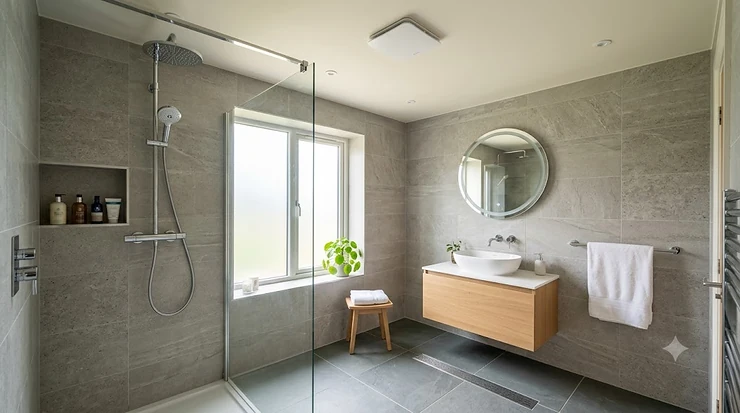
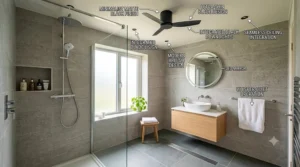
There’s a peculiar British contradiction at work in most homes: we spend thousands fitting gorgeous walk-in showers and sleek wetroom tiles, then bolt a cheap, underpowered extractor fan to the ceiling and wonder why the grout turns black within eighteen months. Wetroom ceiling fans — the ceiling-mounted extraction units specifically rated for direct moisture exposure — are quite possibly the most underrated purchase in any bathroom renovation.
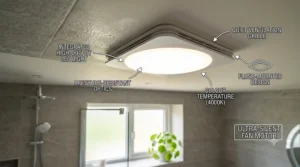
A wetroom, for those planning or refitting one, is an open-plan shower space where water can flow freely across the floor without a tray or enclosure. That design freedom is brilliant, but it creates a serious ventilation challenge: steam and humidity are now airborne in a much larger, more open space. A standard bathroom fan simply isn’t built for this. You need something rated, positioned, and powerful enough to handle the sustained moisture load — and in a British climate where you’re running hot showers for eight months of the year just to feel warm, that load is considerable.
What exactly is a wetroom ceiling fan? Put simply, it’s a ceiling-mounted extractor fan — either axial, inline, or dMEV (decentralised Mechanical Extract Ventilation) — with a sufficiently high Ingress Protection (IP) rating to operate safely in Zone 1 directly above a shower, typically IP45 minimum for ceiling installation, with IP65 or higher preferred for closer proximity to water. According to the IP Code classification (Wikipedia), IP65 means the unit is fully dust-tight and protected against water jets from any direction — a meaningful upgrade over cheaper bathroom alternatives.
Get it right and your wetroom stays fresh, mould-free, and your tiles look beautiful for years. Get it wrong and you’re regrouting, redecorating, and possibly dealing with respiratory issues caused by persistent damp. The stakes, quietly, are rather high.
Quick Comparison: Best Wetroom Ceiling Fans UK 2026
| Model | Type | IP Rating | Noise Level | Airflow | Best For |
|---|---|---|---|---|---|
| Vent-Axia Lo-Carbon Svara | Axial (dMEV) | IP44 | 17 dB(A) | 30 l/s boost | Smart homes, app users |
| Envirovent SIL100T | Axial | IP45 | 26.5 dB(A) | 95 m³/h | Value & quiet |
| Airflow iCON 30 | Axial | IP45 | 33.3 dB | 33 l/s | Modern design lovers |
| Xpelair C4HTSR Simply Silent | Axial | IP44 | 15–29 dB(A) | 29 l/s | Humidity control |
| Manrose MF100T Inline | Inline mixed flow | IPX4 | 24 dB(A) | 245 m³/h | Large wetrooms, long duct runs |
| Bosch Silent 1900 | Axial | IP45 | 28 dB(A) | 100 mm | Reliable brand loyalists |
| Envirovent SIL100HT | Axial | IP45 | 26.5 dB(A) | 95 m³/h | Dual control (humidity + timer) |
The Vent-Axia Svara stands apart for smart-home integration, but if you simply want quiet, reliable extraction at a fair price, the Envirovent SIL100T is the clear sweet spot. Budget-conscious buyers should note that the Bosch and Xpelair options trade a little IP rating headroom for brand recognition — both remain perfectly safe for ceiling-mounted wetroom use when positioned at 600mm+ from the shower zone. For large wetrooms with long duct runs exceeding three metres, nothing in this list competes with the Manrose MF100T’s raw extraction volume.
💬 Just one click — help others make better buying decisions too! 😊
✨ Don’t Miss These Exclusive Deals!
🔍 Take your wetroom ventilation to the next level with these carefully selected products. Click on any highlighted item to check current pricing and availability on Amazon.co.uk. These picks will help you find exactly what you need!
Top 7 Wetroom Ceiling Fans: Expert Analysis
1. Vent-Axia Lo-Carbon Svara (Model 409802)
The Svara is the kind of product that makes you wonder why all bathroom fans aren’t this clever. It’s the UK’s first app-enabled bathroom extractor, and Bluetooth control via the Vent-Axia Connect app transforms what is normally a fiddly installation — fiddly switches, confusing jumper settings — into something you can configure from your phone in under two minutes.
The key specs that matter for wetroom use: it operates at a whisper-quiet 17 dB(A) on low trickle, which is genuinely near-silent — you’ll hear the shower running far louder. On boost mode it shifts 30 l/s, which is more than double the legal minimum of 15 l/s required under UK Building Regulations Approved Document F. IP44 rated at 230V/UK plug, so perfectly suited for Zone 2 ceiling installation (600mm+ from shower). The intelligent humidistat kicks in automatically when steam builds, and a silent hours mode prevents the boost from disturbing a sleeping house at 2am — genuinely thoughtful.
What most UK buyers overlook: the Svara requires a permanent live, switched live, and neutral (three wires plus earth) at the fan position. Many older British homes — particularly pre-1990s terraces and Victorian conversions — have only two wires at the fan position. Worth checking before you buy or budgeting for a qualified electrician to rewire.
UK customers consistently praise the near-silent running and the ease of app setup; a common note is “so quiet I sometimes check it’s actually on.” Available on Amazon.co.uk, Prime-eligible for next-day delivery.
✅ App-controlled — simple setup for installers and owners
✅ Near-silent at 17dB; sleep-friendly
✅ Intelligent humidistat and light sensor
❌ Requires three-wire connection — may need an electrician
❌ IP44 only — not suitable for Zone 1 directly above shower
Price range: £60–£90 range. Excellent value for a smart fan with this level of customisation.
2. Envirovent SIL100T (Silent 100 with Timer)
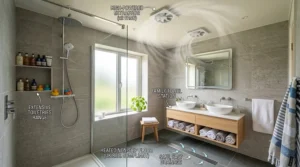
The SIL100T is, frankly, the fan a huge portion of UK bathrooms probably already have and should have more of. It’s the extractor fan equivalent of a perfectly reliable estate car: not glamorous, never troublesome, quietly gets on with the job. The 26.5 dB(A) rating at 3 metres is genuinely unobtrusive, and the 95 m³/h airflow is almost comically more powerful than most competitors in the same price bracket.
The motor is mounted on silent elastic blocks — a detail that matters a great deal in practice. Fans that vibrate transmit noise through joists and ceilings, creating a low hum audible in adjacent rooms. The Envirovent doesn’t do this. The IP45 rating is appropriate for ceiling mounting and Zone 2 proximity to showers, the adjustable timer runs up to 30 minutes (factory set to one minute — do adjust this on installation), and it comes with a built-in backdraught shutter so cold draughts don’t whistle back through the duct in winter.
For UK buyers in older properties: this fan is CE approved rather than UKCA marked, which is still acceptable for products placed on the market under transitional provisions, though worth confirming with your installer. Meets Building Regulations Part F requirements with its 95 m³/h extraction rate. Wall, ceiling, or window mounting — versatile for awkward layouts common in British terraces. Available on Amazon.co.uk, typically Prime-eligible.
UK reviewers repeatedly highlight the quiet operation and ease of installation, with many replacing noisier Xpelair or Manrose units and noting a dramatic improvement.
✅ Excellent 95 m³/h airflow for the price
✅ Ultra-quiet motor mounting reduces structural vibration
✅ Adjustable timer up to 30 minutes
❌ Timer model requires three-wire connection
❌ Minimalist looks; not designed for style-led bathrooms
Price range: £35–£55 range. Outstanding value — probably the best pound-for-pound wetroom ceiling fan in this list.
3.Airflow iCON 30 Extractor Fan
Airflow as a brand has been quietly doing excellent things in UK ventilation for decades, and the iCON 30 is their most polished domestic product. The iris shutter — an automatic mechanism that opens only when the fan runs and seals completely when it stops — is a genuine engineering flourish. In a British winter, that sealed duct means no cold air infiltration and noticeably less heat loss. For a wetroom in a flat where the bathroom backs onto an outside wall, this matters.
The 33 l/s airflow at just 10.7W is efficient. At 33.3 dB it’s audible but not intrusive. The IP45 rating handles Zone 2 ceiling installation cleanly. Where the iCON earns its premium is in the modular system: humidity sensor, PIR, and timer modules are sold separately and click into place without rewiring, which means you can upgrade functionality without calling an electrician back. That flexibility is rather clever for a rented property or a first-time installation where requirements might change.
One thing to note for DIY installers: the iCON 30 requires a 160mm ceiling hole, larger than the standard 100mm most fans need. If you’re replacing an existing unit, budget for making good around the hole. UK customers rate it highly for build quality and note the iris shutter genuinely reduces external noise from wind — handy if you live near a main road or in an exposed Scottish coastal town.
✅ Automatic iris shutter prevents backdraught and heat loss
✅ Modular — add humidity/PIR/timer without rewiring
✅ Energy efficient at 10.7W
❌ Requires 160mm ceiling hole — larger than standard
❌ Add-on modules increase total cost significantly
Price range: £60–£85 (fan only); modules add £20–£35 each. Worth the investment for a long-term, flexible wetroom setup.
4. Xpelair C4HTSR Simply Silent Contour
Xpelair is a name British homeowners and electricians have trusted since the 1960s, and the Simply Silent Contour with humidistat and timer is arguably their most refined domestic product. The stand-out feature is dual-speed operation: a near-silent 15 dB(A) in quiet mode versus 29 dB(A) in high-speed mode. The humidistat switches between modes automatically depending on steam levels — so your wetroom gets serious extraction when you actually need it, then drops back to a whisper the moment humidity normalises.
IP44 rated at 230V, UK plug — suitable for Zone 2 ceiling installation, which covers the majority of wetroom configurations. The flat, minimal faceplate comes in both square and round options in the box, which means you can match your existing bathroom fittings without ordering separately. That might sound trivial, but in a freshly tiled wetroom where every detail matters, it’s a thoughtful touch.
What most buyers overlook about this model: the humidistat needs to be set correctly on installation — the factory setting is often too sensitive, causing the fan to run continuously at low humidity. Five minutes adjusting the dial on install will save you weeks of unnecessary running. UK reviewers consistently praise the quiet mode but note the installation instructions could be clearer for non-electricians.
Available on Amazon.co.uk, Prime-eligible.
✅ Dual-speed operation — quiet and powerful modes
✅ Both square and round covers included
✅ Well-established UK brand; easy to find spare parts
❌ IP44 only — Zone 2 installation only
❌ Humidistat requires calibration on install
Price range: £55–£80 range. A strong all-rounder for medium-sized wetrooms in homes where quiet running is a priority.
5. Manrose MF100T Inline Mixed Flow Fan with Timer
For larger wetrooms, wetrooms without direct external wall access, or long duct runs over three metres, the Manrose MF100T is in a different league. It’s an inline fan — meaning the motor unit sits hidden in the loft or ceiling void, with just a discreet ceiling grille visible in the wetroom itself. The extraction grille can be positioned directly above the shower zone, pulling steam at source, even in Zone 1. Because there are no live electrics in the shower room itself — only a passive grille — the IP rating requirement at the room end is greatly simplified.
The mixed flow twin-blade design produces 245 m³/h at maximum speed, which is more than double the output of every other fan in this list. Dual speed via an internal jumper (set at installation) means you can dial it down for noise-sensitive settings — on low speed, UK users consistently describe it as near-silent for its output class. The 24 dB(A) noise rating at maximum is impressive for this level of extraction. IPX4 rated, 3-year warranty.
In practice, this is the right choice for a newly built open-plan wetroom in a mid-terrace, a master bedroom en-suite with no external wall, or any layout where ducting runs exceed three metres. The installation is more involved — you’ll want a Part P registered electrician — but the resulting ventilation is transformative. Available on Amazon.co.uk.
✅ 245 m³/h — far exceeds Part F minimum for large wetrooms
✅ Motor in ceiling void — quiet and no Zone 1 electrics concern
✅ Dual speed; adjustable timer up to 20 minutes
❌ Inline installation requires access to ceiling void/loft
❌ More complex installation — Part P electrician recommended
Price range: £50–£75 range. Exceptional value for the extraction performance delivered.
6. Bosch Silent 1900 Bathroom Extractor Fan (100mm)
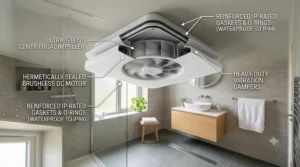
Bosch’s entry into the domestic extractor fan market is exactly what you’d expect from a German engineering brand: reliable, well-built, and sensibly specified rather than dazzling. The Silent 1900 operates at 28 dB(A), extracting at a healthy rate through a 100mm duct, with light-switch activation and IP45 rating for Zone 2 ceiling use. The design is clean and modern — the kind of understated panel that looks at home in a contemporary wetroom without screaming “functional object.”
Where Bosch earns its place in a UK buyer’s consideration: the brand’s after-sales support and warranty handling is generally excellent, and spare parts are far easier to source than for some budget Chinese-manufactured alternatives. For landlords managing rental properties across multiple locations, that consistency is worth real money. It’s also one of the simpler installations in this list — two-wire connection (light-switch operation only, no timer), which suits properties wired without a permanent live at the fan position.
The honest caveat: at this price, you’re not getting a humidistat, a smart app, or a noise level to rival the Envirovent or Vent-Axia. What you’re getting is German build quality and a brand you’ll still be able to call in five years. Available on Amazon.co.uk, Prime-eligible.
✅ Reliable German build quality; good warranty support
✅ Two-wire installation — suits older UK property wiring
✅ Clean, modern aesthetic
❌ No humidistat or timer option in this model
❌ Slightly louder than comparable UK competitors at this price
Price range: £45–£65 range. A solid, no-nonsense choice for those who value reliability over features.
7. Envirovent SIL100HT (Silent 100 Humidistat & Timer)
Think of this as the SIL100T’s more sophisticated sibling. The addition of a factory-set humidistat alongside the adjustable timer means the fan can respond automatically to steam without needing a three-position switch — it simply senses the humidity spike when you start the shower and reacts. For a wetroom used by multiple people in quick succession (common in family homes), this autonomous operation is genuinely useful. You’re not relying on anyone to switch anything on.
The spec is otherwise identical to the SIL100T: 95 m³/h, 26.5 dB(A), IP45, sealed-for-life ball bearings, backdraught shutter, 5-year guarantee. Wall or ceiling mountable. The additional wiring complexity — three wires required, same as the timer model — is unchanged, but the functional benefit of humidity-triggered automatic operation justifies the slight price premium over the standard timer model.
UK customers who’ve upgraded from cheaper, switch-only fans frequently comment that the automatic humidity response means their wetroom stays genuinely drier, not just ventilated. In a country where the NHS has flagged damp and mould as serious health risks, that’s not a trivial benefit. Available on Amazon.co.uk.
✅ Automatic humidity response — no manual operation needed
✅ Same reliable 95 m³/h airflow as SIL100T
✅ 5-year guarantee; well-regarded UK brand
❌ Three-wire connection required
❌ Slightly higher price than timer-only model
Price range: £50–£70 range. Worth the few extra pounds over the standard model for wetroom-specific use.
Which Wetroom Ceiling Fan Should You Actually Buy? A Decision Framework
Rather than forcing every reader towards the same fan, here’s how to self-diagnose your situation — the spec sheet approach that actually leads to the right answer.
If your wetroom is under 4m² with a short duct run (under 2 metres): The Envirovent SIL100T is all you need. It extracts well above Part F requirements and costs sensibly. Save the extra £30 over the smart options.
If your wetroom is a newly renovated, open-plan space in a flat or mid-terrace with no direct external wall access: The Manrose MF100T inline is the only real choice. Everything else is compromising on extraction where you should not. Budget for a qualified electrician and rigid duct rather than flexible where possible.
If you use a smart speaker ecosystem (Alexa, Google Home) or simply want zero maintenance once installed: The Vent-Axia Svara is worth its premium. The app control means humidity thresholds, silent hours, and holiday airing mode are all adjustable without tools. Particularly recommended for short-term rental properties or builds where you want set-and-forget operation.
If noise is your primary concern — bedroom directly above, light-sleeping partner, baby in the adjacent room: Choose between the Xpelair C4HTSR on quiet mode (15 dB) or the Vent-Axia Svara at 17 dB. Both are genuinely close to inaudible.
If you’re a landlord retrofitting across multiple properties on a tight budget: The Envirovent SIL100T hits the right balance of price, performance, and reliability without any frills that can fail or require reconfiguration between tenants.
The most common expensive mistake UK buyers make is choosing on noise rating alone and ignoring extraction rate. A fan that whispers at 15 dB but only moves 60 m³/h will allow moisture to linger in a well-insulated modern wetroom. Silent and inadequate is worse than slightly audible and effective.
Common Problems (and How to Solve Them) in UK Wetrooms
Problem 1: Fan keeps running but steam still lingers This is almost always an airflow rate issue or a ducting problem, not a fan fault. Flexible ducting — the corrugated silver tubing you often see in loft spaces — creates significant resistance. Switching to smooth, rigid PVC duct can increase effective airflow by 30–40% through the same fan. If you can’t change the ducting, the Manrose MF100T’s higher raw output compensates.
Problem 2: Condensation on tiles even after showering Your fan is likely undersized for the room or positioned poorly. Part F requires at least 15 l/s for intermittent extraction — but in a fully open wetroom, working closer to 30 l/s is more realistic for meaningful steam removal. Also check that fresh air can enter the room: a well-sealed, draught-proofed flat can starve the fan of intake air, drastically reducing effective extraction.
Problem 3: Fan making a rattling noise after a year or two Usually one of three things: a loose backdraught shutter, debris in the blade assembly, or bearing wear on cheaper units. The Envirovent’s sealed-for-life bearings specifically address the last issue. On any model, an annual clean of the fan cover and impeller blades makes a meaningful difference — mould and dust accumulation on the blades increases imbalance and noise over time.
Problem 4: Old two-wire wiring, can’t fit a timer fan The Bosch Silent 1900 and the standard Envirovent SIL100S (no-timer version) both operate on two wires. Alternatively, budget for a Part P electrician to run a permanent live — typically a modest cost during a bathroom renovation and worth it for long-term functionality. Your electrician can advise on whether Building Regulations notification is required for your specific work.
Problem 5: Post-Brexit, a product I ordered has a CE mark rather than UKCA Under current transitional arrangements, CE-marked products remain acceptable in Great Britain for most categories including ventilation fans, though manufacturers are progressively migrating to UKCA marking. Northern Ireland buyers should note that the Northern Ireland Protocol means CE marking requirements still apply there. When in doubt, check the manufacturer’s documentation or ask your installer — it won’t invalidate a fan that’s otherwise correctly specified.
How to Choose Wetroom Ceiling Fans in the UK: 6 Key Criteria
- IP Rating First, Everything Else Second. In Zone 1 (directly above the shower, up to 2.25 metres high), you need a minimum IP65 rating — though in practice, ceiling-mounted inline fans with the motor in the loft void sidestep this requirement entirely by removing electrics from the zone. In Zone 2 (0.6 metres outward from Zone 1), IP44 is the minimum; IP45 is the standard for most recommended models. Never install an IP20-rated fan anywhere in a wetroom, regardless of what a previous owner may have done.
- Extraction Rate vs. Room Size. The legal minimum for intermittent extraction in bathrooms and shower rooms is 15 l/s per Part F. For an open wetroom, target at least 30 l/s. For a large family wetroom over 6m², the Manrose MF100T at 245 m³/h is worth serious consideration.
- Noise Level vs. Placement. Noise matters most when the fan is adjacent to sleeping spaces. A 17–26 dB axial fan ceiling-mounted in the room itself will be quieter in the wetroom but transmit more structure-borne noise than an inline fan in the loft void. For a wetroom beneath a bedroom, go inline.
- Wiring Configuration. Two-wire or three-wire at the fan position determines which models you can install without additional electrical work. Confirm this before purchasing — it’s a fundamental constraint.
- Humidistat vs. Timer vs. Both. A timer alone (like the SIL100T) works perfectly well when people reliably switch the fan on. A humidistat (like the SIL100HT) is genuinely superior for busy households or when the wetroom is used by children. The Vent-Axia Svara does both, with app-adjustable sensitivity.
- Duct Run Length and Configuration. Long or convoluted duct runs (over 3 metres, multiple bends) dramatically reduce axial fan output. The Manrose MF100T’s inline mixed flow design handles longer runs; a straight-pull axial fan on a 4-metre run with two 90° bends will likely under-perform against Part F requirements.
UK Regulations, Safety Standards, and What the Law Actually Requires
This section tends to be glossed over in most buying guides. It shouldn’t be.
Building Regulations Approved Document F (gov.uk) governs ventilation in English dwellings. The equivalent in Scotland is Section 3 of the Scottish Building Standards; Wales follows ADF closely with minor variations; Northern Ireland has its own Technical Booklet K. The core requirement is consistent: any new or significantly renovated bathroom or wetroom must have mechanical extract ventilation meeting minimum airflow rates.
For intermittent extract fans: minimum 15 l/s (54 m³/h) in a bathroom or shower room. For continuous dMEV fans (like the Svara in continuous mode): minimum 8 l/s trickle, with a boost mode of at least 15 l/s. Wetrooms with no external wall must achieve 4 air changes per hour for purge ventilation — something to flag with your electrician or building inspector.
Electrically, bathroom fan installation is Part P notifiable work in England and Wales when it involves new circuit wiring or consumer unit changes. Simply replacing a like-for-like fan on an existing circuit, with no new wiring, generally falls outside notification requirements — but this is precisely the kind of thing worth confirming with your local building control officer if you’re unsure.
For IP ratings and bathroom zones, the definitive reference is BS 7671 (IET Wiring Regulations, 18th Edition). Most qualified electricians will know these zones well, but as a homeowner it’s worth understanding that Zone 1 (directly above the shower) requires at minimum IP45 for ceiling fittings, with IP65 strongly preferred for any fixed fitting in direct spray contact.
UKCA marking is progressively replacing CE marking for products placed on the Great Britain market. Most major UK ventilation brands (Vent-Axia, Xpelair, Envirovent) have UKCA-marked current production versions, though CE-marked stock continues circulating under transitional provisions. Always check the product documentation.
Real-World Performance: What British Wetrooms Actually Need
There’s a meaningful gap between what a manufacturer’s specification says and what a fan delivers in a real British home. A few observations from the field.
Modern new-builds are significantly more airtight than the Victorian terraces and 1970s semis that make up the bulk of the UK housing stock. In a newer, well-insulated home, a humidistat-controlled fan is almost essential — without fresh air intake, an undersized fan will simply recirculate humid air without effective extraction. Ensure there’s a trickle vent or undercut on the bathroom door (typically 10mm minimum) to allow makeup air in.
British households also tend to shower in the morning before leaving for work — meaning the wetroom sits closed and unventilated for the rest of the day. A dMEV fan running continuously at 8 l/s (like the Svara in trickle mode) is demonstrably better at controlling background moisture than an intermittent fan that runs for 15 minutes then stops. For a flat with poor natural ventilation and northeast-facing rooms — painfully common in British cities — this continuous low-level extraction is the genuine long-term mould prevention strategy.
The UK’s damp, mild climate means tiles and grout dry more slowly than in drier European climates. Condensation can persist on cooler tile surfaces for an hour or more after showering, even with the fan running. Heated towel rails and, where budget allows, underfloor heating in the wetroom dramatically accelerate surface drying — the fan does its job better when surfaces are warmer and drying is faster. It’s a system, not a single product solution.
Long-Term Cost and Maintenance in the UK
Running costs for these fans are genuinely modest. The Vent-Axia Svara at 4W in trickle mode running 24 hours a day costs roughly £5–£7 per year at typical UK unit rates. Even the Manrose at higher wattage, running intermittently, adds only a few pounds annually to your electricity bill. The false economy lies in buying the cheapest possible unit, having it fail inside two years, and paying an electrician to replace it.
Maintenance is straightforward but often skipped. Every six months:
- Remove and rinse the fan cover under warm water
- Check the backdraught shutter opens freely — a sticky shutter dramatically reduces airflow without any obvious sign that the fan is underperforming
- Inspect visible duct connections for gaps (gaps mean recirculating within the ceiling void, not extracting to outside)
- On humidistat models, check the sensor is clean — dust and grease accumulation desensitises it
Replacement parts for Vent-Axia, Xpelair, and Envirovent are widely available in the UK through trade electrical merchants and online, which is a practical advantage of sticking with established British brands over imported alternatives.
Comparison: Wetroom Ceiling Fans vs. Standard Bathroom Fans
| Feature | Wetroom Ceiling Fan | Standard Bathroom Fan |
|---|---|---|
| IP Rating | IP44–IP65 | IP20–IP44 |
| Zone Suitability | Zone 1 or Zone 2 | Zone 2 or outside zone only |
| Typical Airflow | 30–245 m³/h | 15–95 m³/h |
| Humidistat Option | Common | Less common |
| UK Regs (Part F) Compliant | Yes (most models) | Depends on extraction rate |
| Price Range (GBP) | £35–£90 | £15–£50 |
| Best For | Dedicated wetroom/open shower | Standard enclosed bathroom |
The core difference is not merely IP rating — it’s the combination of extraction capacity, safety certification, and control intelligence that makes a properly specified wetroom ceiling fan a genuinely different product. Using a basic IP20 fan in a wetroom isn’t just poor practice; it’s a potential Building Regulations non-compliance and, more seriously, an electrical safety risk over time as moisture infiltrates unprotected motor housings.
✨ Don’t Miss These Exclusive Deals!
🔍 Check current prices on all these wetroom ceiling fans directly on Amazon.co.uk — prices and availability update regularly, and Prime members typically enjoy next-day delivery on all models listed here!
FAQ: Wetroom Ceiling Fans UK
❓ What IP rating do I need for a wetroom ceiling fan in the UK?
❓ Does a wetroom ceiling fan need to be installed by a qualified electrician in the UK?
❓ How many litres per second does a wetroom extractor fan need to move?
❓ Can I use a humidistat extractor fan in my wetroom instead of a timer?
❓ Are wetroom ceiling fans available on Amazon.co.uk with Prime next-day delivery?
Conclusion: Stop Treating Ventilation as an Afterthought
The right wetroom ceiling fan isn’t a grudge purchase. It’s the unsexy but genuinely important decision that determines whether your beautifully tiled wetroom stays pristine for a decade or starts looking tired and mouldy within eighteen months. The products in this list cover every realistic UK scenario — from the small flat en-suite needing quiet, reliable extraction to the open-plan family wetroom demanding serious airflow.
For most UK homes, the Envirovent SIL100T remains the sensible starting point: excellent extraction, proven quiet operation, competitive price, and the kind of reliability that means you simply won’t think about it again. Move up to the Vent-Axia Lo-Carbon Svara if smart control and app management appeal, or to the Manrose MF100T if your room is large or your duct run is long.
Whatever you choose, involve a qualified electrician if there’s any doubt about wiring configuration — and check that your installation meets Approved Document F requirements before signing off. Your future self — the one who isn’t scrubbing mould off grout on a Sunday morning — will be very grateful.
✨ Don’t Miss These Exclusive Deals!
🔍 Ready to choose? Click on any highlighted product in this guide to check current pricing and availability on Amazon.co.uk. Prime members get free next-day delivery on most of these models!
Recommended for You
- Best Ceiling Fan for Ensuite: 7 Top UK Picks in 2026
- Best IP44 Bathroom Ceiling Fans UK 2026: 7 Top-Rated Picks
- Best IP44 Ceiling Fan with Light UK 2026: 7 Top Picks Reviewed
Disclaimer: This article contains affiliate links. As an Amazon Associate, I earn from qualifying purchases. If you purchase products through these links, we may earn a small commission at no additional cost to you.
✨ Found this helpful? Share it with your mates! 💬🤗
