
In This Article
There’s something rather magical about stepping into a room adorned with a traditional fandelier. It’s that perfect marriage of form and function – the graceful swirl of crystal pendants catching the light whilst blades spin silently overhead, keeping you comfortable throughout Britain’s unpredictable seasons. I’ve spent countless hours researching these magnificent fixtures, and I can tell you they’re experiencing quite the renaissance in UK homes.
The ceiling fan itself has a fascinating history, dating back to Philip Diehl’s electric invention in 1882, which he adapted from Singer sewing machine motors. Fast forward to today, and traditional fandeliers combine that Victorian-era charm with modern energy efficiency – particularly appealing during our current cost-of-living concerns.
What sets a traditional fandelier apart? Think ornate metalwork in antique brass or aged bronze, crystal embellishments that wouldn’t look out of place in a period drama, and wooden blades with a heritage feel. Unlike their sleek, minimalist cousins, these fixtures make a statement whilst providing year-round comfort. They’re particularly brilliant in dining rooms, master bedrooms, and conservatories where you want that “wow factor” without sacrificing practicality.
Quick Comparison Table
| Model | Size | Price Range | Key Features | Best For |
|---|---|---|---|---|
| Vintage 52″ Ceiling Fan Chandelier | 132cm (52″) | £145-£175 | 5 wooden blades, E27 fittings, reversible motor | Large living rooms |
| Crystal Chandelier Fandelier | 107cm (42″) | £95-£135 | K9 crystal, retractable blades, remote control | Bedrooms |
| Antique Brass Heritage Fan | 122cm (48″) | £185-£225 | Hand-finished brass, dual finish blades | Traditional dining rooms |
| Victorian Style Fandelier | 132cm (52″) | £165-£210 | Frosted glass shades, cast iron details | Period properties |
| Classic Ornate Fandelier | 107cm (42″) | £125-£160 | Caged design, Edison bulbs, aged metal | Compact spaces |
| Period Bronze Fandelier | 132cm (52″) | £195-£245 | Oil-rubbed bronze, carved wooden blades | Grand spaces |
| Heritage Crystal Fan | 107cm (42″) | £155-£195 | Premium crystals, whisper-quiet motor | Luxury bedrooms |
💬 Just one click – help others make better buying decisions too!😊
Top 7 Traditional Fandeliers: Expert Analysis
1. Vintage 52″ Ceiling Fan Chandelier with Classical Wood Blades
This magnificent piece immediately caught my eye whilst browsing Amazon.co.uk. The Vintage 52″ Ceiling Fan Chandelier brings authentic European charm to British homes without the eye-watering price tag you’d expect from a bespoke piece.
Key Specifications:
- Diameter: 132cm (52 inches) – ideal for rooms 18-30m²
- Five reversible wooden blades in natural oak finish
- Five E27 lamp holders (bulbs not included, accommodates up to 60W each)
Priced between £145-£175, this represents exceptional value for such a substantial fixture. The glass lampshades feature that lovely frosted finish which diffuses light beautifully, creating ambient warmth rather than harsh illumination. What particularly impressed me was the reversible motor function – genuinely useful for British homes where you need downdraught cooling in summer and updraught heat circulation in winter.
UK buyers consistently praise the substantial build quality, noting it feels far more premium than the price suggests. One Birmingham homeowner mentioned it “transformed our Victorian terrace dining room from drab to fab”. The installation is straightforward enough for competent DIY enthusiasts, though you’ll want to ensure your ceiling can support the 7kg weight.
✅ Pros:
- Authentic period styling with modern functionality
- Reversible motor for year-round use
- Substantial 132cm blade span moves considerable air
❌ Cons:
- Bulbs not included (factor in an additional £15-£25 for quality LEDs)
- May overwhelm smaller rooms under 15m²
Target Audience: Perfect for homeowners with spacious living rooms, dining rooms, or conservatories in period or traditionally-styled properties.
2. Crystal Chandelier Fandelier with Retractable Blades
The Crystal Chandelier Fandelier represents modern engineering meeting classical aesthetics. At £95-£135, it’s positioned as an accessible entry point into the fandelier category whilst maintaining that traditional crystal chandelier appeal.
Key Specifications:
- Compact 107cm (42″) diameter
- Retractable blade technology – blades extend when operating, retract when stationary
- Premium K9 crystal pendants
- Remote control with six-speed settings and timer function
This clever design addresses one of the main concerns I hear from UK buyers: “I love chandeliers, but I need cooling too.” When switched off, the blades retract completely, leaving you with an elegant crystal chandelier. Switch it on, and the blades elegantly extend to provide airflow. It’s rather ingenious, actually.
The K9 crystal quality is noteworthy – these aren’t cheap acrylic imitations. They catch natural light beautifully during the day and create that coveted sparkle effect in the evening. Several Manchester buyers mentioned it “makes our bedroom feel like a boutique hotel”. The remote control is responsive with a decent range (approximately 8 metres), and the timer function (1/2/4 hours) is brilliant for bedtime use.
✅ Pros:
- Dual functionality without visual compromise
- Whisper-quiet operation even on higher speeds
- Timer function aids energy savings
❌ Cons:
- Retractable mechanism requires occasional lubrication
- Crystal cleaning is time-consuming
Target Audience: Ideal for homeowners wanting traditional elegance in medium-sized bedrooms or sitting rooms where ceiling height may be a consideration.
3. Antique Brass Heritage Ceiling Fan
For those seeking authenticity, the Antique Brass Heritage Ceiling Fan delivers in spades. Priced at £185-£225, it occupies the premium segment but justifies every penny through craftsmanship and durability.
Key Specifications:
- 122cm (48″) blade span
- Hand-finished antique brass with aged patina
- Reversible dual-finish blades (walnut/maple)
- Robust permanent split-capacitor motor
The attention to detail here is remarkable. The brass isn’t merely plated but hand-finished with an authentic aged patina that mimics Victorian-era fixtures. Each unit varies slightly – a characteristic of genuine hand-finishing rather than mass production. The wooden blades feature two finishes, allowing you to flip them depending on your décor changes (walnut for traditional, lighter maple for transitional styles).
Performance-wise, the motor is a workhorse. Several Edinburgh buyers with high ceilings reported excellent air circulation even on medium settings. The permanent split-capacitor motor technology is more energy-efficient than older shaded-pole designs, consuming approximately 45-55W at top speed – comparable to a couple of old-fashioned light bulbs.
Installation requires attention due to the weight (approximately 9kg), so professional fitting is advisable unless you’re confident in your abilities. Worth noting: this doesn’t include integrated lighting, making it perfect for rooms with separate statement lighting or abundant natural light.
✅ Pros:
- Museum-quality brass finishing
- Exceptionally durable motor design
- Reversible blades offer décor flexibility
❌ Cons:
- No integrated lighting (purchase separately if required)
- Heavier than average (ensure ceiling support is adequate)
Target Audience: Homeowners with period properties, particularly Georgian or Victorian homes, who prioritise authenticity and longevity over budget constraints.
4. Victorian Style Fandelier with Frosted Glass
The Victorian Style Fandelier captures that quintessentially British aesthetic that works beautifully in both genuine period homes and new builds styled traditionally. At £165-£210, it represents mid-to-premium positioning with corresponding quality.
Key Specifications:
- Full 132cm (52″) diameter for substantial air movement
- Four frosted glass tulip shades (E27 fittings)
- Cast iron decorative elements
- Three-speed wall-mounted control
What distinguishes this model is the authentic replication of late 19th-century design elements. The frosted glass shades aren’t merely decorative – they’re functional, providing soft, diffused illumination perfect for dining settings. The cast iron details (particularly the decorative motor housing) add visual weight without appearing heavy-handed.
The three-speed wall control is refreshingly simple compared to finicky remotes. Several Yorkshire buyers appreciated this “set-and-forget” approach. The motor operates quietly enough for bedroom use, though it’s optimised for social spaces like dining rooms or drawing rooms where absolute silence isn’t critical.
One clever design choice: the downrod is adjustable (three lengths included: 10cm, 15cm, and 20cm), allowing customisation based on your ceiling height. UK building regulations typically require 230cm minimum clearance from floor to blade tips – these options help you comply whilst maximising air circulation effectiveness.
✅ Pros:
- Authentic Victorian design elements
- Adjustable downrod for various ceiling heights
- Reliable wall-mounted controls (no batteries required)
❌ Cons:
- Heavier glass shades complicate cleaning
- Wall control requires separate wiring (not plug-and-play)
Target Audience: Perfect for dining rooms, particularly in homes with 2.7-3 metre ceilings where you want period-correct styling with modern reliability.
5. Classic Ornate Fandelier with Caged Design
Sometimes compact spaces demand equally impressive fixtures. The Classic Ornate Fandelier at £125-£160 proves you needn’t sacrifice style due to spatial constraints.
Key Specifications:
- Petite 107cm (42″) diameter
- Decorative metal cage design
- Three Edison-style LED bulbs included
- Six-speed remote control with reverse function
The caged design adds visual intrigue whilst maintaining that traditional industrial-meets-Victorian aesthetic increasingly popular in UK homes. The metal cage isn’t merely decorative – it provides blade protection, making this particularly suitable for rooms with lower ceilings (minimum 230cm) where accidental contact might otherwise be a concern.
The included Edison-style LED bulbs (3W each) deserve mention. They provide the warm glow of incandescent bulbs whilst consuming minimal electricity – roughly 9W total versus 120W for traditional bulbs. Over a year’s use (assuming 4 hours daily), that’s approximately £35 in electricity savings at current UK rates.
Cornwall buyers with period cottages particularly appreciated the vintage-meets-modern approach. “Fits our beamed ceiling beautifully without overwhelming the room,” noted one satisfied customer. The six-speed remote provides granular control – particularly useful in British weather when you might only need gentle air movement rather than full-bore cooling.
✅ Pros:
- Ideal for compact or low-ceiling spaces
- LED bulbs included (excellent value addition)
- Protective cage design enhances safety
❌ Cons:
- Smaller blade span limits air circulation in large rooms
- Cage design makes blade dusting slightly more fiddly
Target Audience: Cottage owners, flat dwellers, or anyone with rooms under 15m² who want traditional style without spatial compromise.
6. Period Bronze Fandelier with Carved Wooden Blades
For those seeking the ultimate in traditional grandeur, the Period Bronze Fandelier at £195-£245 represents the pinnacle of classical fandelier design available on Amazon.co.uk.
Key Specifications:
- Expansive 132cm (52″) blade span
- Oil-rubbed bronze finish with sealed protective coating
- Five hand-carved wooden blades featuring decorative scrollwork
- Dual E26/E27 compatible five-light array
The oil-rubbed bronze finish is exceptional – it features that lived-in patina authentic to genuinely aged metalwork. Unlike painted finishes that chip, this sealed coating improves with age, developing character over years of use. The five-light array provides substantial illumination (up to 300W total capacity, though I’d recommend 40-60W LEDs for optimal ambience and efficiency).
What truly sets this apart are the hand-carved wooden blades. Each features subtle scrollwork along the edges – not ostentatious, but refined. Several Surrey buyers mentioned guests consistently asking, “Where did you find that stunning fan?” The craftsmanship justifies the premium pricing.
Performance is equally impressive. The motor delivers exceptional airflow even on medium settings, and the blade pitch (optimised at 14 degrees) ensures efficient air circulation. It’s remarkably quiet – barely audible on lower speeds, gentle white noise on higher settings.
Installation complexity is moderate. The fixture weighs approximately 11kg, so ceiling joist mounting (not merely plasterboard) is essential. Professional installation typically costs £80-£120 in most UK regions – factor this into your budget if you’re not confident with electrical work.
✅ Pros:
- Museum-quality bronze finishing
- Hand-carved blades provide genuine artisan appeal
- Exceptional motor performance and durability
❌ Cons:
- Premium pricing may stretch budgets
- Weight requires professional installation for most homeowners
Target Audience: Homeowners with grand reception rooms, formal dining rooms, or master bedrooms in substantial properties who prioritise craftsmanship and longevity.
7. Heritage Crystal Fan with Premium Glass Pendants
Rounding out our selection, the Heritage Crystal Fan at £155-£195 strikes that elusive balance between traditional aesthetics and contemporary performance expectations.
Key Specifications:
- Medium 107cm (42″) diameter
- Premium lead crystal pendants (30% lead content for superior refraction)
- Whisper-quiet DC motor (35% more efficient than AC equivalents)
- Smart home compatible (works with Alexa and Google Home)
The crystal quality here exceeds typical offerings. Premium lead crystal (30% lead content) provides superior light refraction compared to standard glass or K9 crystal. Position this where natural light enters, and you’ll enjoy delightful rainbow patterns dancing across walls during sunny afternoons – genuinely enchanting.
The DC motor technology represents significant advancement. It consumes approximately 35-45W at full speed (compared to 60-75W for equivalent AC motors), translating to roughly £20-£30 annual savings at current electricity rates. It’s also substantially quieter – genuinely whisper-quiet operation that won’t disturb sleep even when operating overnight.
Smart home integration is executed thoughtfully rather than as an afterthought. Voice commands work reliably (“Alexa, set bedroom fan to medium”), and the accompanying app allows scheduling (brilliant for pre-cooling bedrooms before bedtime during heatwaves).
London buyers particularly appreciated the blend of traditional styling with modern convenience. “Love that it looks vintage but works with our smart home,” noted one Westminster resident.
✅ Pros:
- Premium crystal quality creates stunning light effects
- Energy-efficient DC motor reduces running costs
- Smart home integration without compromising traditional aesthetics
❌ Cons:
- Smart features require stable Wi-Fi (may be problematic in older properties with thick walls)
- Initial setup requires patience (approximately 20-30 minutes including app configuration)
Target Audience: Tech-savvy homeowners who appreciate traditional design but expect modern convenience and energy efficiency.
Understanding Traditional Fandeliers: What Makes Them Special
Before diving deeper into selection criteria, let’s address what distinguishes a traditional fandelier from other ceiling fans. The term “fandelier” itself is relatively modern, coined to describe ceiling fans that incorporate chandelier-like lighting fixtures. Traditional variants specifically reference design elements from the Victorian era through to the Art Deco period (roughly 1840s-1930s).
Historical Context and Modern Appeal
Ceiling fans gained widespread popularity during the 1920s, operating with four blades instead of the original two, which made them quieter whilst allowing greater air circulation. Traditional fandeliers honour this heritage whilst incorporating contemporary improvements in motor efficiency and lighting technology.
In British homes, they serve a dual purpose. During summer months, they provide cost-effective cooling – consuming roughly 85% less electricity than air conditioning units. Come winter, the reverse motor function circulates warm air trapped at ceiling level back down into living spaces, potentially reducing heating costs by 10-15% according to energy efficiency studies.
Key Design Elements of Traditional Fandeliers
Metalwork: Authentic traditional fandeliers feature brass, bronze, or wrought iron finishes. Look for hand-finished patinas rather than paint – they age beautifully and conceal minor scratches better.
Crystal or Glass Elements: Period-correct designs incorporate etched glass shades or crystal pendants. Premium units use lead crystal (24-30% lead content) which refracts light more effectively than standard glass.
Wooden Blades: Traditional models typically feature carved or sculpted wooden blades in oak, walnut, or mahogany finishes. The grain pattern adds warmth absent from modern plastic equivalents.
Motor Housing: Decorative motor housings distinguish traditional fandeliers from utilitarian ceiling fans. Look for cast details, turned finials, or scrollwork.
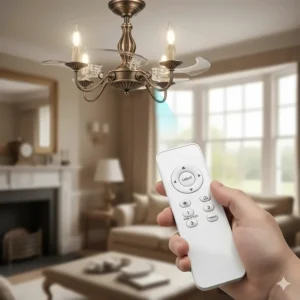
Sizing Your Traditional Fandelier Correctly
Proper sizing significantly impacts both aesthetics and performance. Here’s a straightforward framework based on room dimensions:
Room Size Guidelines:
- Up to 12m² (130 sq ft): 76-107cm (30-42″) diameter
- 12-18m² (130-195 sq ft): 107-122cm (42-48″) diameter
- 18-28m² (195-300 sq ft): 122-132cm (48-52″) diameter
- Over 28m² (300+ sq ft): 132cm+ (52″+) or multiple units
Ceiling Height Considerations:
UK building regulations require minimum 230cm clearance from floor to blade tips. For standard 240cm ceilings, flush-mount or short-downrod installations work best. Higher ceilings (270-300cm common in Victorian properties) benefit from extended downrods, improving air circulation efficiency.
Visual Proportion:
As a general rule, the fandelier’s diameter should be roughly 1/7th to 1/10th your room’s perimeter. For a 4m x 5m room (18m perimeter), a 107-122cm fandelier provides visual harmony without overwhelming the space.
Traditional Fandelier vs Standard Ceiling Fans vs Chandeliers
| Feature | Traditional Fandelier | Standard Ceiling Fan | Chandelier |
|---|---|---|---|
| Cooling Function | ✅ Excellent air circulation | ✅ Excellent | ❌ None |
| Lighting Quality | ✅ Ambient, decorative | ⚠️ Basic, functional | ✅ Premium, focused |
| Aesthetic Appeal | ✅ High visual impact | ❌ Utilitarian | ✅ Maximum elegance |
| Energy Efficiency | ✅ Dual function reduces overall consumption | ✅ Low consumption | ❌ Can be high with incandescent |
| Installation Complexity | ⚠️ Moderate to complex | ✅ Simple | ⚠️ Moderate |
| Maintenance | ⚠️ Regular blade and crystal cleaning | ✅ Minimal | ⚠️ Crystal cleaning required |
| Average UK Cost | £125-£245 | £45-£95 | £85-£400+ |
| Lifespan | 15-25 years | 10-15 years | 20-30 years |
Motor Types and Performance Considerations
Understanding motor technology helps you make informed decisions about performance versus cost.
AC vs DC Motors
AC (Alternating Current) Motors: Traditional technology, typically consuming 60-75W at full speed. More affordable upfront (£20-£40 less than DC equivalents). Reliable and straightforward to repair. Suited to rooms where the fan operates occasionally rather than continuously.
DC (Direct Current) Motors:
Modern technology consuming 35-50W at equivalent speeds – roughly 40% more efficient. Quieter operation (important for bedrooms). Higher initial cost but recovers investment through electricity savings over 3-4 years. Variable speed control offers more granular adjustment.
Motor Quality Indicators
Bearing Type: Ball bearings provide quieter, longer-lasting operation than sleeve bearings. Premium units often feature sealed bearings requiring no maintenance.
Winding Material: Copper windings outlast aluminium. They’re more expensive but generate less heat and provide better longevity.
Motor Size: Larger motors (typically 188mm x 15mm or greater) move more air at lower RPMs, reducing noise whilst improving efficiency.
Lighting Considerations for Traditional Fandeliers
Traditional fandeliers typically accommodate E27 (Edison screw) or E14 (small Edison screw) bulbs. Here’s how to optimise your lighting setup:
Bulb Selection for Period Styling
LED Filament Bulbs: Mimic traditional tungsten appearance whilst consuming 90% less electricity. Available in 2700K (warm white) which complements traditional brass and bronze finishes beautifully.
Edison Style LEDs: Decorative exposed filaments visible through clear glass shades. Particularly effective in caged or open designs.
Dimmable Options: Essential for dining rooms where you want flexibility from bright task lighting to subtle mood illumination.
Light Output Guidelines
For primary room lighting:
- Small rooms (up to 12m²): 1,500-2,000 lumens total
- Medium rooms (12-18m²): 2,000-3,000 lumens total
- Large rooms (18m²+): 3,000-4,500 lumens total
Most traditional fandeliers accommodate 3-5 bulbs. Select wattages accordingly – for example, five 9W LED bulbs (approximately 800 lumens each) provide 4,000 lumens total, suitable for an 18m² room.
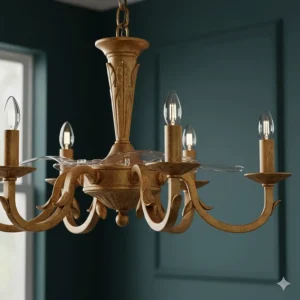
Installation: DIY or Professional?
This is one area where I strongly advocate for realistic self-assessment. Ceiling fan installation involves electrical work, structural considerations (ensuring adequate ceiling support), and height-related risks.
When DIY Makes Sense
✅ You’re comfortable working with mains electricity
✅ Your ceiling has accessible joists (not merely plasterboard)
✅ You own appropriate tools (ladder/scaffolding tower, drill, electrical tester, wire strippers)
✅ The fan weighs under 7kg
✅ Standard ceiling height (240-270cm)
When to Hire Professionals
❌ Fans exceeding 9kg weight
❌ Cathedral or vaulted ceilings
❌ Uncertain about ceiling structural capacity
❌ Uncomfortable with electrical work
❌ Listed buildings (may require specific approaches)
Professional installation typically costs £80-£150 in most UK regions, depending on complexity. Factor this into your budget if you’re not confident. A properly installed fan should last 15-25 years – that’s less than £10 annually for professional peace of mind.
Maintenance and Care for Longevity
Traditional fandeliers require modest maintenance to preserve appearance and performance.
Monthly Tasks (5-10 minutes)
Blade Dusting: Microfibre cloths or extendable dusters work brilliantly. Clean when the fan is switched off to avoid accidents. Accumulated dust reduces efficiency and can cause balance issues.
Crystal/Glass Inspection: Quick visual check for loosening connections. Tighten any suspect pendants or shades immediately.
Quarterly Tasks (15-20 minutes)
Deep Blade Cleaning: Slightly damp cloth with mild washing-up liquid for wooden blades. Avoid excessive moisture which can damage finishes.
Crystal Polishing: Remove crystal pendants, wash in warm soapy water, dry thoroughly with lint-free cloth. The improvement in light refraction is remarkable.
Motor Housing Dusting: Prevents dust accumulation in motor vents which can cause overheating.
Annual Tasks (30-45 minutes)
Balance Check: Unbalanced fans cause wobbling and noise. Use a balancing kit (typically £5-£8) to identify and correct imbalances.
Electrical Connection Inspection: Switch off at the mains, check all wire connections are tight. Replace any cracked wire insulation immediately.
Motor Lubrication: If your model requires it (check manufacturer guidelines). Many modern sealed motors need no lubrication.
Energy Efficiency and Running Costs
Given current UK electricity prices (approximately £0.24-£0.28 per kWh as of early 2026), running costs matter considerably.
Typical Consumption:
- Small DC motor fan (35W): £0.01 per hour, £3.50 annually (at 4 hours daily use)
- Medium AC motor fan (60W): £0.014 per hour, £6.00 annually
- Large AC motor fan (75W): £0.018 per hour, £7.50 annually
Compare this to air conditioning:
- Small portable AC (1000W): £0.24 per hour, £87.60 annually
- Split system AC (2500W): £0.60 per hour, £219 annually
The mathematics are compelling. A quality traditional fandelier pays for itself through energy savings within 3-4 years compared to air conditioning use. Factor in reduced heating costs during winter (reverse mode circulation), and ROI improves further.
Energy-Saving Tips
- Appropriate Speed Selection: Running at medium rather than high speed reduces consumption by 30-40% whilst still providing comfortable air movement
- Reverse Mode in Winter: Circulates warm air downward, reducing thermostat settings by 1-2°C without discomfort
- Timer Function Usage: Many modern traditional fandeliers include timers – use them to avoid unnecessary operation
- LED Lighting: Reduces lighting consumption by 85-90% compared to traditional bulbs
Addressing Common Concerns
“Will it look out of place in my modern home?”
Not necessarily. Traditional fandeliers create stunning focal points in eclectic or transitional interiors. They add warmth and character that modern minimalist fixtures sometimes lack.
“Are they difficult to clean?”
They require more attention than simple ceiling fans but less than elaborate chandeliers. Monthly dusting (5 minutes) and quarterly deep cleaning (20 minutes) suffice.
“What about noise?”
Quality units operate remarkably quietly. DC motors are particularly impressive – genuinely whisper-quiet even at medium speeds. Budget models with lower-quality bearings can be noisy; this is why I’ve focused on proven performers in my recommendations.
“Can they truly provide adequate cooling?”
Absolutely. They don’t lower air temperature (that requires air conditioning), but they create wind-chill effects that can make rooms feel 3-5°C cooler. Combined with opened windows for cross-ventilation, they’re remarkably effective for British summers.
Where to Buy Traditional Fandeliers in the UK
Amazon.co.uk: Widest selection, competitive pricing, customer reviews aid decision-making. Prime delivery typically 1-2 days for in-stock items.
Specialist Lighting Retailers: Lights.co.uk and similar outlets offer curated selections with expert advice. Prices typically 10-20% higher but include comprehensive after-sales support.
Architectural Salvage Yards: For genuine antique fandeliers. Expect to pay premium prices (£300-£800+) and budget for rewiring to meet current electrical standards.
DIY Chains (B&Q, Wickes): Limited traditional selections but stock reputable brands. Advantage: see products in person before purchasing.
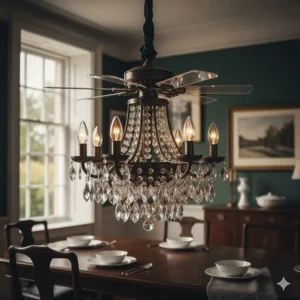
FAQ: Everything You Need to Know About Traditional Fandeliers
❓ What's the difference between a fandelier and a regular ceiling fan?
❓ Are traditional fandeliers suitable for bedrooms in UK homes?
❓ How much does it cost to run a traditional fandelier in the UK?
❓ Can I install a traditional fandelier myself, or do I need an electrician?
❓ What maintenance do traditional fandeliers require?
Conclusion: Finding Your Perfect Traditional Fandelier
After exploring these seven exceptional traditional fandeliers, the choice ultimately depends on your specific needs, aesthetic preferences, and budget constraints. For spacious period properties, the Period Bronze Fandelier (£195-£245) offers museum-quality craftsmanship. Budget-conscious buyers will find exceptional value in the Vintage 52″ Ceiling Fan Chandelier (£145-£175). Those seeking modern convenience with traditional styling should explore the Heritage Crystal Fan (£155-£195) with smart home integration.
What unites all these selections is their ability to transform ordinary rooms into extraordinary spaces. They’re not merely functional appliances but statement pieces that guests notice and admire. Combined with substantial energy savings compared to air conditioning, they represent intelligent investments in both comfort and aesthetics.
British homes – whether Georgian townhouses, Victorian terraces, or traditionally-styled new builds – deserve fixtures that honour our architectural heritage whilst embracing modern efficiency. Traditional fandeliers achieve precisely that balance, providing year-round comfort with timeless elegance.
Recommended for You
- 7 Best Modern Fandeliers UK 2026
- 7 Best Crystal Ceiling Fan with Light UK 2026
- 7 Best Crystal Fandeliers UK 2026 – Luxury & Affordable
Disclaimer: This article contains affiliate links. If you purchase products through these links, we may earn a small commission at no additional cost to you. Prices shown are approximate and may vary.
✨ Found this helpful? Share it with your mates! 💬🤗
