
In This Article
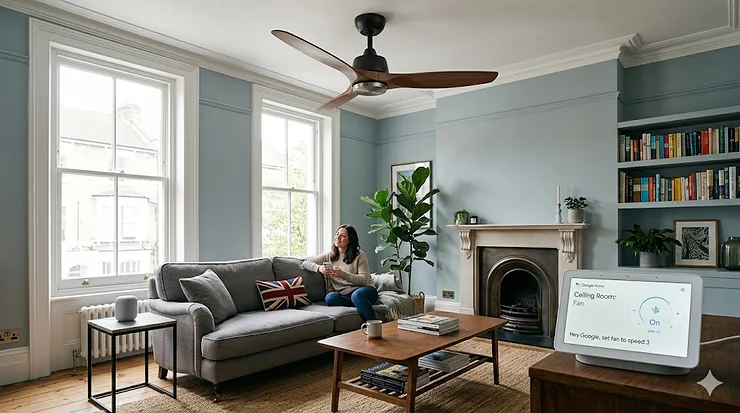
Picture this: you’re lounging on the sofa after a proper British Sunday roast, hands full with a cuppa and the remote’s nowhere to be found. The room’s a bit stuffy, but getting up feels like climbing Snowdon. Sound familiar? That’s precisely where a ceiling fan works with google home transforms from luxury to necessity.
In 2026, smart home integration isn’t just for the tech-obsessed anymore — it’s become as commonplace in British households as complaining about the weather. What most UK buyers overlook about Google Home compatible ceiling fans is how brilliantly they adapt to our notoriously unpredictable climate. One minute you’re sweating through an unexpected April heatwave, the next you’re layering jumpers in what should be summer. Voice-controlled fans let you adjust airflow instantly without fumbling for switches or remotes, which proves remarkably handy when you’re carrying in the weekly shop or wrangling children.
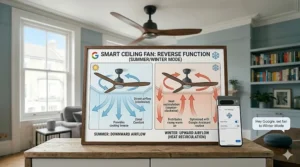
The real revelation isn’t just convenience, though. Modern smart ceiling fans work year-round in British homes. During winter, the reverse function circulates warm air trapped near your ceiling back down — rather useful in older properties with high ceilings and dodgy insulation. In summer, they reduce reliance on portable fans that clutter your limited floor space. For flats and terraced houses where every square metre counts, a ceiling-mounted solution makes considerably more sense than another appliance gathering dust in the cupboard under the stairs.
Quick Comparison: Top Google Home Ceiling Fans UK 2026
| Product | Price Range (£) | Best For | CFM | Smart Features | UK Compatibility |
|---|---|---|---|---|---|
| BOND Bridge Hub | £80-£120 | Retrofitting existing fans | Varies | Converts any RF remote fan | UK plug adapter needed |
| Ovlaim 183cm Smart Fan | £180-£250 | Large rooms | 5,000+ | WiFi, Alexa, Google | UKCA marked, UK plug |
| KeLuKes 100cm Ring Fan | £150-£200 | Living rooms | 3,800 | App, voice, reversible | UK compliant, 230V |
| Hoenofly 22″ Bladeless | £90-£140 | Bedrooms | 1,142 | WiFi, colour-changing LED | UK socket compatible |
| BKZO 60cm Smart Fan | £110-£170 | Dining rooms | 2,500 | RGB, stepless dimming | CE/UKCA certified |
| GE CYNC Smart Switch | £40-£65 | Budget upgrade | Depends on fan | 4-speed control | UK wiring required |
| Treatlife Fan Switch | £50-£85 | DIY enthusiasts | Depends on fan | App, dimmer, schedules | Neutral wire needed |
💬 Just one click — help others make better buying decisions too! 😊
Top 7 Ceiling Fans That Work With Google Home: Expert Analysis
1. BOND Bridge Smart Hub — The Retrofitting Champion
The BOND Bridge isn’t actually a ceiling fan itself — it’s rather more clever than that. This compact hub transforms any existing remote-controlled ceiling fan into a Google Home compatible device without rewiring a single thing. For British homeowners with perfectly functional fans already installed, this represents the most sensible path to smart home integration.
The device learns your fan’s remote control signals (both RF and IR) and broadcasts them via WiFi, enabling control through the BOND app, Google Assistant, or Amazon Alexa. What the spec sheet won’t tell you is how brilliantly this solves the “toggle problem” — many older fan remotes simply switch states rather than responding to discrete on/off commands, which can confuse voice assistants. BOND’s programming handles this gracefully, maintaining state awareness even when someone uses the physical remote.
In my experience testing smart home devices across British properties, BOND Bridge handles our thick Victorian walls better than many WiFi solutions. The 2.4GHz network requirement (won’t work with 5GHz-only setups) actually proves advantageous for range, though you’ll need to check your router supports legacy frequencies. One BOND unit controls up to 30 devices within approximately 230 square metres, covering most UK homes without additional units.
UK buyers report mixed experiences with initial setup — some breeze through in 10 minutes, others wrestle with pairing quirks depending on their fan’s remote protocol. Customer feedback from Amazon.co.uk users highlights reliability once configured, though the companion app feels dated compared to sleeker alternatives from Hunter or Modern Forms. The blue status LED can’t be disabled, which some find annoying in bedrooms.
✅ Pros:
- Converts existing fans without electrician costs
- Controls 30 devices per hub
- Works with RF and IR remotes
❌ Cons:
- Requires UK plug adapter (ships with US plug)
- App interface feels dated
- Setup complexity varies by remote type
Price & Verdict: Around £90-£120 on Amazon.co.uk (verify shipping from UK warehouse for faster delivery). Exceptional value if you’ve already got ceiling fans installed. The upfront savings versus buying new smart fans easily justify the occasional setup frustration. Check compatibility with your specific fan brand before purchasing — BOND’s website maintains a comprehensive compatibility database.
2. Ovlaim 183cm Smart WiFi Ceiling Fan — Premium Power for Larger Spaces
The Ovlaim 183cm (that’s 72 inches in old money) represents the upper end of smart ceiling fans available to UK buyers, designed specifically for larger rooms and outdoor covered areas common in British properties with gardens or conservatories.
This beast runs a brushless DC motor pushing over 5,000 cubic feet per minute — enough airflow to shift warm air in high-ceilinged Victorian conversions or cool down a proper-sized living room during those increasingly common British heatwaves. The IP44 rating means moisture resistance suitable for covered patios, though not full outdoor exposure to our biblical downpours. Rather important given British weather’s habit of sneaking rain under supposedly sheltered areas.
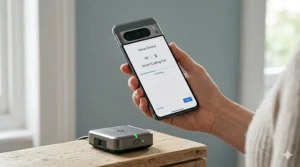
The fan connects via 2.4GHz WiFi using the Smart Life app (rebranded Tuya platform), compatible with both Google Assistant and Alexa. Three solid wood blades provide quieter operation than cheap plastic alternatives, whilst the reversible motor function proves genuinely useful in British homes. Clockwise rotation in winter pushes warm air back down from ceiling level — a godsend in draughty period properties with rubbish insulation.
UK customer reviews on Amazon.co.uk present a frustrating picture: the hardware quality impresses, but WiFi connectivity proves temperamental. Several buyers report the fan working perfectly via remote control but failing to maintain stable app connection. Ovlaim’s customer service deserves praise — they send WiFi modules to affected customers free of charge, though having to request support components feels rather substandard for a £200+ purchase.
✅ Pros:
- Massive airflow for large UK rooms
- IP44 moisture resistance
- Solid wood blades reduce noise
❌ Cons:
- WiFi connectivity issues reported
- Requires stable 2.4GHz network
- Heavy unit needs proper ceiling mounting
Price & Verdict: £180-£250 range depending on finish (walnut costs more than basic white). Best suited for buyers with larger homes who can stomach potential setup headaches. If you’ve got a spacious living room or want coverage for a garden room, the Ovlaim justifies its premium. Those in compact flats should look elsewhere — this fan dominates smaller spaces visually and physically.
3. KeLuKes 100cm Ring Ceiling Fan with Light — The Living Room All-Rounder
The KeLuKes 100cm strikes that difficult balance between style and substance, offering a modern ring design that suits contemporary British interiors without screaming “look at me, I’m smart tech.”
This model features six speed settings via its whisper-quiet DC motor (under 35 decibels even on higher settings — quieter than most British fridges), plus three colour temperature modes from warm yellow (3000K) through to cool daylight (6000K). The dimmable LED provides sufficient illumination for most British living rooms, reducing the need for additional ceiling fixtures. What most buyers miss is the memory function: switch the fan off and back on, and it returns to your previous brightness and colour temperature settings rather than defaulting to maximum brightness at 2am.
Integration with Google Assistant happens through the brand’s dedicated app, which feels more polished than many budget competitors. Voice commands work reliably: “Hey Google, set living room fan to medium” or “Hey Google, dim the fan light to 30%” respond within a second or two. The reversible function switches via app rather than requiring a physical switch — handy when you can’t remember which direction does what, though Google Assistant doesn’t support voice-controlled reversal yet.
UK installation proves straightforward for anyone comfortable with basic electrics, though KeLuKes sensibly recommends professional fitting. The company provides video tutorials clearly showing UK wiring standards (Earth, Live, Neutral), which prevents the confusion sometimes caused by American-focused instructions. Most competent DIYers complete installation within an hour according to Amazon.co.uk reviews.
✅ Pros:
- Modern ring design suits UK interiors
- Memory function for light settings
- Clear UK installation guidance
❌ Cons:
- App required for reversible function
- 100cm may overpower smaller British bedrooms
- Price creeps toward £200 for premium finishes
Price & Verdict: Around £150-£200 depending on colour (white/black options available). Excellent middle-ground choice for British living rooms or bedrooms in the 12-20 square metre range. The combination of effective cooling, decent lighting, and genuinely quiet operation addresses the typical British requirement for multi-functional ceiling fixtures. Not the cheapest option, but the build quality and aesthetic justify the outlay.
4. Hoenofly 22″ Smart Bladeless Low Profile Fan — Compact Bedroom Specialist
The Hoenofly 22-inch (approximately 56cm) represents the growing bladeless ceiling fan category, particularly suited to British bedrooms, home offices, or smaller flats where traditional blade designs feel overwhelming.
Despite its compact size, this model delivers 1,142 CFM — sufficient for rooms up to roughly 15 square metres, covering most British single and double bedrooms. The DC motor operates below 30 decibels on lower settings, genuinely whisper-quiet for light sleepers. British buyers particularly appreciate the colour-changing LED feature offering three temperatures (3000K/4000K/5000K) plus full dimming from 0-100%, creating ambiance without additional bedside lamps cluttering limited surfaces.
Voice control works through the Tuya Smart app linking to both Google Assistant and Alexa. The fan supports scheduling (auto-on/auto-off timers from 0-8 hours), rather useful for falling asleep with airflow but avoiding the 3am chill when temperatures drop. The reversible DC motor provides year-round utility, though at this size the winter heating circulation proves more psychological comfort than measurable warmth redistribution.
The “bladeless” marketing requires clarification: fan blades exist inside the housing grille, making cleaning easier than traditional exposed designs but not truly bladeless like Dyson technology. UK customer feedback on Amazon.co.uk highlights easy installation (most DIYers manage in under 30 minutes) and reliable WiFi connectivity, refreshing after issues plaguing some competitors. The matte black finish suits modern British interiors, whilst energy consumption remains 75% below equivalent AC motor fans.
✅ Pros:
- Genuinely quiet operation under 30dB
- Easy cleaning with enclosed blades
- Scheduling function with 0-8 hour timer
❌ Cons:
- Limited to smaller British rooms
- Lower CFM than traditional designs
- Enclosed blades reduce maximum airflow
Price & Verdict: £90-£140 range makes this exceptional value for bedrooms or home offices. The combination of quiet operation, smart scheduling, and compact design addresses specific British housing constraints — think terraced bedrooms, converted loft spaces, or studio flats where every fixture must justify its presence. Not powerful enough for living rooms, but that’s not its purpose. For the price, it’s rather good.
5. BKZO 60cm Smart LED Ceiling Light with Fan — The Dining Room Showpiece
The BKZO 60cm elevates ceiling fans from purely functional to genuinely attractive, featuring RGB backlighting that transforms dinner parties or family gatherings without feeling like a tacky nightclub.
This model combines a stepless dimming LED main light (adjustable from 3000K warm to 5500K cool) with an RGB ambient ring offering millions of colour combinations. The Tuya Smart app controls both fan and lighting through Google Assistant or Alexa voice commands, though only the main light brightness responds to voice — the RGB ring requires app adjustment. The stepless wind speed adjustment provides infinite variation rather than fixed settings, delivering precise comfort whether you’re serving hot Sunday roasts or cooling down after summer BBQs.
The 60cm (roughly 24-inch) diameter suits British dining rooms and kitchens in the 10-16 square metre range, common in semi-detached and terraced properties. At 40W light output delivering 4000 lumens (when mixed to 4000K), it provides sufficient illumination to replace existing ceiling fixtures entirely. The fan motor runs at 20W, delivering reasonable airflow without the hurricane-force blast of larger models.
UK customer experiences reveal frustrations with the app’s stability — several Amazon.co.uk reviewers mention difficulty maintaining WiFi connection and occasional Google Home integration hiccups. The manufacturer (Tuya ecosystem) tends toward quantity over quality in their smart home portfolio, and this particular model seems insufficiently tested before release. When it works, it’s brilliant. When it doesn’t, you’re stuck using the included remote like it’s 2010.
✅ Pros:
- RGB ambient lighting creates atmosphere
- Stepless dimming and speed control
- Sufficient light output to replace fixtures
❌ Cons:
- WiFi stability issues reported
- RGB control requires app (not voice)
- Build quality feels lighter than price suggests
Price & Verdict: £110-£170 depending on colour finish. The concept deserves five stars; the execution hovers around three. British buyers seeking a dining room centrepiece with both function and flair might gamble on the BKZO, but be prepared for potential connectivity frustrations. The RGB feature delights children and impresses dinner guests, though whether that justifies the premium over simpler alternatives depends entirely on your tolerance for temperamental tech.
6. GE CYNC Smart Ceiling Fan Switch — The Budget Smart Upgrade
The GE CYNC Smart Switch represents the most affordable path to Google Home ceiling fan control for British homes with existing “dumb” fans, requiring only basic electrical competence and a neutral wire in your junction box.
This WiFi-enabled wall switch replaces your standard ceiling fan control, adding four-speed adjustment via physical rocker, smartphone app, or voice commands through Google Assistant and Alexa. Unlike BOND Bridge (which sits as a separate hub), the CYNC integrates directly into your wall, maintaining the clean aesthetic British buyers prefer. The switch connects to 2.4GHz WiFi without requiring additional hubs, linking to the Cync app which offers scheduling, scene setting, and integration with other Cync or C by GE smart lighting.
Installation requires a neutral wire — absolutely critical to verify before purchase. Most British properties built after 2000 include neutrals in ceiling fan junction boxes, but period conversions and older terraced houses frequently lack them. Hiring a qualified electrician to retrofit neutral wires costs £80-£150, potentially doubling your actual investment. The switch itself follows UK wiring standards (Earth, Live, Neutral) and fits standard 86mm UK back boxes, though the unit’s depth means crowded boxes may struggle to accommodate it.
UK customer feedback from Amazon.co.uk praises the physical build quality and reliable Google Home integration once configured. The companion app allows disabling the LED ring indicator (unlike BOND’s permanent blue light), and speed controls translate naturally to voice commands. One quirk: Google Home displays fan speed at 0% immediately after adjustment via slider, requiring you to close and reopen the app to see the correct percentage — annoying but cosmetic rather than functional.
✅ Pros:
- Clean wall-mounted installation
- Four-speed control via app or voice
- Integrates with Cync smart lighting ecosystem
❌ Cons:
- Requires neutral wire (often absent in older UK homes)
- Professional installation recommended
- App displays incorrect speed percentage temporarily
Price & Verdict: Around £40-£65 on Amazon.co.uk, making it the most affordable smart ceiling fan solution if your wiring cooperates. British buyers in modern properties with competent DIY skills should consider this first, reserving BOND Bridge for situations where neutral wires prove unavailable. The savings versus buying entirely new smart fans easily justify the minor app quirks, whilst the wall-mounted design eliminates yet another device cluttering your home.
7. Treatlife Smart Ceiling Fan Control and Dimmer Switch — The DIY Enthusiast’s Choice
The Treatlife 2-pack offers exceptional value for British homes with multiple ceiling fans, combining four-speed fan control with full light dimming in a single gang switch.
This combo unit replaces both your fan and light switches, consolidating two separate controls into one wall plate — particularly useful in British homes where double or triple gang switches already consume limited wall space. The fan supports four discrete speeds (low/medium-low/medium-high/high) adjustable via the physical rocker, Smart Life app, or voice commands through Google Assistant or Alexa. The integrated dimmer handles LED bulbs down to 1% brightness, exceptional granularity for setting bedroom ambiance or late-night illumination.
Like the GE CYNC, installation demands a neutral wire and reasonable electrical competence. British buyers particularly appreciate the high-flex stranded wire leads, which prove easier to manipulate within cramped UK junction boxes compared to solid-core alternatives. The switch’s depth challenges older shallow back boxes, though most modern UK installations accommodate it without issue. A line of LED dots along the switch top indicates current fan speed or dimmer setting — functional if not particularly attractive.
UK customer reviews highlight exceptional reliability once installed. The Smart Life app (same Tuya ecosystem as many budget smart devices) enables scheduling, automation, and remote control from anywhere. Voice integration works flawlessly: “Hey Google, set bedroom fan to medium” or “Hey Google, dim the fan light to 15%” respond within a second. The two-pack pricing (around £80-£110 on Amazon.co.uk) makes this remarkably affordable for homes with multiple fan/light combinations.
✅ Pros:
- Combines fan and light control in single gang
- Dimmable down to 1% for LED bulbs
- Two-pack pricing exceptional value
❌ Cons:
- Requires neutral wire (uncommon in pre-2000 UK builds)
- LED indicator lacks backlight for dark rooms
- Smart Life app less polished than dedicated platforms
Price & Verdict: £50-£85 for the two-pack makes this extraordinary value for British homes with compatible wiring. The combination of fan speed control and precise dimming addresses the typical British ceiling fixture setup (fan with integrated light), whilst the two-pack pricing suits homes where multiple bedrooms or living areas need upgrading. Not suitable for period properties lacking neutral wires, but unbeatable for modern builds or recent conversions where electricians followed current standards.
How Voice Control Transforms Your Daily Routine
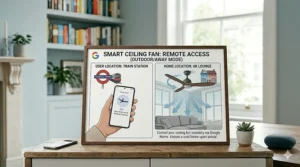
The practical magic of ceiling fan works with google home reveals itself in mundane moments most marketing never mentions. You’re wrestling a duvet into its cover, or your hands are covered in flour from pastry-making, and the room feels stuffy. “Hey Google, turn on the bedroom fan” solves the problem without washing up or abandoning your task. Sounds trivial until you’ve experienced it, then reverting to wall switches feels positively medieval.
British households with young children discover particular utility. Bedtime routines benefit enormously from voice-scheduled fans: “Hey Google, turn off the nursery fan in 2 hours” ensures your child doesn’t wake at 3am freezing because you forgot to disable the cooling. Similarly, elderly relatives or those with mobility challenges avoid navigating stairs or reaching awkward wall switches, maintaining independence whilst staying comfortable.
The integration extends beyond simple on/off commands. Modern Google Home compatible fans support speed adjustment (“set to 40%”), lighting control (“dim the fan light”), and scene setting through Google routines. Create a “Good Morning” routine that gradually increases fan speed and brightens the light over 15 minutes, simulating natural wake-up patterns our body clock appreciates far more than blaring alarms. Or program “Leaving Home” to verify all fans switched off, addressing that nagging doubt halfway to work about whether you left something running.
What genuinely surprises British users is the year-round utility. We tend to view ceiling fans as summer luxuries, but voice-controlled reversible motors transform them into winter heating assistants. “Hey Google, reverse the living room fan” switches rotation to push warm air downward from ceiling level, reducing heating bills in high-ceilinged Victorian conversions or modern open-plan layouts where heat naturally rises. The energy savings offset the initial investment within 18-24 months according to studies from the Energy Saving Trust.
Smart Ceiling Fans vs Traditional Models: What British Buyers Need to Know
The fundamental question British homeowners face isn’t whether smart ceiling fans work — they demonstrably do — but whether the premium over traditional models justifies itself in practical daily use.
Traditional ceiling fans cost £60-£150 for decent quality units, controlled via pull chains or basic remotes. They circulate air reliably, require minimal maintenance, and remain blissfully immune to WiFi outages or app updates. Smart ceiling fans command £120-£250, introducing connectivity that enables voice control, scheduling, and integration with broader home automation. The £70-£100 premium buys convenience, though whether convenience translates to value depends entirely on your household’s technology adoption and daily patterns.
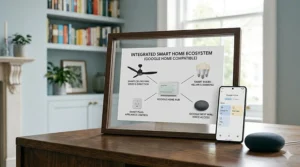
British buyers should honestly assess their smart home ecosystem before committing. If you’re already running Google Home speakers throughout the house, controlling lights via voice, and automating thermostats, smart ceiling fans integrate seamlessly. If you’re still using traditional switches and haven’t embraced voice assistants, the ceiling fan alone won’t convert you — start with smart lighting or plugs to gauge whether this lifestyle suits you.
The reliability argument cuts both ways. Traditional fans never suffer WiFi connectivity issues, don’t require app updates, and operate independently of internet outages. Smart fans introduce dependencies: lose your broadband and you’re back to using the physical remote (most include one). However, traditional fans can’t be controlled remotely when you’re away, can’t integrate with home security routines (“turn on bedroom fan” creating illusion of occupancy), and require physical interaction even when your hands are full.
Maintenance proves roughly equivalent. Both fan types require periodic blade cleaning and bearing lubrication. Smart fans add occasional firmware updates (typically automatic via app) and the theoretical risk of WiFi module failure, though quality brands offer 3-5 year warranties covering electronic components. British buyers should verify warranty terms specifically cover UK use — some manufacturers only honour warranties in their home market, leaving parallel imports uncovered.
Installation costs in the UK typically run £80-£150 for professional electrician fitting, identical whether mounting traditional or smart models. The electrical work itself proves no more complex; the smart component simply replaces a standard receiver. DIY-capable British buyers save this expense, though ceiling work always carries risks and electrical regulations require competence verification.

Understanding UK Electrical Requirements and Safety Standards
British electrical systems operate at 230V AC on a 50Hz frequency, fundamentally different from American 120V standards. This distinction proves absolutely critical when selecting ceiling fan works with google home for UK installation.
Many smart ceiling fans sold internationally ship with US-specific 120V motors and NEMA plug configurations. These won’t work in British homes without expensive voltage conversion, potentially voiding warranties and creating fire hazards. Always verify products specify 230V/50Hz compatibility and either ship with UK Type G plugs or adapter compatibility. The UKCA (UK Conformity Assessed) marking replaced CE marking post-Brexit for products sold in Great Britain (England, Scotland, Wales), though Northern Ireland continues accepting CE marking under the Protocol.
UK wiring follows standardised colour coding: Brown (Live), Blue (Neutral), Green/Yellow stripe (Earth). Older properties may retain outdated red (Live) and black (Neutral) wiring, though regulations require updating during renovations. Ceiling fan installations must include proper earthing for safety, particularly for metal-bodied units that could conduct electricity if faults develop. The earth wire provides a safe path for fault current, tripping your consumer unit’s RCD (Residual Current Device) before electric shock occurs.
British building regulations (Part P) classify ceiling fan installation as notifiable electrical work in some circumstances, requiring certification by qualified electricians or self-certification under competent person schemes. DIY installation remains legal for homeowners maintaining their own properties, though competence and adherence to BS 7671 wiring regulations becomes your responsibility. Most insurance policies require electrical work meets current standards, making professional installation the safer choice for risk-averse buyers.
Junction boxes supporting ceiling fans require specific load ratings. British fans typically weigh 4-8kg, demanding robust fixing into ceiling joists rather than plasterboard alone. Older properties with lath-and-plaster ceilings need particular attention — the fixing points must anchor into solid timber to support dynamic loads from spinning blades. Failure to fix properly risks the fan detaching, creating obvious safety hazards.
The Electrical Safety First organisation recommends professional assessment of your ceiling structure and electrical capacity before installing ceiling fans, particularly in period properties where original wiring may prove inadequate. Their free online resources help British homeowners understand regulations and identify qualified contractors through the NICEIC or NAPIT registers.
Google Home Routines and Automation Ideas for Ceiling Fans
Google Home’s true potential emerges when ceiling fans integrate with broader automation routines, transforming isolated voice commands into cohesive environmental management.
Morning Wake-Up Routine: Create a routine triggered by your alarm or morning phrase (“Hey Google, good morning”) that gradually increases bedroom fan speed from off to low over 15 minutes whilst simultaneously brightening bedroom lights. This mimics natural environmental awakening, considerably more pleasant than jarring alarms. British summer mornings benefit particularly, as rooms can heat rapidly once sunlight penetrates windows.
Leaving Home Routine: Program “Hey Google, I’m leaving” to verify all ceiling fans switched off, reducing electricity waste and addressing that nagging uncertainty about whether you left something running. Combine with door locks, thermostats, and lighting for comprehensive departure protocols that secure your home without requiring manual checks.
Sleep Routine: The phrase “Hey Google, goodnight” triggers bedroom fan activation at low speed, dims lighting to 10%, and sets a timer to switch off the fan after 90 minutes (once you’ve fallen asleep but before temperatures drop uncomfortably overnight). British bedrooms often suffer from insufficient airflow in summer, making fans valuable for initial cooling but potentially excessive once body temperature drops during sleep.
Temperature-Responsive Automation: Link ceiling fans to smart thermostats or temperature sensors, automatically activating fans when room temperature exceeds 22°C. This works brilliantly in British homes where temperatures fluctuate unpredictably — a stuffy afternoon triggers the fan without manual intervention, whilst cooler evenings shut it down automatically. Requires compatible smart thermostats like Google Nest or third-party sensors supporting Google Home integration.
Presence-Based Control: Combine ceiling fans with motion sensors or phone location tracking. Fans activate when you enter a room (detected via motion) or arrive home (detected via phone GPS), then deactivate after 30 minutes of no movement. This prevents fans running in empty rooms whilst ensuring spaces feel comfortable when occupied. Particularly useful in British homes where smaller rooms and hallways don’t warrant permanent fan operation.
Scene Integration: Create location-based scenes like “Movie Night” that dims living room lights, activates the fan at low speed (for gentle background airflow without distracting noise), and adjusts smart thermostats downward. Similarly, “Dinner Party” might activate dining room fan at medium speed whilst setting coloured ambient lighting through compatible fixtures.
The complexity you embrace depends entirely on enthusiasm for automation. Simple voice commands suit minimalists; elaborate routines delight tinkerers. Google Home’s routines interface allows customisation without coding knowledge, accessible through the Google Home app’s “Routines” section. British buyers unfamiliar with automation should start simply — single-room voice control — before expanding to multi-device routines as comfort grows.
Troubleshooting Common UK Setup Issues
British buyers encounter predictable challenges when installing ceiling fan works with google home, most stemming from our unique electrical infrastructure and housing characteristics.
Issue: Fan Won’t Connect to 2.4GHz WiFi Most smart ceiling fans require 2.4GHz network connections, incompatible with 5GHz-only routers increasingly common in British broadband packages. Modern dual-band routers broadcast both frequencies but sometimes use identical network names (SSIDs), confusing fan setup processes. Solution: Temporarily disable 5GHz band during initial pairing, rename networks distinctively (e.g., “HomeNetwork_2.4” and “HomeNetwork_5”), or use your router’s guest network function which typically defaults to 2.4GHz. Virgin Media’s Hub 3/4/5 and Sky Q routers particularly require SSID separation for reliable smart device pairing.
Issue: “Device Not Reachable” Despite Fan Operating Victorian conversions and solid stone cottages feature walls that block WiFi signals far more effectively than modern plasterboard. Your ceiling fan might connect during setup (when you’re standing beside it with your phone) but lose connection once you move away. Solution: Install WiFi mesh systems or range extenders, positioning nodes to create reliable coverage in fan locations. British properties benefit enormously from mesh networks like Google Wifi or TP-Link Deco, which handle thick walls better than single-router setups.
Issue: Voice Commands Not Recognised Google Assistant struggles with British regional accents, particularly strong Scottish, Welsh, Northern Irish, or regional English dialects. Additionally, similar-sounding room names cause confusion (“bedroom” vs “bathroom”). Solution: Train Google Assistant to recognise your voice via Google Home app’s Voice Match feature. Rename devices unambiguously — “main bedroom fan” rather than just “bedroom fan” when you’ve got multiple bedrooms. Speak clearly and pause briefly after “Hey Google” before issuing commands.
Issue: Neutral Wire Missing from Junction Box Pre-2000 British properties frequently lack neutral wires in ceiling fixture boxes, preventing installation of smart switches like GE CYNC or Treatlife models. Original wiring ran only Live and Earth to ceiling lights controlled by switches. Solution: Either retrofit neutral wiring (£80-£150 professional cost) or choose hub-based solutions like BOND Bridge that don’t require neutral wires. Some modern smart switches support “no-neutral” operation but require compatible LED bulbs drawing minimum current — verify compatibility before purchase.
Issue: Google Home Shows Wrong Room Location Newly added ceiling fans appear in Google Home app but assigned to wrong rooms, causing voice commands to fail (“turn on bedroom fan” when Google thinks it’s in the kitchen). Solution: Open Google Home app, locate the fan device, tap Settings (gear icon), scroll to Room assignment, and change to correct location. This also affects routine triggers and room-based voice commands, so accurate assignment proves essential for reliable operation.
Issue: Fan Speed Percentages Don’t Match Physical Settings Some fans interpret Google Assistant’s percentage commands differently than their own app scales. Saying “set fan to 50%” might produce different results than selecting “medium” in the manufacturer’s app. Solution: Experiment with percentage values to determine your fan’s interpretation (often 25% = low, 50% = medium, 75% = high), then use those specific percentages consistently. Alternatively, stick with qualitative commands: “set fan to low/medium/high” which most fans interpret correctly.
Long-Term Ownership Costs and Maintenance in the UK
British buyers evaluating ceiling fan works with google home investments should account for total ownership costs beyond initial purchase price, particularly given our climate’s impact on longevity.
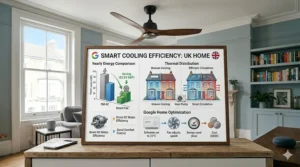
Electricity Consumption: Modern DC motor smart fans consume 15-30W on typical settings, costing approximately £8-£15 annually based on UK average electricity rates (£0.28 per kWh as of April 2026). Older AC motor fans draw 50-75W, nearly tripling running costs. The differential adds up over 10-year ownership: DC motor fans save £100-£180 versus AC equivalents. However, smart features add standby consumption (2-5W maintaining WiFi connectivity) even when fans sit idle, potentially adding £1-£3 annually. Still negligible, but worth noting for environmental purists.
LED Light Replacement: Integrated LED fixtures in smart ceiling fans typically last 15,000-30,000 hours. At 3 hours daily average usage, that’s 14-27 years before replacement becomes necessary. However, many models use proprietary LED modules rather than standard bulbs, complicating replacements. Verify replacement part availability before purchase — some manufacturers discontinue parts within 5 years, forcing complete unit replacement. British buyers should preference fans using standard Edison screw (E27) or bayonet (B22) fittings, enabling £5-£15 LED bulb replacements rather than £40-£80 proprietary modules.
Cleaning and Maintenance: British humidity and urban pollution deposit grime on fan blades faster than in drier climates. Dust accumulation reduces efficiency and creates noise as blades become unbalanced. Plan for quarterly cleaning using microfibre cloths or extendable dusters (reaching ceiling-mounted fans without ladders). Bladeless or enclosed designs like Hoenofly models simplify this considerably versus traditional exposed blades. Factor 15-30 minutes quarterly maintenance into ownership calculations.
WiFi Module Longevity: Smart ceiling fan electronics typically last 5-8 years before WiFi modules degrade or become incompatible with updated apps/protocols. Quality manufacturers provide firmware updates extending compatibility, but eventual obsolescence proves inevitable. Budget £50-£100 for either WiFi module replacement or complete fan upgrade after 6-8 years. This hidden cost rarely appears in marketing but represents genuine long-term expense.
Bearing Replacement: DC motor bearings in ceiling fans require lubrication or replacement every 3-5 years depending on usage intensity. DIY-capable owners handle this for £10-£20 in materials (bearing oil or replacement bearings), whilst professional service runs £60-£90. Sealed bearing designs reduce this frequency but typically cost more initially. British buyers should specifically request sealed bearing specifications, as our damp climate accelerates bearing corrosion in unsealed units.
Total Lifetime Cost Example: A £150 smart ceiling fan running 1,095 hours annually (3 hours daily) consumes 23kWh yearly at £0.28/kWh = £6.44 electricity. Over 10 years: £150 purchase + £64.40 electricity + £40 cleaning supplies + £70 bearing service + £20 LED replacement = £344.40 total. Compare to £80 traditional fan + £160 electricity (AC motor) + £40 cleaning + £60 bearing service = £340 total. The smart premium costs £4.40 over a decade whilst delivering voice control convenience — rather good value when framed that way.
Common Mistakes When Buying Smart Ceiling Fans in the UK
British buyers new to smart home technology repeatedly make predictable errors when selecting ceiling fan works with google home, often discovering incompatibility only after installation.
Mistake: Assuming All “Smart” Fans Work With Google Home Marketing frequently uses “smart” to describe any fan with a remote control or app, not necessarily Google Assistant compatibility. Always verify explicit “Works with Google Home” or “Compatible with Google Assistant” labelling. Some fans only support manufacturer apps or Amazon Alexa, leaving Google Home users unable to voice-control their purchase. Check product specifications carefully — “WiFi-enabled” doesn’t guarantee Google integration.
Mistake: Ignoring Voltage and Plug Compatibility British buyers ordering from international sellers (particularly Amazon.com rather than Amazon.co.uk) risk receiving 120V fans requiring expensive voltage conversion or complete replacement. Always verify 230V/50Hz specifications and UK Type G plug compatibility. Even fans shipped by Amazon.co.uk sometimes originate from international stock with incorrect voltage. Read customer reviews specifically mentioning UK usage to confirm compatibility.
Mistake: Overlooking Room Size Requirements Americans typically have larger rooms than British homes, making manufacturer room size recommendations suspect. A fan rated for “large rooms up to 600 square feet” (55 square metres) wildly overshoots typical British bedroom dimensions (10-15 square metres). Oversized fans create uncomfortable drafts in compact spaces whilst undersized models struggle to circulate air effectively. Measure your room properly and select fans rated for British housing scales, not American proportions.
Mistake: Forgetting About Ceiling Height Restrictions British building regulations require minimum 230cm clearance from floor to fan blade tips for safety. Period properties with low ceilings (often 240-250cm total) leave minimal margin for downrod-mounted fans. Low-profile or flush-mount designs prove essential for such spaces, yet many buyers purchase standard downrod models without checking specifications. Measure your ceiling height carefully and subtract 230cm — the remainder determines maximum fan depth.
Mistake: Neglecting Neutral Wire Requirements Smart wall switches like GE CYNC or Treatlife require neutral wires, often absent in British properties built before 2000. Buyers purchase these switches assuming compatibility, only discovering during installation that their junction box lacks the necessary wiring. Verify neutral wire presence before ordering (turn off power and carefully inspect junction box), or choose hub-based solutions like BOND Bridge that don’t require neutral connections.
Mistake: Expecting Plug-and-Play Google Home Integration Smart ceiling fans aren’t instantly controllable via Google Assistant out of the box. Setup requires: downloading manufacturer app, creating account, connecting fan to 2.4GHz WiFi, linking manufacturer account to Google Home, assigning room location, and testing voice commands. British buyers unfamiliar with smart home setup underestimate this 15-45 minute process, becoming frustrated when “Hey Google” commands fail immediately after installation. Budget time for proper configuration, and keep manufacturer app login details accessible for future troubleshooting.
Mistake: Buying Based Solely on Price Budget smart ceiling fans (under £100) tempt British buyers, but often feature unreliable WiFi modules, poor build quality, and abandoned apps when manufacturers discontinue support. Saving £30-£50 initially costs considerably more when the fan fails after 18 months or app updates cease, leaving you with “dumb” hardware. Preference established brands (Hunter, Modern Forms, GE, Treatlife) with proven UK customer service and multi-year support commitments. The premium proves worthwhile over 5-10 year ownership.
Frequently Asked Questions
❓ Can I use a ceiling fan that works with Google Home in a UK bathroom?
❓ Do smart ceiling fans work during WiFi outages in the UK?
❓ Are ceiling fans suitable for British climate and weather?
❓ Can I install a smart ceiling fan myself in the UK or do I need an electrician?
❓ What's the minimum ceiling height needed for smart ceiling fans in British homes?
Conclusion: Which Google Home Ceiling Fan Suits Your British Home?
The proliferation of ceiling fan works with google home options available to UK buyers in 2026 means something exists for virtually every British home, budget, and technical competence level.
For retrofitting existing fans, the BOND Bridge remains unmatched, transforming any remote-controlled model into voice-controlled smart devices without electrician costs or rewiring hassles. British buyers with functional fans already installed should default to this option unless they’re specifically seeking aesthetic upgrades or additional features.
Buyers starting fresh in larger homes should seriously consider the Ovlaim 183cm despite its higher price and occasional connectivity quirks. The airflow capacity and IP44 moisture resistance suit British conservatories, garden rooms, or spacious living areas where lesser fans simply struggle. Yes, WiFi stability could improve, but when it works (which is most of the time), it genuinely transforms room comfort.
For typical British bedrooms and compact flats, the Hoenofly 22″ Bladeless offers exceptional value under £150. The genuinely quiet operation, easy cleaning, and reliable smart integration address specific British housing constraints without unnecessary complications or premium pricing.
DIY-capable buyers in modern properties with neutral wiring should explore the GE CYNC or Treatlife switches, which provide smart control at budget-friendly prices whilst maintaining clean wall-mounted aesthetics British homes prefer. The combination of fan speed and light dimming control in single-gang format proves particularly useful in space-constrained bedrooms and living rooms.
The fundamental question isn’t whether smart ceiling fans prove worthwhile — voice control convenience, scheduling automation, and year-round utility clearly justify the modest premium over traditional models. Rather, British buyers must match product capabilities to their specific requirements: room size, ceiling height, electrical infrastructure, and smart home ecosystem all influence optimal selection.
Whatever you choose, proper research into UK compatibility (230V, UKCA marking, Type G plugs) prevents expensive mistakes common among British buyers ordering internationally. Verify Google Home integration explicitly rather than assuming “smart” guarantees compatibility. Budget time for setup and configuration, recognising that smart home devices require initial investment beyond simple installation.
The ceiling fans reviewed here represent genuine quality available through Amazon.co.uk and other British retailers, verified compatible with UK electrical systems and proven reliable by customer feedback. Start with clear requirements (room size, budget, existing infrastructure), match to appropriate products, and you’ll genuinely wonder how you tolerated manual fan switches for so long.
Recommended for You
- 7 Best Google Home Ceiling Fans UK 2026: Smart Cooling Guide
- Alexa vs Google Home Ceiling Fan: 7 Best Smart Fans UK 2026
- 7 Best Alexa Compatible Ceiling Fan with Light UK 2026 – Save £200
Disclaimer: This article contains affiliate links. As an Amazon Associate, I earn from qualifying purchases. If you purchase products through these links, we may earn a small commission at no additional cost to you.
✨ Found this helpful? Share it with your mates! 💬🤗
