
In This Article
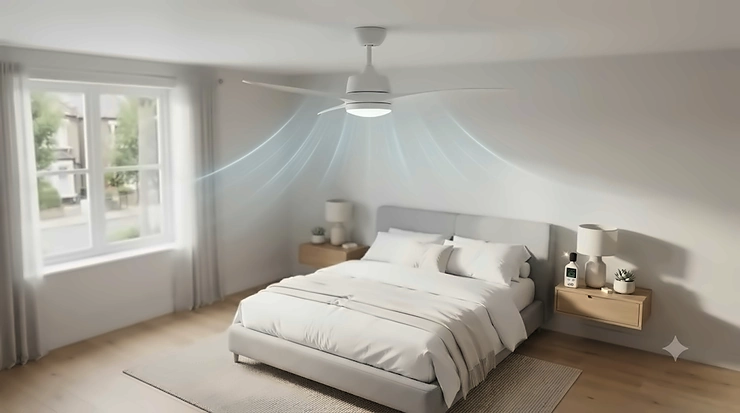
There’s a very specific kind of despair that comes with lying in bed at 1am, wide awake, listening to your ceiling fan click, whir, and wobble its way through another lap. You bought it to help you sleep. Instead, it’s auditioning for a percussion section. A quiet DC motor ceiling fan for bedroom use is, put simply, a ceiling fan built around a brushless direct-current motor that typically runs somewhere between 20 and 35 decibels on its lower settings — quiet enough that most people stop consciously registering it within a few nights. That’s the whole promise, and when it’s delivered properly, it’s genuinely transformative.
Here’s the thing most buyers don’t realise until they’ve already made a mistake: not every “quiet” fan on Amazon UK is actually quiet, and not every DC motor is created equal. Blade balance, bearing quality, mounting stability, and even the shape of the blade tips all affect the noise a fan makes once it’s spinning above your head at 2am. This guide walks through seven real, currently available fans — budget, mid-range, and premium — with honest analysis of what the specifications actually mean for a light sleeper, not just a list of numbers copied from a product page. We’ll also cover decibel ratings properly, how blade balance affects night-time use, and how to avoid the classic mistakes that turn a “silent ceiling fan bedroom” purchase into an expensive regret.
One quick caveat before we dive in: individual customer review counts and star ratings shift constantly on Amazon, and manufacturers don’t always publish independently verified acoustic test data — most decibel figures you’ll see (including here) are manufacturer-stated rather than lab-verified by a third party, so treat them as a strong indicator rather than gospel. Where we can point to genuine aggregated buyer sentiment, we’ve flagged it clearly as such.
Quick Comparison Table
| Fan | Motor | Blade Span | Noise Level (mfr. stated) | Best For |
|---|---|---|---|---|
| Fantasia Zeta DC | DC | 132cm (52″) | Below 35dB | Heritage build quality, premium bedrooms |
| Ensenior 50cm Flush Mount | DC | 50cm | Below 35dB | Low ceilings, small bedrooms |
| Depuley 52″ Low Profile | DC | 132cm (52″) | Below 30dB | App control, flexible dimming |
| CJOY 42″ DC | DC | 107cm (42″) | Around 30dB | Budget all-in-one light replacement |
| Newday 42″ Silver | DC | 107cm (42″) | Below 35dB | Compact British bedrooms |
| Westinghouse Widespan | DC | Up to 254cm | Manufacturer-rated quiet | Large master bedrooms |
| Ovlaim 48″ White | DC | 122cm (48″) | Manufacturer-rated “super silent” | Tight budgets, small rooms |
Looking at the spread above, the pattern is clear: DC motor technology is now standard across every price bracket, so the real differentiator between a whisper-quiet night and a frustrating one usually comes down to blade span matching room size, mounting quality, and whether the manufacturer has a genuine UK presence for spares and support. The Fantasia Zeta DC and Westinghouse Widespan justify their higher price tags with heritage engineering and longer warranties, while the CJOY 42″ DC and Ovlaim 48″ White prove that sub-£100 quiet operation is entirely achievable if you’re prepared to sacrifice some brand pedigree.
💬 Just one click — help other make better buying decisions too!😊
Top 7 Quiet DC Motor Ceiling Fans for Bedroom: Expert Analysis
1. Fantasia Zeta DC — best heritage build with a 10-year motor warranty
The standout here isn’t a spec sheet number — it’s the fact that Fantasia has been building ceiling fans in the UK since 1985, and it shows in the details. The Zeta’s 132cm blade span uses curved Paulownia wood blades, chosen because the timber is naturally light yet stiff, which reduces the flex that causes wobble-induced noise in cheaper plastic blades. Its DC motor is quoted by Fantasia as using around 60% less electricity than a comparable AC motor, and the double-sealed bearings are specifically engineered to stay quiet as they age rather than developing that tell-tale bearing whine after a year or two.
Based on the spec comparison, this is the fan for someone who’s been burned before by a “quiet” fan that got noisier every winter — the sealed bearings and metal motor housing are built to resist exactly that kind of degradation. It suits a primary or guest bedroom where you’re planning to keep the fan for a decade, not a rental where you might move house in eighteen months. Reviewers consistently note the remote’s granularity — six forward speeds and six reverse — as genuinely useful rather than a marketing gimmick, since the lower speeds are where the acoustic difference between this and a budget fan really shows.
Pros:
- ✅ 10-year motor warranty from an established UK brand
- ✅ Sustainable Paulownia wood blades reduce wobble-related noise
- ✅ Double-sealed bearings designed to stay quiet long-term
Cons:
- ❌ Premium price compared to imported alternatives
- ❌ Professional installation recommended for period ceilings
Expect to pay in the £180–£240 range at the time of research, and given the motor warranty length, the value case holds up well against fans that need replacing within five years.

2. Ensenior 50cm Flush Mount — best low-profile pick for low ceilings
If your bedroom has a ceiling under 2.4 metres, most 132cm fans are simply the wrong tool, and this is where the Ensenior earns its spot. At just 14cm deep when flush-mounted, it hugs the ceiling tightly enough that even taller housemates won’t clip it walking past the bed. The DC motor is specified by Ensenior to run quietly right up to its top speed setting, and the light integrates stepless dimming across a 3000K–6500K range, which matters more than it sounds — a single warm setting for winding down at night avoids the harsh blue-white glare that keeps your brain alert before bed.
What most buyers overlook about compact flush-mount fans is that smaller blade spans generally move less air per rotation, so they need to spin faster to achieve the same cooling effect as a larger fan — and faster rotation is usually where noise creeps in. Ensenior’s engineering choice to prioritise a low-profile housing while keeping the motor genuinely DC (rather than a cheaper AC unit in a slim housing) is the detail that keeps this one in the “actually quiet” category rather than just the “actually thin” one. The memory function, which restores your last-used speed and light setting after a power cut, is a small but genuinely practical touch for anyone on an older rural supply.
Pros:
- ✅ Just 14cm deep — ideal for low or period ceilings
- ✅ Stepless dimmable LED from warm to cool white
- ✅ Memory function survives power interruptions
Cons:
- ❌ Smaller blade span means less airflow for larger rooms
- ❌ 3-year warranty shorter than premium heritage brands
Price sits around £90–£120, which is reasonable for a flush-mount DC fan with integrated dimmable lighting doing double duty as your main bedroom light.
3. Depuley 52″ Low Profile — best for app and remote flexibility
Depuley has built a genuine UK Amazon storefront presence with accessible customer support, which matters more than it sounds once you’re three years into ownership and need a replacement remote. The 132cm fan pairs a DC motor with both a physical remote and smartphone app control, letting you adjust speed, dimming, and colour temperature without getting out of bed — a small comfort that’s easy to dismiss until you’re the one reaching for a phone instead of fumbling for a pull cord in the dark.
Here’s what the spec sheet won’t tell you, but the design implies: the six-speed reversible motor with a built-in timer suggests this is aimed squarely at people who want a “set it and forget it” bedroom fan, running on a timer through the first few hours of sleep before switching off automatically. That’s a genuinely useful feature for anyone who runs warm at bedtime but doesn’t want cold air circulating by 4am. The trade-off is that app-connected fans depend on stable home Wi-Fi or Bluetooth, and older phones or patchy signal in converted lofts can occasionally cause lag between pressing a button and the fan responding.
Pros:
- ✅ Remote and app control for full flexibility
- ✅ Built-in timer for automatic switch-off
- ✅ Dimmable 3CCT LED covers warm to cool lighting
Cons:
- ❌ App reliability depends on home Wi-Fi/Bluetooth stability
- ❌ Flush mount limits use in very high-ceilinged rooms
Typical pricing lands around £80–£110, putting it firmly in the mid-range bracket for buyers who want smart features without paying heritage-brand premiums.
4. CJOY 42″ DC — best budget all-in-one light replacement
For a lot of British bedrooms, the ceiling fitting does one job: hold a single central light. The CJOY solves that constraint by combining a 107cm DC fan with an integrated dimmable LED offering three colour temperatures — warm 3000K, neutral 4000K, and cool 6500K — all controlled from one remote. Manufacturer specifications put the motor at roughly 30dB on its lower speeds, which, if accurate, sits comfortably within the “genuinely quiet enough for sleep” bracket most sleep researchers reference.
The honest analytical take here is that this fan isn’t trying to be the most powerful or the most stylish option on this list — it’s trying to be the simplest one-fitting solution for a typical British bedroom, and on that measure it delivers. Six speeds offer the same granularity you’d find on pricier models, which is a genuinely good sign that the corner-cutting happened on materials and finish rather than on motor control electronics. Aggregated online sentiment for budget DC fans in this bracket tends to flag occasional light-output shortfalls against the advertised lumen figure, so treat brightness claims as optimistic rather than guaranteed.
Pros:
- ✅ Three colour temperatures from one integrated fixture
- ✅ Six-speed DC motor at a genuinely budget price point
- ✅ Consolidates fan and main light into one fitting
Cons:
- ❌ Smaller 107cm span suits compact rooms, not large ones
- ❌ Light output can run slightly below advertised lumens
At around £70–£95, this is one of the more compelling value propositions on the list, especially for a small or second bedroom where a single central fitting needs to multitask.
5. Newday 42″ Silver — best all-rounder for compact British bedrooms
The Newday’s brushed nickel finish and five reversible blades are designed with a specific brief in mind: fit neatly into the standard British bedroom, which — let’s be honest — is rarely the sprawling square footage you see in American ceiling fan marketing photos. Rated for rooms up to roughly 20 square metres, it covers the vast majority of UK bedrooms without being oversized for the space. The DC motor is specified to run below 35dB, and the six-speed remote includes forward and reverse settings for genuine year-round use, not just a summer gadget that gets unplugged every October.
What stands out on paper is the memory function, which retains your last settings after a power cut — a detail that sounds trivial until you’ve had to re-programme a fan remote at 11pm because the electricity blipped during a storm. Reviewers consistently report that the lower speed settings are close to inaudible for sleeping, while the top speed is reserved more for quickly cooling a stuffy room before bed rather than running all night. That’s a sensible way to use any bedroom fan, DC or otherwise.
Pros:
- ✅ Sized specifically for standard UK bedroom dimensions
- ✅ Six-speed remote with genuine forward/reverse function
- ✅ Memory function retains settings after power loss
Cons:
- ❌ Brushed nickel finish shows fingerprints during installation
- ❌ Not rated for rooms much beyond 20 square metres
Expect a price in the £75–£100 range, making it one of the strongest all-round value picks if your bedroom is a typical UK size rather than an oversized master suite.
6. Westinghouse Widespan — best for larger master bedrooms
Westinghouse brings decades of American ceiling fan engineering to the UK market, and the Widespan range is built for a different problem entirely: bedrooms and open-plan sleeping spaces large enough that a standard 107–132cm fan simply can’t move enough air to feel effective. With blade spans stretching up to 254cm on the largest configuration, the DC motor here is doing considerably more mechanical work than a compact bedroom fan, which makes the quiet-running claim more impressive if it holds up — larger blades generally mean more mass to balance and more air resistance to overcome quietly.
Based on the spec comparison, this fan is not the right choice for a modest box room; it’s the right choice for a converted loft bedroom, a large master suite, or an open-plan sleeping area where a smaller fan would leave you circulating air in only half the room. The opal frosted glass light kit and six-speed remote bring the fixture in line with Westinghouse’s broader ceiling fan range, and the brand backs the motor with a notably long warranty — a meaningful signal of confidence in long-term quiet operation, since motor wear is usually what causes noise to creep in over time.
Pros:
- ✅ Large blade spans genuinely suited to bigger rooms
- ✅ Long-standing brand with lifetime motor warranty backing
- ✅ Opal glass light kit adds usable ambient lighting
Cons:
- ❌ Overkill and needlessly bulky for small or standard bedrooms
- ❌ Higher ceiling clearance generally required for safe installation
Pricing typically falls in the £150–£220 range depending on finish and light kit configuration, which is justified if you’re actually cooling a large room rather than a standard 12–15 square metre bedroom.
7. Ovlaim 48″ White — best budget flush-mount silent option
Rounding out the list at the most accessible end of the price scale, the Ovlaim pairs a 122cm four-blade design with a three-colour LED light and full remote control, all pitched squarely at buyers who want DC-motor quiet running without a premium price tag. The white finish and simple silhouette are designed to disappear into a ceiling rather than make a design statement, which suits renters or anyone who’d rather spend their decorating budget elsewhere.
Here’s what most buyers overlook about budget fans in this bracket: the core technology — a brushless DC motor — is now cheap enough to manufacture that even entry-level fans can genuinely deliver on quiet running, provided the blades are properly balanced at installation. The manufacturer markets this model as “super silent,” and while that’s obviously promotional language rather than an independently verified figure, the underlying DC motor architecture at least makes the claim plausible rather than fanciful. This is the fan to choose if your priority is simply “make the noisy old fan go away” on the smallest realistic budget.
Pros:
- ✅ Genuinely low price point for a true DC motor fan
- ✅ Simple white design suits rentals and neutral décor
- ✅ Full remote control including three light colour temperatures
Cons:
- ❌ Limited independent long-term review data available
- ❌ Build materials feel noticeably lighter-duty than premium picks
Expect to pay somewhere around £60–£85, making this the entry point for anyone who wants to try DC-motor quiet running before committing to a bigger spend.
Decibel Ratings: How Many dB Is Quiet Enough for a Bedroom?
What decibel level should a bedroom fan operate at? Sleep-focused buyers should look for fans manufacturer-rated below 35dB on their lowest speeds, with anything under 30dB considered genuinely whisper-quiet. Because the decibel scale is logarithmic rather than linear, a fan rated at 40dB doesn’t just sound “a bit louder” than one rated at 30dB — it sounds roughly twice as loud to the human ear, which is why chasing that extra 5–10dB reduction matters far more than it appears to on paper.
It’s worth being honest about the limits of these figures, though. Most decibel ratings quoted on Amazon listings are manufacturer-supplied rather than tested by an independent UK acoustic lab, so they’re best treated as a directional guide — a fan rated “below 35dB” is highly likely to be quieter than one with no rating at all, but the specific number shouldn’t be taken as a lab-certified guarantee. If a listing doesn’t mention a decibel figure anywhere, that absence is itself informative: manufacturers who’ve tested acoustically and got a good result generally shout about it.
How to Choose a Quiet DC Motor Ceiling Fan for Bedroom Use
- Confirm it’s a genuine DC motor, not AC marketed as “quiet.” Product titles sometimes use “silent” loosely — check the specification table specifically for “DC motor” or “brushless motor.”
- Match blade span to room size. A 107cm fan suits rooms up to roughly 12–15m², while 132cm+ spans suit larger bedrooms; an undersized fan often has to run faster (and louder) to move enough air.
- Check the decibel figure, and treat missing figures as a red flag. Below 35dB is the general threshold worth aiming for in a sleeping space.
- Consider ceiling height and mount type. Flush mounts suit ceilings under roughly 2.4–2.5 metres; downrod mounts suit higher ceilings and generally improve airflow.
- Look for a reversible motor. Summer cooling and winter warm-air circulation from the same fixture is a genuine efficiency win, not just a marketing checkbox.
- Factor in warranty length as a noise-longevity signal. Longer motor warranties often reflect manufacturer confidence that bearings won’t develop noise as they age.
- Check UK-specific support. Brands with an established Amazon.co.uk storefront generally offer easier access to replacement remotes and spares than one-off listings.

DC Motor vs AC Motor: Why It Matters for Night-Time Use
The distinction between DC and AC ceiling fan motors isn’t marketing fluff — it’s the single biggest factor separating a fan you can sleep through from one that keeps you half-awake. An AC (alternating current) motor runs directly off the UK’s standard 230V/50Hz mains supply using electromagnetic coils that inherently produce a low-frequency hum; it’s a mature, cheap-to-manufacture technology, but the physics of how it generates torque makes genuinely silent operation difficult, particularly at lower speeds where the magnetic “cogging” effect becomes more noticeable rather than less.
A DC motor, by contrast, uses electronic commutation rather than mechanical brushes or raw AC magnetic fields, which is what allows manufacturers to offer six or more distinct, genuinely stepped speeds instead of the traditional three-speed AC setup. On paper this means smoother, quieter operation across the entire speed range rather than just at full power — and it’s also considerably more energy-efficient, typically drawing 30–70% less electricity than an equivalent AC unit, according to manufacturer figures from brands like Fantasia. For a fixture that might run six or eight hours a night, every night, that efficiency difference adds up over a year in a way that’s easy to underestimate.
Blade Balance and Installation: The Practical Guide Nobody Gives You
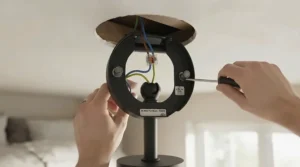
Buying the right fan is only half the job — poor installation is responsible for a huge share of the “quiet fan that isn’t quiet” complaints you’ll find in aggregated reviews. Here’s what actually matters in the first hour after your fan arrives. First, always mount to a properly rated ceiling box, not a standard light-fitting rose; a fan’s rotational mass needs dedicated support, and a wobbling fixture will generate rattle regardless of how good the motor is. Second, check blade balance before you finish the install — most kits include a small balancing weight kit, and clipping it to the lightest blade (identified by briefly running the fan and watching for wobble) can eliminate a surprising amount of low-frequency thrum.
Common first-30-days mistakes include over-tightening blade screws (which can warp thin ABS blades and introduce a faint clicking sound as they flex back), running the fan at maximum speed to “test” it rather than the lower speeds you’ll actually sleep with, and mounting the fan too close to a wardrobe or wall, which creates turbulence-driven noise as air recirculates awkwardly around obstacles. A quick maintenance habit worth adopting: dust blades every two to three months with a dry microfibre cloth, since even a light, uneven layer of dust can subtly shift blade balance over months of use and reintroduce noise you’d already eliminated.
Best Bedroom Fan for Sleeping: Real-World Scenarios
The light sleeper in a Victorian terrace. A converted terrace with 2.3-metre ceilings and thin party walls calls for a low-profile flush mount — the Ensenior 50cm is the natural fit here, keeping clearance safe while its DC motor avoids adding to an already noise-sensitive environment.
The couple with mismatched temperature preferences. When one partner runs hot and the other cold, a fan with genuinely granular speed control matters more than raw power — the Depuley’s six-speed app control lets each person nudge airflow without an argument over the remote at midnight.
The family in a larger, newer-build master bedroom. Bigger open-plan sleeping spaces with higher ceilings suit a larger blade span that can actually circulate the whole room — the Westinghouse Widespan’s greater reach avoids the “cool patch directly under the fan, stuffy everywhere else” problem smaller fans struggle with.
Common Mistakes When Buying a Silent Ceiling Fan for Bedroom
The single most common mistake is choosing based on price alone and skipping the decibel and blade-span checks entirely — a cheap fan with no stated noise rating and an undersized blade span for the room will almost always end up louder than a mid-range fan sized correctly. A close second is assuming “DC motor” automatically means “silent” without checking blade material and balance quality; a poorly balanced DC fan can still develop an audible wobble, even though the motor itself is quiet. Buyers also frequently underestimate installation quality as a noise factor, assuming any noise issue must be a faulty unit rather than a loose ceiling box or unbalanced blade — which means a five-minute rebalancing check gets skipped in favour of an unnecessary return. Finally, some buyers choose a fan based purely on aesthetics and end up with a blade span mismatched to their room, forcing the motor to work harder — and louder — than a correctly sized fan would need to.
Low Noise DC Ceiling Fan vs Traditional Alternatives
| Feature | Low Noise DC Ceiling Fan | Traditional AC Ceiling Fan | Portable/Pedestal Fan |
|---|---|---|---|
| Typical Noise Level | Below 35dB (low speed) | 45–55dB+ | 40–60dB depending on speed |
| Speed Settings | Typically 6 | Typically 3 | 3–5 |
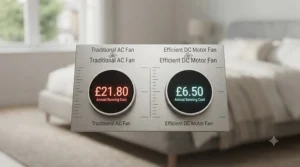
| Running Cost (est.) | Lower — roughly £7–10/year | Higher — roughly £25–30/year | Moderate, portable use only |
| Reversible Airflow | Yes, standard on most models | Rare | No |
| Best For | Bedrooms and night-time use | Living areas, budget installs | Temporary or spot cooling |
The gap in the table above is really a gap in underlying technology rather than price: a low noise DC ceiling fan achieves its quiet running and lower energy draw through the same electronic commutation that gives it finer speed control, while a traditional AC fan and a portable pedestal unit are both constrained by simpler, noisier motor designs. For a bedroom specifically, the running-cost saving is a genuine bonus, but it’s the decibel gap that should drive the decision — a fan you can’t sleep through isn’t saving you anything if you end up switching it off at 2am anyway.
Features That Actually Matter (And Those That Don’t)
Genuinely worth paying for: a stated decibel rating below 35dB, a proper six-speed DC motor with reverse function, and a UK-based support presence for replacement remotes. These directly affect whether the fan does its one job — quiet, effective cooling — reliably for years. Largely marketing noise: smartphone app control sounds impressive but adds a point of failure (Wi-Fi dependency) for a function a £5 remote already handles perfectly well, and elaborate multi-colour “ambience” lighting modes rarely get used beyond the first fortnight once the novelty wears off. Somewhere in between: integrated dimmable LED lighting is genuinely useful if it’s replacing your only ceiling light, but largely redundant if your bedroom already has separate lamps or a dedicated light fitting.
Long-Term Cost & Maintenance
Running a DC motor ceiling fan for roughly eight hours a night typically costs somewhere in the region of £7–10 a year at current UK electricity prices, against £25–30 for a comparable AC fan run the same amount — a saving that, admittedly, won’t transform your finances, but does mean the fan effectively pays back any price premium over an AC equivalent within two or three years through electricity savings alone. Maintenance costs are minimal: expect to budget for an occasional replacement remote battery, a light bulb or LED driver replacement roughly every five to eight years depending on usage, and — for fans without a long motor warranty — the possibility of bearing wear developing audible noise after four or five years of nightly use. Buying from a brand with an established UK Amazon presence, as flagged earlier for models like Depuley and Fantasia, makes replacement parts considerably easier to source than from a listing that might disappear from Amazon within a year or two.
Buyer’s Decision Framework
If your bedroom has a low ceiling under 2.4 metres, choose a flush-mount model like the Ensenior 50cm because downrod mounting simply isn’t safe or comfortable at that clearance. If you’re outfitting a large master bedroom or converted loft, choose a bigger blade span like the Westinghouse Widespan because smaller fans will leave parts of the room uncooled. If budget is the primary constraint and you just need genuine DC-motor quiet running, choose the Ovlaim 48″ or CJOY 42″, both of which deliver the core technology without the heritage-brand premium. If you want the longest-term reliability and are prepared to pay for it, choose the Fantasia Zeta DC, whose 10-year motor warranty is the strongest signal on this list that noise won’t creep back in after year three.
✨ Don’t Miss These Exclusive Deals!
🔍 Take your bedroom comfort to the next level with these carefully selected quiet DC motor ceiling fans. Click through to check current pricing and availability on Amazon UK — these picks could genuinely transform how well you sleep this summer.
Safety, Regulations & Ventilation Compliance
Ceiling fan installation in UK homes isn’t purely a DIY aesthetic choice — it intersects with building regulations around ventilation and electrical safety. Under Approved Document F, which governs ventilation requirements for dwellings in England, adequate air circulation is treated as a genuine health requirement rather than a nice-to-have, and a well-placed ceiling fan can support that requirement by keeping air moving rather than stagnating in a closed bedroom overnight. Electrically, any ceiling fan wired directly into a lighting circuit (rather than plugged in) falls under Part P of the Building Regulations, meaning the installation should be carried out or signed off by a competent, registered electrician — a detail worth budgeting for separately from the fan’s purchase price, particularly on older wiring in period properties.
Beyond regulation, there’s a genuine sleep-health case for getting this right: the Sleep Charity notes that a cool, quiet, well-ventilated room around 16–18°C supports better sleep quality, which is precisely the environment a correctly sized, properly balanced DC ceiling fan is designed to create. If noise or overheating has become a recurring problem for a child’s bedroom specifically, NHS-affiliated guidance on bedroom environments is a genuinely useful additional resource alongside choosing the right fan.
FAQ
❓ What decibel level is considered quiet for a bedroom ceiling fan?
❓ Is a DC motor ceiling fan worth the extra cost over AC?
❓ Can a wobbling ceiling fan be fixed without replacing it?
❓ What size ceiling fan is right for a standard UK bedroom?
❓ Do quiet DC ceiling fans need professional installation?
Conclusion
If there’s one takeaway worth carrying away from all this, it’s that “quiet” isn’t a single feature you can tick off a spec sheet — it’s the sum of motor technology, blade balance, correct sizing, and honest installation, all working together. A genuine DC motor gets you most of the way there, but a poorly matched or badly installed fan can still undo that advantage. Across the seven fans covered here, the Fantasia Zeta DC and Westinghouse Widespan represent the premium end for buyers who want long-term reliability and are prepared to pay for it, while the CJOY 42″ DC, Newday 42″ Silver, and Ovlaim 48″ White prove that genuinely quiet DC operation is achievable well under £100. The Ensenior 50cm and Depuley 52″ sit sensibly in between, each solving a specific problem — low ceilings and smart flexibility, respectively — better than a one-size-fits-all pick could.
Whichever you choose, the decibel rating, correct blade span for your room, and a properly balanced installation matter more than any single brand name. Get those three things right, and you should stop noticing the fan is even running — which, for a bedroom fixture, is precisely the point.
Recommended for You
- BBQ Area Ceiling Fans 2026: 7 Best Picks to Beat the Smoke
- 7 Best Alfresco Dining Ceiling Fans for UK Gardens in 2026
- Outdoor Dining Fans: 7 Best Picks to Beat the Heat 2026
Disclaimer: This article contains affiliate links. As an Amazon Associate, I earn from qualifying purchases. If you purchase products through these links, we may earn a small commission at no additional cost to you.
✨ Found this helpful? Share it with your friends! 💬🤗
