
In This Article
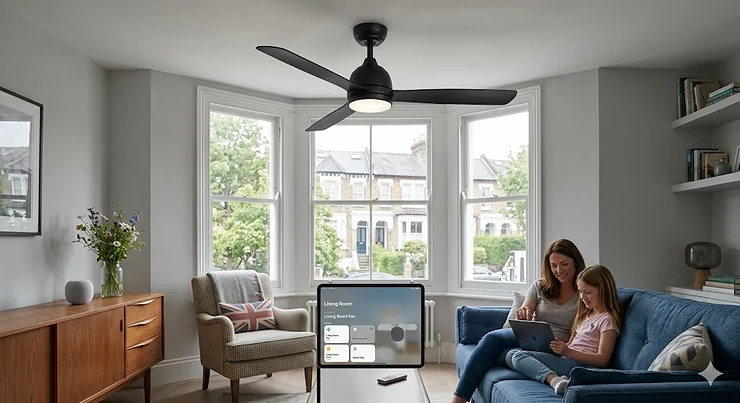
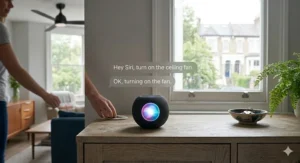
A homekit ceiling fan transforms your ordinary ceiling fan into a sophisticated climate control device that responds to your voice, schedules itself around your routine, and integrates seamlessly with your Apple ecosystem. Rather than fumbling for pull chains in the dark or hunting for that remote control you last saw three weeks ago, you simply tell Siri to cool things down whilst you’re still settling into the sofa with your evening cuppa.
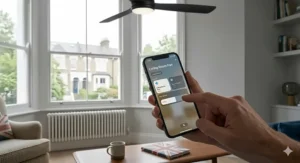
The appeal extends beyond mere convenience. These fans connect to your iPhone, iPad, or Apple Watch through Apple’s Home app, creating possibilities that traditional fans simply can’t match. Imagine your bedroom fan automatically increasing speed when your HomeKit temperature sensor detects the room’s heating up on a stuffy August afternoon, or the living room fan powering down when you leave for work. This level of automation isn’t futuristic fantasy—it’s standard functionality for homekit ceiling fan systems in 2026.
What distinguishes HomeKit-compatible fans from other smart ceiling fans flooding the market? Primarily, it’s the tight integration with Apple’s ecosystem and the robust privacy protections Apple demands from manufacturers. Whilst Alexa and Google Home fans communicate with cloud servers scattered across the globe, HomeKit processes most automation locally on your home hub, keeping your cooling preferences between you and your devices. For UK buyers who value both convenience and data privacy, this distinction matters rather more than marketing materials might suggest.
The UK market presents unique challenges for homekit ceiling fan adoption. Our homes tend to be smaller than American properties, with ceiling heights that sometimes make installation more complex. British weather rarely demands the cooling power Americans expect from ceiling fans, yet our mild climate creates perfect conditions for year-round air circulation—particularly useful for redistributing heat from radiators during our damp, chilly winters. According to research on energy efficiency, ceiling fans with reversible motors can reduce heating costs by allowing you to raise thermostat settings without sacrificing comfort. A homekit ceiling fan with reversible motor operation becomes a genuinely practical investment, not just a summer luxury.
Quick Comparison Table: Top HomeKit Ceiling Fan Solutions for UK Homes
| Solution Type | Price Range (£) | Installation | Native HomeKit | UK Availability | Best For |
|---|---|---|---|---|---|
| Hunter Symphony | £400-£550 | Moderate | ✅ Yes | Import required | Premium installations, large rooms |
| Bond Bridge Hub | £80-£130 | Plug & Play | ❌ Via Homebridge | Amazon.co.uk Prime | Existing RF/IR fans, renters |
| Lutron Caséta | £70-£110 + £80 hub | Moderate | ✅ Yes | Amazon Global | Wall switch upgrade |
| WiFi Controllers | £25-£55 | DIY Electrical | ❌ Via Homebridge | Amazon.co.uk Prime | Budget-conscious DIYers |
| Hunter Aerodyne | £180-£250 | Moderate | ✅ Yes | Import required | Mid-range complete fans |
| UK Smart Fans (RGB) | £120-£200 | Moderate | ❌ Via Homebridge | Amazon.co.uk Prime | 230V compatibility, local warranty |
| MELCloud Fans | £300-£450 | Professional | ❌ Via bridges | HVAC installers | Heat pump integration |
💬 Just one click — help others make better buying decisions too! 😊
Top 7 HomeKit Ceiling Fan Solutions: Expert Analysis for UK Homes
1. Bond Bridge – The Universal Smart Hub Solution
The Bond Bridge represents the most versatile path to homekit ceiling fan functionality for UK homes, particularly those with existing remote-controlled fans. This compact hub device learns the infrared or radio frequency signals from your current fan remote, then translates them into commands your iPhone can send through the Bond Home app, which integrates with Apple HomeKit via Homebridge.
Here’s what makes the Bond Bridge rather brilliant for British applications: it requires absolutely no electrical work. You plug it into a standard UK socket, download the app, point your existing remote at the device, and press buttons whilst the Bond learns each command. Within five minutes, your ceiling fan speaks the language of your smart home. The device can control up to thirty fans from a central location with a range covering approximately 230 square metres—more than adequate for most UK homes, even those stubborn Victorian conversions with thick walls.
In my experience, what most UK buyers overlook about this approach is the preservation of existing functionality. Your original remote continues working exactly as before, whilst simultaneously gaining app control and voice commands through Siri. This redundancy proves invaluable during the inevitable moments when technology decides to have a sulk. The Bond Bridge also supports motorised blinds and electric fireplaces, making it a Swiss Army knife for smart home integration rather than a one-trick pony.
UK customers report reliable performance across brands including MinkaAire, Hampton Bay, and the various generic ceiling fans sold through B&Q and Screwfix. The device works with both IR and RF remotes, covering virtually every fan on the UK market. One caveat worth noting: the Bond Bridge itself doesn’t natively support HomeKit certification from Apple. Integration requires running Homebridge on a Raspberry Pi or similar always-on device—a minor technical hurdle that might deter less tech-savvy users but presents no real difficulty for anyone comfortable following online tutorials.
Pros:
✅ No electrical work required—plug and play installation
✅ Controls up to 30 devices including fans, blinds, and fireplaces
✅ Works with virtually all RF/IR remote-controlled fans
✅ Existing remotes continue functioning alongside smart control
✅ Wide UK availability through Amazon.co.uk with Prime delivery
Cons:
❌ Requires Homebridge for genuine HomeKit integration (not native)
❌ Another device requiring socket space and Wi-Fi bandwidth
Price range: Around £80-£130 depending on model (standard Bridge vs Pro version). The Pro model offers extended range and Ethernet connectivity for more robust network integration.
UK Value Verdict: For UK homes with existing remote-controlled ceiling fans, the Bond Bridge delivers excellent value. The initial learning curve pays dividends across multiple devices, and avoiding electrician call-out fees (typically £60-£120 per visit in the UK) makes this investment recoup quickly.

2. Hunter Symphony – Premium Integrated HomeKit Fan
The Hunter Symphony stands as one of the few complete ceiling fan units with built-in HomeKit certification, representing Hunter’s flagship approach to smart home integration. This three-blade beauty features curved blade tips that set it apart aesthetically whilst delivering impressive air circulation for large UK living spaces.
With a 132cm (52-inch) blade span, the Symphony handles substantial rooms—think open-plan kitchen-diners or converted loft spaces—with authority. The integrated LED lighting provides ample illumination without resorting to separate ceiling fixtures, whilst the dimmable function lets you set ambient lighting through the same Home app controlling fan speed. Hunter’s SureSpeed guarantee promises air velocity 20% higher than competitors, a claim that translates to effective cooling even at lower, quieter speed settings.
What the spec sheet won’t tell you is how well this fan handles our British climate’s year-round demands. The reversible DC motor proves genuinely useful in UK homes—upward airflow during winter redistributes heat from radiators more efficiently than you’d expect, potentially shaving a degree or two off thermostat settings. Over a heating season, that efficiency compounds into noticeable energy savings. The whisper-quiet operation at medium speeds means you’ll actually use it year-round rather than tolerating it only during heat waves.
The substantial challenge for UK buyers centres on availability. Hunter doesn’t maintain robust UK distribution channels, meaning you’re importing from American retailers or speciality European suppliers. That introduces customs duties (typically 20% VAT plus potential import duty on electronics), extended delivery times, and warranty complications should anything go wrong. You’ll also need to verify the electrical specifications—Hunter fans designed for the US market operate on 120V, whilst UK electrical systems provide 230V. Some models offer dual-voltage capability, but confirming this before purchase isn’t optional.
Pros:
✅ Native HomeKit certification requiring no additional hubs or bridges
✅ Three-speed DC motor with reversible operation for year-round use
✅ Integrated dimmable LED lighting eliminates separate fixtures
✅ Whisper-quiet operation even at higher speeds
✅ Premium build quality with Hunter’s established reputation
Cons:
❌ Limited UK availability requiring import arrangements
❌ Voltage compatibility must be verified for UK electrical systems (230V)
❌ Higher price point when shipping and duties are factored in
❌ Warranty support more complicated for imported units
Price range: Around £400-£550 when import costs and shipping are included. US retail pricing sits around $299-$399, but UK buyers face additional expenses.
UK Value Verdict: For new-build homes or major renovations where a premium ceiling fan makes sense anyway, the Hunter Symphony justifies its cost through build quality and seamless HomeKit integration. For most UK buyers, the import complications and voltage concerns make retrofit solutions more practical unless you’re particularly committed to having a complete HomeKit-certified unit.
3. Lutron Caséta Fan Speed Control – Professional Wall Switch Solution
The Lutron Caséta Fan Speed Control approaches homekit ceiling fan functionality from an entirely different angle—replacing your existing wall switch rather than the fan itself. This in-wall controller provides four-speed fan control plus off, with a dedicated favourite button that sets your preferred speed with a single press.
For UK homeowners comfortable with basic electrical work (or willing to hire a spark for an hour), this solution elegantly solves the smart fan problem without requiring a ceiling fan replacement. The Caséta system uses Lutron’s proprietary Clear Connect RF technology rather than relying on Wi-Fi, resulting in more reliable performance and lower latency than many Wi-Fi-based alternatives. Once you’ve added the Caséta Smart Bridge hub (sold separately, around £70-£90), your fan controller automatically appears in Apple’s Home app with full Siri voice control.
What makes this particularly clever for UK applications is the ability to create a three-way switch configuration without additional wiring. You can mount Lutron’s Pico wireless remote in a second location using a battery-free, wall-mounting bracket—perfect for the opposite side of a bedroom or at the top of stairs. This replicates traditional three-way switching without the electrical work that would normally require fishing cables through walls and ceilings. In older UK homes with solid walls and impossible-to-access ceiling voids, this wireless approach feels rather revolutionary.
The primary limitation worth understanding upfront: the Caséta fan control manages only the fan, not integrated lighting. If your ceiling fan includes a light kit, you’ll need a separate Caséta dimmer switch on a second circuit to control illumination. This doubles the cost and requires your fan to have separate fan and light wiring—not all UK ceiling fans are wired this way. Additionally, Lutron Caséta products are designed primarily for the North American market, meaning UK availability comes through Amazon Global Store or speciality importers rather than local retailers.
Pros:
✅ Professional-grade reliability using dedicated RF technology, not Wi-Fi
✅ Four-speed control with programmable favourite setting
✅ Creates wireless three-way switching without additional wiring
✅ Integrates with broader Caséta ecosystem for whole-home automation
✅ Works with existing ceiling fans—no fan replacement required
Cons:
❌ Requires Caséta Smart Bridge hub (additional £70-£90 investment)
❌ Controls fan only—separate dimmer needed for lighting control
❌ Installation requires basic electrical knowledge or professional help
❌ Limited UK availability through specialist importers
Price range: Around £70-£110 for the fan control switch alone. Budget an additional £70-£90 for the required Smart Bridge hub unless you already own Caséta products.
UK Value Verdict: For homeowners building a Caséta-based smart home system, adding fan control represents a logical expansion. As a standalone solution for a single ceiling fan, the combined cost of switch and hub makes less financial sense unless you value Lutron’s superior reliability and plan to expand the system over time.
4. Smart WiFi Universal Ceiling Fan Controller Kit – Budget-Friendly Retrofit
The Smart WiFi Universal Ceiling Fan Controller Kit represents the accessible end of the market—compact receiver modules that install inside your fan’s canopy, adding smart functionality without replacing the entire fan or modifying wall switches. These controllers, available from numerous manufacturers on Amazon.co.uk under brands like YukiHalu, 53T, and generic offerings, typically cost between £25-£55.
The installation process requires basic electrical confidence but nothing approaching professional-level complexity. You access the wiring inside your fan’s canopy (the dome covering the motor assembly), connect the controller’s wires to the appropriate fan circuits following a straightforward wiring diagram, then tuck the compact receiver (typically around 11cm × 5cm × 2.5cm) into the canopy and seal everything back up. Set your fan’s pull chains to maximum speed, and control thereafter happens through the included RF remote, smartphone app, and voice commands via Alexa or Google Assistant.
Here’s where UK buyers need to pay attention: these controllers don’t natively support HomeKit. Like the Bond Bridge, genuine HomeKit integration requires running Homebridge—the open-source bridge software that translates between non-HomeKit devices and Apple’s ecosystem. This isn’t difficult for anyone comfortable following tutorials, but it does require a Raspberry Pi or always-on computer running the Homebridge software. Once configured, these budget controllers deliver surprisingly robust performance, controlling fan speed (typically three settings) and lighting on/off functions through Siri voice commands and the Home app.
The compact dimensions suit most UK ceiling fans, though it’s worth measuring your fan’s canopy interior before purchasing. Some vintage or minimalist fans lack sufficient space to accommodate even these small receivers. Most controllers operate the integrated light as simple on/off rather than dimmable—acceptable for bedrooms but potentially limiting for living spaces where you might want ambient lighting control.
Pros:
✅ Remarkable value—full smart functionality for £25-£55
✅ Compact receivers fit most UK ceiling fan canopies
✅ Works with existing fans—no replacement required
✅ Included RF remote provides backup control
✅ Wide UK availability with next-day Prime delivery
Cons:
❌ Requires Homebridge for genuine HomeKit integration
❌ Installation requires basic electrical knowledge
❌ Light control typically on/off only, no dimming
❌ Build quality varies significantly between manufacturers
Price range: Around £25-£55 depending on features and manufacturer. Premium versions with dimming capability cost £45-£65.
UK Value Verdict: For budget-conscious UK buyers comfortable with basic DIY and willing to set up Homebridge, these controllers deliver exceptional value. The £30-£40 price point means you can equip multiple fans for less than a single premium solution costs, making whole-home ceiling fan automation surprisingly affordable.
5. Hunter Aerodyne – Mid-Range HomeKit Performance
The Hunter Aerodyne positions itself as Hunter’s more affordable entry into the HomeKit ceiling fan market whilst maintaining the build quality and performance characteristics the brand established over 135 years. With a 132cm (52-inch) four-blade design, this fan delivers what Hunter calls 20% higher airflow velocity than competitors—a marketing claim that, in practice, translates to effective cooling without resorting to jet-engine noise levels.
The matte black and matte silver finish options suit contemporary UK home aesthetics nicely, avoiding the brass-and-faux-wood aesthetic that dominated ceiling fans in the 1990s. The integrated LED light provides ample illumination for bedrooms or living spaces, whilst the included remote control offers traditional operation for anyone who prefers tactile buttons to voice commands. Hunter’s SIMPLEconnect Wi-Fi technology integrates with HomeKit, Alexa, and Google Home simultaneously—useful flexibility for households with mixed smart home ecosystems.
What distinguishes the Aerodyne from the pricier Symphony centres primarily on aesthetics and blade design rather than functional capability. The four-blade configuration versus Symphony’s three blades affects visual appearance more than cooling performance. Both fans operate at similar noise levels and offer comparable speed control granularity. If your priority is HomeKit functionality rather than making a design statement, the Aerodyne delivers equivalent smart features for substantially less money.
The same availability challenges plague this model as other Hunter HomeKit fans. UK buyers face import requirements, voltage verification, and shipping costs that complicate what should be a straightforward purchase. Hunter’s US retail price of around $180 becomes £180-£250 by the time you’ve navigated international shipping and customs procedures. For that investment, you’re receiving a quality product, but the hassle factor shouldn’t be dismissed lightly.
Pros:
✅ Native HomeKit certification plus Alexa and Google Home support
✅ Competitive pricing compared to other HomeKit-certified complete fans
✅ Four-speed reversible motor handles UK climate year-round
✅ Modern aesthetic suits contemporary British home interiors
✅ Hunter build quality backed by established reputation
Cons:
❌ Import required for UK buyers with associated complications
❌ Voltage compatibility must be confirmed before purchase
❌ Installation complexity comparable to any ceiling fan replacement
❌ UK warranty support more challenging than domestically purchased products
Price range: Around £180-£250 including shipping and duties, though prices fluctuate based on shipping costs and exchange rates.
UK Value Verdict: The Aerodyne offers solid value if you’re specifically committed to a complete HomeKit-certified ceiling fan unit and can navigate import procedures. For most UK buyers, the aggravation of international purchasing and voltage verification makes retrofit solutions more sensible unless you’re already comfortable importing American smart home products.
6. Homebridge-Compatible Smart Fan with RGB Lighting – UK Market Alternative
Recognising that genuine HomeKit-certified ceiling fans remain elusive in UK retail channels, several manufacturers have developed smart ceiling fans specifically for the British and European markets that work beautifully with HomeKit through Homebridge integration. These fans, available on Amazon.co.uk from brands like MUMENG, offer complete fan units with built-in Wi-Fi controllers and RGB ambient lighting—features that appeal to UK buyers seeking both functionality and atmosphere.
These fans typically operate on 230V UK electrical systems (no voltage conversion required), come with UK plugs on associated controllers, and ship from UK warehouses with next-day Prime delivery. The integrated RGB lighting adds visual interest beyond simple white LED illumination—useful for children’s rooms or entertainment spaces where coloured ambient lighting enhances the atmosphere. Most models include remote controls, smartphone app connectivity via Smart Life or Tuya platforms, and voice control through Alexa and Google Assistant natively.
The Homebridge integration path means you’re running bridge software to translate between the fan’s native protocols and HomeKit. This isn’t official Apple certification, but the functional result feels identical once configured. You tell Siri to set the bedroom fan to medium speed, and it happens. You create automation rules in the Home app that turn the fan on when temperature exceeds 24°C, and it works. The lack of official certification matters more from a philosophical standpoint than a practical one—Apple enthusiasts who demand every device bear the “Works with HomeKit” badge may object, whilst pragmatists simply appreciate that it functions as intended.
Build quality varies significantly across manufacturers in this segment. Some units deliver surprisingly robust construction for £120-£180, whilst others feel rather flimsy despite similar pricing. Customer reviews become your most reliable guide, with particular attention to comments from UK buyers about noise levels, wobbling during operation, and longevity beyond the first six months. The RGB lighting, whilst visually appealing, occasionally suffers from colour accuracy issues—reds might lean orange, blues trend towards purple—but for ambient mood lighting rather than precision colour work, this rarely causes concern.
Pros:
✅ Available on Amazon.co.uk with Prime delivery—no import hassles
✅ 230V UK electrical compatibility confirmed out of box
✅ RGB ambient lighting adds visual interest and flexibility
✅ Competitive pricing compared to importing American alternatives
✅ UK-based customer service and warranty support
Cons:
❌ Requires Homebridge—not officially Apple HomeKit certified
❌ Build quality varies significantly between manufacturers
❌ RGB colour accuracy inconsistent across products
❌ Less established brands with limited long-term reliability data
Price range: Around £120-£200 for complete fan units with RGB lighting and smart controls.
UK Value Verdict: For UK buyers who want a complete smart ceiling fan without import complications, these represent practical compromises. The Homebridge requirement adds a small technical hurdle, but the convenience of UK voltage compatibility, local warranty support, and next-day delivery offsets this for many buyers. Research specific models thoroughly through recent UK customer reviews before purchasing.
7. MELCloud/Mitsubishi Electric Compatible Fans – Premium HVAC Integration
For UK homeowners with Mitsubishi Electric heat pump systems or those planning comprehensive climate control installations, MELCloud-compatible ceiling fans represent an intriguing option that integrates ceiling fan operation with broader HVAC management. Whilst not HomeKit-certified in the traditional sense, these fans connect to Mitsubishi’s MELCloud platform, which can then integrate with HomeKit through third-party bridges or IFTTT automation.
This approach makes particular sense in UK new-builds or retrofit projects where air source heat pumps are replacing traditional gas boilers. The ceiling fan works in concert with the heat pump system, circulating conditioned air more efficiently and allowing heat pump thermostats to achieve target temperatures with less energy input. During UK winters, this coordination proves particularly valuable—the heat pump warms the air, whilst the ceiling fan in reverse mode redistributes that warmth from ceiling level back down to occupied spaces.
The primary audience for this solution comprises homeowners investing in comprehensive smart climate control rather than those simply wanting to add HomeKit functionality to an existing ceiling fan. If you’re already committed to Mitsubishi Electric HVAC equipment and the MELCloud ecosystem, adding compatible ceiling fans creates a cohesive system. If you’re simply trying to make a standalone ceiling fan work with Siri, this represents massive overkill with costs to match.
UK availability centres around specialist HVAC installers and trade suppliers rather than consumer retail channels. Pricing reflects the professional installation market, with fans starting around £300-£450 before installation labour. These aren’t DIY-friendly products—they’re designed for integration into professionally specified HVAC systems where the installer handles commissioning and MELCloud configuration.
Pros:
✅ Integrates with broader HVAC control for optimised energy efficiency
✅ Professional-grade components designed for longevity
✅ Works seamlessly with Mitsubishi Electric heat pump systems
✅ UK installer network provides professional setup and support
✅ Energy savings through coordinated climate control
Cons:
❌ Premium pricing reflecting professional installation market
❌ Requires comprehensive HVAC system to justify investment
❌ Not consumer DIY-friendly products
❌ HomeKit integration indirect through third-party bridges
Price range: Around £300-£450 for fan units, plus professional installation costs (typically £200-£400 depending on complexity).
UK Value Verdict: This solution makes sense only within the context of comprehensive HVAC system installations. For homeowners building new properties or undertaking major renovations with air source heat pumps and professional climate control systems, the integration value justifies premium pricing. For standalone ceiling fan applications, look elsewhere.
Making Any Ceiling Fan Work with Siri: The Homebridge Solution
For UK homeowners frustrated by the scarcity of officially certified HomeKit ceiling fans, Homebridge emerges as the practical bridge between what’s available in the British market and what Apple’s ecosystem demands. This open-source software project, running on a Raspberry Pi or similar always-on device, translates between the protocols used by thousands of smart home products and Apple’s HomeKit framework.
The setup process requires modest technical confidence but nothing approaching programming expertise. You install Homebridge on a Raspberry Pi (£35-£60 for the hardware), follow well-documented configuration guides to add plugins for your specific ceiling fan controller (Bond Bridge, Smart Life devices, or other WiFi controllers), and within an hour or two, your ceiling fan appears in Apple’s Home app as though it were officially certified. From that point forward, the experience feels identical to genuine HomeKit devices—Siri responds to voice commands, automation rules trigger based on temperature or time, and control from your iPhone or iPad works seamlessly.
The UK Homebridge community has grown substantially, with dedicated forums and Discord channels where British users share configuration files and troubleshooting advice specific to products available on Amazon.co.uk. This collaborative knowledge base dramatically reduces the learning curve for newcomers. Rather than deciphering generic documentation, you can find specific guidance for the exact Smart Life ceiling fan controller you purchased from Amazon yesterday.
One consideration worth acknowledging: Homebridge represents an enthusiast solution rather than a consumer product. When issues arise—perhaps after a HomeKit update or Homebridge plugin revision—you’re troubleshooting through community forums rather than ringing a customer support line. For technically inclined homeowners who enjoy tinkering with smart home configurations, this presents no obstacle. For those who simply want things to work without fuss, official HomeKit certification provides peace of mind that Homebridge cannot fully replicate, regardless of how well it functions.
How to Choose the Right HomeKit Ceiling Fan Solution for Your UK Home
Selecting among homekit ceiling fan options requires evaluating several factors beyond simple price comparisons. The most important decision centres on whether you need a complete ceiling fan replacement or can retrofit your existing fan with smart controls. This choice cascades through every subsequent consideration.
Room Size and Ceiling Height dictate minimum blade span requirements. UK building regulations mandate minimum ceiling heights of 2.3 metres for habitable rooms, with practical ceiling fan installation requiring roughly 2.4 metres to maintain adequate clearance. For rooms under 12 square metres, 106cm (42-inch) fans suffice. Medium rooms between 12-18 square metres benefit from 132cm (52-inch) spans. Larger open-plan spaces exceeding 18 square metres demand 137cm (54-inch) or larger fans for effective air circulation. Measure your ceiling height precisely—British homes with 2.3-metre ceilings might require low-profile mounting rather than standard downrod installations.
Electrical Configuration matters profoundly for retrofit controllers. Some UK ceiling fans separate fan and light circuits with distinct wiring, allowing independent smart control of each function. Others combine fan and light on a single circuit, limiting control granularity. Before purchasing any retrofit solution, access your fan canopy and photograph the wiring configuration. If you see separate wires for fan motor and light fixture, virtually any smart controller works. If a single wire feeds both, your options narrow to hub-based solutions like Bond Bridge that work with the existing remote control.
Technical Comfort Level honestly assessed saves frustration later. Installing a smart controller inside a fan canopy requires shutting off the circuit breaker, connecting wires according to diagrams, and testing functionality before sealing everything up. If this prospect induces anxiety, hub-based solutions requiring no electrical work (Bond Bridge) or professionally installed options (Lutron Caséta through an electrician) make better choices. Don’t let enthusiasm for smart home technology override realistic assessment of your DIY capabilities.
Budget Constraints guide solutions across a spectrum from £30 retrofit controllers to £500+ complete imported fans. Establish a realistic budget including installation costs if you’re hiring help. A £40 WiFi controller saves money initially but requires £80-£120 electrician fees unless you’re installing it yourself. A £90 Bond Bridge costs more upfront but needs zero installation, potentially becoming the more economical choice. Factor in the Homebridge requirement for non-certified solutions—if you lack a Raspberry Pi, add £35-£60 to your budget.
Future-Proofing Considerations shouldn’t be ignored. Will you expand your smart home ecosystem over time? If so, solutions that integrate with broader platforms (Lutron Caséta for whole-home lighting control, or Bond Bridge for multiple RF devices) deliver better long-term value than standalone fan controllers. Are you likely to move house within a few years? Plug-and-play solutions travel with you, whilst installed controllers typically stay with the property.
Common Mistakes When Buying HomeKit Ceiling Fans in the UK
The enthusiasm for smart home integration frequently leads UK buyers into predictable pitfalls. Understanding these common errors helps avoid expensive disappointments.
Assuming US Products Work on UK Electrical Systems tops the mistake list. American ceiling fans operate on 120V electrical systems, whilst UK homes provide 230V. Some Hunter fans offer dual-voltage capability, but many don’t. Plugging a 120V fan into a 230V circuit doesn’t simply fail to work—it risks damaging the motor or creating fire hazards. Always verify voltage compatibility explicitly before importing American ceiling fans. If the product specifications don’t clearly state “100-240V” compatibility, assume it’s 120V-only and unsuitable for UK use. UK electrical safety regulations mandate proper voltage matching for all installed electrical equipment.
Overlooking Ceiling Height Requirements creates safety issues and disappointing performance. Ceiling fans require minimum clearances for safe operation—typically 2.1 metres from floor to blade tips, plus 30cm from blade tips to ceiling. UK homes, particularly Victorian conversions and older properties, sometimes barely meet these requirements. Measure precisely before purchasing. Low-profile mounting options exist for challenging installations, but they’re not universal across all fan models.
Ignoring Canopy Space Limitations frustrates buyers who’ve already purchased WiFi controllers before confirming they’ll fit. Some UK ceiling fans, particularly minimalist modern designs, offer minimal canopy volume. A smart controller measuring 11cm × 5cm might not physically fit inside a canopy with 10cm diameter and 4cm depth. Always measure your existing fan’s canopy interior before ordering retrofit controllers, and compare against the new controller’s published dimensions.
Underestimating Setup Complexity for non-technical buyers leads to abandoned projects. If phrases like “SSH into your Raspberry Pi” or “configure JSON files” induce confusion, solutions requiring Homebridge might exceed your comfort level. Hub-based options requiring only smartphone apps (Bond Bridge with Homebridge pre-configured) or professionally installed controllers (Lutron Caséta) better suit less technical users. There’s no shame in acknowledging technical limitations—better to choose an appropriate solution than struggle with something beyond your skillset.
Failing to Research UK Return Policies for imported products creates expensive mistakes. Items imported from American retailers often can’t be returned through Amazon UK’s generous return programme. If your imported Hunter fan arrives with voltage incompatibility or doesn’t fit your ceiling height, you might face return shipping costs exceeding £50-£80 to send it back to the US, plus potential restocking fees. UK-sourced products, even if slightly more expensive initially, include Consumer Rights Act 2015 protections and hassle-free returns that imported products don’t offer.
Believing Marketing Claims Without Verification leads to disappointment with exaggerated performance specifications. When a manufacturer claims “50% more airflow than competitors,” ask yourself: compared to which specific competitors? Measured under what conditions? Independent testing data from Which? magazine or similar UK consumer organisations provides more reliable performance assessment than manufacturer marketing materials. UK buyers particularly benefit from seeking British customer reviews rather than American ones—our climate, room sizes, and usage patterns differ sufficiently that US experiences don’t always translate.
Installation Guide: Adding HomeKit Control to Your UK Ceiling Fan
For UK homeowners tackling retrofit installations, understanding the process before beginning prevents surprises. This guide covers WiFi controller installation inside a fan canopy—the most common DIY approach.
Safety First – Electrical Isolation
Before touching any wires, locate your consumer unit (fuse box) and switch off the circuit breaker controlling your ceiling fan. Modern UK consumer units label circuits, but if yours doesn’t, you’ll need to identify the correct breaker through trial and error. Once you’ve switched off what you believe is the correct breaker, test the fan with its existing controls to confirm power is truly off. Never assume—verify with a non-contact voltage tester (£8-£15 from Screwfix) or by attempting to turn on the fan.
Accessing the Canopy
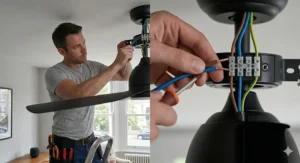
Most UK ceiling fans secure the canopy (the dome covering the motor assembly) with three small screws around the perimeter. Remove these screws carefully—they’re easy to drop, and finding a tiny screw on carpet proves remarkably difficult. Support the canopy as you remove the final screw to prevent it dropping. Once opened, you’ll see the mounting bracket, electrical wiring, and any existing controls.
Understanding UK Fan Wiring
Typical UK ceiling fan wiring includes:
- Earth wire (green/yellow): Safety ground, usually connected to the mounting bracket
- Neutral wire (blue): Return path for electrical current
- Live wire (brown): Supplies power to the fan
- Separate light circuit (if present): Additional brown and blue wires for light fixture
Your smart controller will have corresponding wires, though colour coding might differ slightly. Most controllers include wiring diagrams showing which controller wires connect to which fan wires. Follow these diagrams precisely—incorrect connections can damage the controller or fan motor.
Installing the Smart Controller
Connect the controller’s wires to the corresponding fan wires using the supplied wire connectors (typically push-in connectors or twist-on wire nuts). Ensure connections are secure—gently tug each wire to confirm it won’t pull free. Most controllers include sticky mounting pads or small brackets for securing the controller module inside the canopy. Position the controller to leave adequate space for closing the canopy without pinching wires.
Before sealing everything up, restore power at the consumer unit and test functionality with the controller’s smartphone app. Verify all fan speeds work correctly and lighting operates as expected. Once confirmed, switch power off again, carefully tuck wiring into the canopy, and secure the cover with its mounting screws.
Configuring Homebridge Integration
With the physical installation complete and the fan responding to its native app (Smart Life, Tuya, or similar), configure Homebridge to expose the fan to HomeKit. This involves adding the appropriate plugin through Homebridge’s web interface, entering your Smart Life or Tuya account credentials, and allowing the plugin to discover your newly installed fan controller. Within minutes, your ceiling fan appears in Apple’s Home app, ready for Siri voice commands and automation rules.
UK Building Regulations Compliance
Whilst replacing a ceiling fan or installing smart controllers inside existing fans doesn’t typically require Building Regulations approval in England and Wales, electrical work must comply with BS 7671 wiring regulations. If you’re not confident in your electrical competency, hire a qualified electrician who can issue a Minor Electrical Installation Works Certificate confirming compliance. This documentation proves valuable for home insurance purposes and when selling your property.
Real-World Performance: HomeKit Ceiling Fans in British Climate
The mild, damp British climate creates usage patterns for ceiling fans rather different from American or Australian contexts. Understanding these differences helps set realistic expectations for homekit ceiling fan performance in UK homes.
Summer Cooling in UK Context
British summers rarely deliver the sustained heat that makes ceiling fans essential in warmer climates. Our typical summer sees temperatures between 18-24°C, with occasional heat waves pushing towards 28-32°C for a few days. During normal summer conditions, a ceiling fan set to low or medium speed provides subtle air movement that improves comfort without the aggressive cooling Americans expect. This gentler airflow suits UK sensibilities—we’re not accustomed to constant breeze, so high-speed operation often feels uncomfortable rather than refreshing.
The HomeKit automation potential shines during those occasional heat waves. Configure your temperature sensor to trigger the bedroom fan when temperature exceeds 24°C at night, ensuring comfortable sleep without leaving the fan running constantly. This targeted activation saves energy whilst delivering cooling precisely when needed. British summer nights cool substantially, so scheduling the fan to reduce speed automatically at 2AM prevents waking up chilled at 4AM when temperature has dropped to 16°C.
Winter Heating Efficiency
This represents where ceiling fans deliver surprising value in UK homes. Our heating season extends from October through April—seven months when warm air from radiators rises to ceiling level whilst floor-level temperatures remain uncomfortably cool. Running ceiling fans in reverse (clockwise when viewed from below) redistributes this stratified air without creating uncomfortable drafts.
The energy savings from improved heat distribution can reduce heating costs by 5-10% over a winter season. For an average UK household spending £1,500-£2,000 annually on heating, this represents £75-£200 saved—enough to recoup the cost of a smart fan controller within 6-18 months. Energy efficiency guidance confirms that ENERGY STAR certified ceiling fans can be up to 60% more efficient than conventional models, with proper use alongside heating systems delivering measurable savings. HomeKit automation enhances this by running fans only when heating is active, detected through integration with smart thermostats or timed schedules matching your heating periods.
Damp Weather Considerations
British homes contend with persistent dampness far more than American properties. Ceiling fans assist with air circulation that reduces condensation on windows and prevents that musty smell that develops in poorly ventilated rooms. Running fans at low speed during autumn and spring maintains air movement that helps damp evaporate rather than settling into soft furnishings and causing mould.
Smart scheduling becomes particularly useful here—configure your bathroom or kitchen fan to run for 30 minutes after morning showers or cooking sessions, when humidity peaks. This automated damp management happens invisibly in the background, requiring no conscious intervention but delivering meaningful air quality improvements.
Frequently Asked Questions About HomeKit Ceiling Fans UK
❓ Can I use American HomeKit ceiling fans in the UK?
❓ Do I need a neutral wire for smart ceiling fan controllers?
❓ Will HomeKit ceiling fans work if my internet connection drops?
❓ Can I control multiple ceiling fans independently with HomeKit?
❓ Are there running costs for HomeKit ceiling fans beyond electricity?
Conclusion: Finding Your Ideal HomeKit Ceiling Fan Solution
The landscape for homekit ceiling fan options in the UK presents challenges absent in American markets. Official HomeKit-certified ceiling fans remain scarce in British retail channels, requiring import arrangements that add complexity and cost. However, this apparent limitation opens opportunities for creative solutions that often deliver superior value whilst maintaining the HomeKit functionality UK buyers seek.
For most British homeowners, retrofit approaches make more practical and economic sense than importing complete ceiling fan units. The Bond Bridge emerges as particularly compelling for homes with existing remote-controlled fans, offering plug-and-play convenience without electrical work. Budget-conscious buyers comfortable with basic DIY find excellent value in £30-£50 WiFi controllers that install inside fan canopies, delivering smart control for a fraction of premium solutions’ cost. Those building comprehensive smart home systems might prefer Lutron Caséta’s professional-grade reliability, despite the higher initial investment.
The Homebridge requirement for most UK-available solutions represents a minor technical hurdle rather than a genuine obstacle. The British Homebridge community provides robust support, sharing configuration files and troubleshooting guidance specific to products available on Amazon.co.uk. Within an afternoon’s effort, even moderately technical homeowners can establish stable Homebridge installations that run reliably for years with minimal maintenance.
Whatever solution you choose, the transformation from pull-chain ceiling fans to Siri-controlled climate management genuinely improves daily life. The convenience of voice commands whilst your hands are occupied cooking dinner, the energy savings from automated winter heat redistribution, the comfort of bedroom fans that adjust speed based on temperature—these benefits compound over time, justifying the initial investment through enhanced comfort and reduced energy costs.
The UK market will likely see improved HomeKit ceiling fan availability as Apple’s smart home ecosystem matures and British consumer demand increases. Until then, the solutions outlined here deliver functional HomeKit integration through practical workarounds that respect both the realities of UK electrical systems and the constraints of British retail channels.
Recommended for You
- 7 Best Voice Command Ceiling Fans UK 2026 | Save £150 Yearly
- 7 Best IoT Ceiling Fans UK 2026 | Zigbee, Matter & WiFi Compared
- 7 Best Smart Home Ceiling Fan UK 2026 | Hub Compatible
Disclaimer: This article contains affiliate links. As an Amazon Associate, I earn from qualifying purchases. If you purchase products through these links, we may earn a small commission at no additional cost to you.
✨ Found this helpful? Share it with your mates! 💬🤗
