In This Article
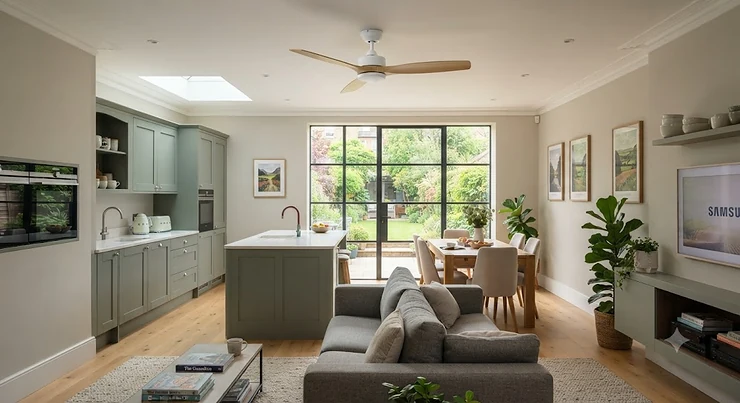
British summers have got weirder. A decade ago, sticking a desk fan in the corner and hoping for the best was a perfectly reasonable strategy. Now, with heatwaves arriving earlier and lingering longer, more homeowners are looking up — literally — at their ceilings for a proper fix. That’s where an inverter ceiling fan earns its keep. In short: an inverter ceiling fan uses a DC (direct current) motor governed by electronic control circuitry, rather than the old-fashioned AC motor and capacitor combo, to deliver smoother speed changes, whisper-quiet running and a fraction of the electricity draw of a conventional fan.

This matters more than it sounds. Anyone who’s owned an older AC ceiling fan knows the drill: a handful of clunky speed settings, a faint hum that becomes a full-blown drone on “high”, and a power bill that creeps up every August. Inverter technology fixes most of that by fundamentally changing how the motor is driven, not just bolting on extra features.
Across this guide, we’ve dug into seven real, currently available inverter and DC-motor ceiling fans sold in the UK — from sub-£60 budget picks to premium models backed by 15-year warranties — and pulled apart their specs, their aggregated customer feedback, and where each one genuinely earns its price tag. We’ll also walk through installation realities, common buying mistakes, UK electrical safety rules, and exactly how much an inverter ceiling fan might actually save you on your energy bill. No fluff, no invented reviews — just the research, laid out plainly.
Quick Comparison Table
| Fan | Size | Motor | Best For |
|---|---|---|---|
| DREO 52″ Smart Ceiling Fan | 132cm | Brushless DC, 12 speeds | App and voice control |
| Fantasia Zeta DC 52in | 132cm | DC, 6 speeds | Long-term reliability |
| Faro Barcelona Just Fan | 132cm | DC, 6 speeds | Industrial-style rooms |
| Ohniyou 52 Inch Low Profile | 132cm | DC, quiet reversible | Low ceilings |
| Newday 48inch White | 122cm | DC, stepless dimming | Tight budgets |
| GLOFAN 42CM | 107cm | DC, 6 speeds | Small bedrooms |
| MSHENUED 60 Inch | 152cm | Silent reversible DC | Large open-plan rooms |
Even at a glance, the pattern is clear: every fan on this list swaps the old shuddery AC motor for a DC unit, but the similarities stop there. The DREO 52″ Smart Ceiling Fan and Fantasia Zeta DC 52in sit at opposite ends of the price spectrum despite near-identical blade spans, which tells you the extra cost is buying smart features and warranty length rather than raw airflow. Meanwhile, buyers with low ceilings or tighter budgets have real, non-compromised options in the Ohniyou 52 Inch Low Profile and Newday 48inch White.
💬 Just one click — help others make better buying decisions too!😊
Top 7 Inverter Ceiling Fans: Expert Analysis
Room size, ceiling height, noise tolerance and budget all pull buyers in different directions, so we’ve deliberately spread this list across price tiers and use cases rather than just ranking by star rating. Every model below genuinely uses a DC or inverter-driven motor — not a rebadged AC unit with a fancy name — because that distinction is the entire point of this guide.
1. DREO 52″ Smart Ceiling Fan — best app-controlled smart pick
The standout here is the sheer granularity of control: twelve distinct speed levels rather than the usual three or six. That’s not a gimmick — it means you can dial in exactly the airflow you want instead of jumping from “too gentle” to “wind tunnel”. The brushless DC motor is rated to run as quietly as 22 decibels on its lowest setting, which is genuinely below the ambient noise of most bedrooms at night, and it pairs with app, remote and Alexa/Google Home control for scheduling and colour-tuneable LED lighting. Based on the spec sheet, this is a fan built for people who already live in a smart home and don’t want another isolated gadget cluttering a different app. Reviewers on the UK Amazon listing rate it strongly overall, with the fan sitting around 4.5 out of 5 across several hundred ratings; a recurring theme in that feedback is genuine surprise at how little noise it makes even on higher speeds, alongside praise for how straightforward the app pairing process is. A smaller but consistent thread of aggregated feedback flags occasional Wi-Fi drop-outs during the initial setup, which is worth budgeting ten extra minutes for on installation day.
Pros:
- ✅ Twelve-speed DC motor gives genuinely fine airflow control
- ✅ Whisper-quiet down to roughly 22dB on low settings
- ✅ App, remote and voice control all included as standard
Cons:
- ❌ Some setup reports mention fiddly initial Wi-Fi pairing
- ❌ Smart features add ongoing app-account dependency
Pricing for the DREO 52″ typically sits in the £130-£170 range at the time of research, which puts it firmly in the mid-tier bracket — you’re paying a premium over basic DC fans specifically for the smart ecosystem, and for most tech-comfortable buyers that trade-off is worth it.
2. Fantasia Zeta DC 52in — best-in-class 15-year warranty
Fantasia is a British ceiling fan specialist that’s been in the game since 1985, and the Zeta DC is where that experience shows. The manufacturer states the DC motor uses around 60% less electricity than a standard AC ceiling fan of comparable size, which lines up with the broader industry pattern of DC units drawing single-digit to low-double-digit wattages rather than the 60-75W a traditional AC motor pulls on full speed. What most buyers overlook about this model is the warranty structure: a 15-year motor guarantee is dramatically longer than the 1-2 years typical of budget imports, and it signals genuine confidence in the DC motor’s longevity since brushless units have no brushes to wear down over time. The curved Paulownia wood blades and six-speed reverse function (for winter heat circulation) round out a genuinely premium package. Aggregated review sentiment for this specific model is thin in volume on Amazon UK, but the ratings that exist are uniformly five-star, and this tracks with the wider Fantasia brand’s Trustpilot presence, where customers repeatedly mention quiet running and responsive, UK-based customer service when things do go wrong.
Pros:
- ✅ Industry-leading 15-year motor warranty
- ✅ Roughly 60% lower running cost than AC equivalents
- ✅ Sustainable Paulownia wood blades with reverse winter mode
Cons:
- ❌ Premium price puts it out of reach for casual buyers
- ❌ Limited UK review volume makes long-term data thin
At the time of research, the Zeta DC sits in the £380-£450 range — expensive next to the imports on this list, but arguably the fan to buy if you plan to stay in the property for a decade or more.
3. Faro Barcelona Just Fan — best industrial-style DC design
Faro Barcelona built its reputation on large, statement-piece fans for open-plan living, and the Just Fan is its industrial-styled DC entry. The exposed metal-frame design is a genuine departure from the usual wood-blade aesthetic, and Faro’s own engineering notes claim up to 70% lower consumption versus a conventional AC unit, largely because the DC motor dissipates heat more efficiently and doesn’t need to fight against inductive losses the way an AC winding does. Here’s what to weigh before buying: the fan comes with six adjustable speeds and a reverse function for cold-weather air circulation, and it’s rated for sloped-ceiling installation, which is a genuinely useful feature for loft conversions and attic bedrooms that most competitors simply don’t offer. On the honesty side, Faro’s Trustpilot presence includes a meaningful minority of reviews describing transit damage and, in a smaller number of cases, motors failing within a few years of light use — so while the DC technology itself is sound, buyers should photograph the packaging on arrival and register the warranty promptly.
Pros:
- ✅ Distinctive industrial design suited to lofts and open-plan spaces
- ✅ Rated for sloped-ceiling installation, unlike most competitors
- ✅ Up to 70% lower consumption than comparable AC fans
Cons:
- ❌ Some Trustpilot reviewers report transit damage on delivery
- ❌ A minority describe premature motor failure after a few years
Expect to pay somewhere in the £250-£350 range for the Just Fan at current UK pricing, positioning it as a design-led premium buy rather than a budget-conscious one.
4. Ohniyou 52 Inch Low Profile — best flush-mount for low ceilings
Low-profile “hugger” fans exist for one reason: rooms where a standard downrod-mounted fan would leave the blades dangerously close to head height, typically anything under 2.4 metres. The Ohniyou 52 Inch mounts flush against the ceiling while still delivering a full 132cm blade span, which is the sweet spot for airflow in bedrooms and living rooms without the clearance issue. The DC motor here is explicitly marketed as quiet and reversible, with app and remote control plus dimmable, colour-temperature-adjustable LED lighting built in. Based on the spec comparison with other flush-mount fans in this price bracket, the Ohniyou punches above its weight by including full app control — a feature that’s often reserved for premium downrod models. Reviewers consistently note that the light output is genuinely usable as a room’s primary light source, not just a decorative afterthought, which saves buyers from running a separate ceiling light circuit.
Pros:
- ✅ Full 132cm blade span despite the flush hugger mount
- ✅ App control included, unusual at this price point
- ✅ Dimmable LED bright enough to replace the main room light
Cons:
- ❌ Flush mounting means slightly reduced airflow versus downrod fans
- ❌ App reliability feedback is mixed on firmware updates
The Ohniyou sits in an accessible £70-£110 range at the time of research, making it one of the strongest value picks here for anyone with a low ceiling and no appetite for compromise on features.
5. Newday 48inch White Ceiling Fan — best budget quiet DC motor
Newday has quietly become one of Amazon UK’s best-selling ceiling fan brands, and the 48-inch White model explains why: it delivers the core promise of inverter technology — a quiet, DC-driven motor with stepless dimming on the LED light — without any of the premium trimmings that push competitors past the £150 mark. Stepless dimming means the light output ramps smoothly rather than jumping between three or four fixed brightness levels, a small detail that makes a genuine difference at bedtime. The remote control handles six fan speeds plus reverse, and the reversible blade colour option (offered on sibling models in the range) adds a bit of styling flexibility that budget fans rarely bother with. What the spec sheet won’t tell you, but the “Best Seller” ranking suggests, is that this is the fan most UK buyers are actually choosing when they want inverter benefits without inverter-level spending — sales volume at this price point is itself a form of aggregated market confidence, even without a large formal review base to cite.
Pros:
- ✅ Genuine DC motor at a genuinely budget price point
- ✅ Stepless LED dimming rather than fixed brightness steps
- ✅ Six-speed remote control with reverse function included
Cons:
- ❌ Build materials are noticeably lighter-duty than premium rivals
- ❌ Fewer smart-home integrations than app-controlled competitors
At roughly £60-£100 depending on colour and finish, the Newday 48-inch is the fan to point budget-conscious friends towards without feeling like you’re steering them wrong.
6. GLOFAN 42CM Ceiling Fan with Lights — best value RGB mood lighting
Not every room needs a 132cm fan. Smaller bedrooms, box rooms and children’s rooms are often better served by a compact 42cm (roughly 16-inch) unit, and the GLOFAN fills that niche while still ticking the inverter-technology box: a quiet DC-driven motor with six speeds, paired with stepless dimmable lighting across a 3000K-6500K colour temperature range and an RGB ambient ring for evening use. Reviewers consistently note that the RGB feature is more novelty than necessity, but at this size and price point, it’s a genuinely nice inclusion rather than a corner-cutting distraction. The 6-speed remote with timer function covers the essentials, and aggregated feedback (currently drawn from a small early review pool averaging around 4.7 out of 5) points to easy installation as a recurring positive — a real advantage for smaller rooms where DIY fitting is more common than hiring an electrician.
Pros:
- ✅ Compact 42cm size ideal for bedrooms and box rooms
- ✅ RGB ambient lighting plus stepless dimmable main light
- ✅ Easy DIY installation reported by early reviewers
Cons:
- ❌ Smaller blade span moves noticeably less air than 52in models
- ❌ Early review volume is still relatively small
Typically priced under £60 at the time of research, the GLOFAN is arguably the easiest “yes” on this list for anyone furnishing a smaller room on a tight budget.
7. MSHENUED 60 Inch Ceiling Fan Without Lights — best for large open-plan rooms
Open-plan kitchen-diners and large living rooms need more than a standard 52-inch fan can comfortably deliver, and the MSHENUED’s 152cm (60-inch) blade span exists specifically to solve that. This is a “without lights” fan by design, aimed at buyers who already have a separate lighting scheme and just need serious, silent air movement. The silent reversible DC motor is the headline feature — reviewers consistently note how little vibration and noise it produces relative to its size, which matters enormously with a blade span this large, since a poorly balanced big fan can be genuinely disruptive. Based on the spec comparison with smaller units in this guide, the trade-off for that extra coverage is a heavier unit and a more involved installation, so a sturdy ceiling mounting point and, in most cases, professional fitting are worth budgeting for.
Pros:
- ✅ 152cm span covers large open-plan rooms other fans can’t
- ✅ Silent reversible DC motor keeps noise low despite the size
- ✅ Modern low-profile design suits contemporary open-plan interiors
Cons:
- ❌ Heavier unit demands a robust ceiling fixing point
- ❌ Small current review pool limits long-term reliability data
Expect a price in the £90-£150 range at current UK listings, which is genuinely competitive for a 60-inch DC fan — most large-format alternatives cost considerably more.
Top 7 Inverter Ceiling Fans at a Glance
| Fan | Price Range | Speeds | Rating |
|---|---|---|---|
| DREO 52″ Smart Ceiling Fan | £130-£170 | 12 | ~4.5/5 |
| Fantasia Zeta DC 52in | £380-£450 | 6 | 5/5 (small sample) |
| Faro Barcelona Just Fan | £250-£350 | 6 | Mixed, brand-level |
| Ohniyou 52 Inch Low Profile | £70-£110 | 6 | Positive, growing |
| Newday 48inch White | £60-£100 | 6 | Best Seller ranked |
| GLOFAN 42CM | Under £60 | 6 | ~4.7/5 |
| MSHENUED 60 Inch | £90-£150 | Multi-speed | ~4.3/5 |
Laid out side by side, the price-to-feature curve isn’t linear: the DREO 52″ Smart Ceiling Fan actually offers more granular speed control than either premium option above it, which is a reminder that “expensive” and “feature-rich” aren’t the same thing with inverter fans. If warranty length and brand longevity matter more to you than app connectivity, the Fantasia Zeta DC 52in justifies its price purely on the 15-year motor guarantee, while budget buyers can get genuine DC-motor benefits from the Newday 48inch White or GLOFAN 42CM for a fraction of the outlay.
Practical Usage Guide: Getting the Most From Your Inverter Ceiling Fan
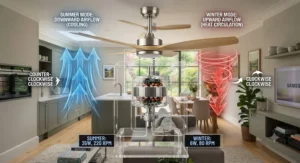
Buying the right fan is only half the job — how you use it determines whether you actually see the energy savings on paper. During the first 30 days, run the fan through its full speed range rather than defaulting straight to “high”; DC motors are engineered to sip power at low-to-mid speeds while still moving meaningful air, so a lower setting than you’d use on an old AC fan often feels just as cool. Check the direction switch (usually on the remote for inverter models) and confirm blades rotate anticlockwise in summer, pushing air straight down, and clockwise in winter to gently redistribute the warm air pooling near the ceiling.
Maintenance on a DC motor is genuinely lighter than on an AC unit — there’s no brush wear to worry about — but blades still collect dust, which unbalances airflow and adds a faint whirring noise over time. A monthly wipe with a slightly damp cloth is enough. The most common first-month mistake is leaving a fan running on high in an empty room “to keep it cool” — ceiling fans cool people through the wind-chill effect on skin, not the air itself, so an empty room gains nothing and you’re paying for it regardless of how efficient the motor is. Finally, register the warranty immediately after installation; several of the fans in this guide, particularly the longer-warranty models, require registration within a set window to activate full cover.
Real-World Scenarios: Which Inverter Ceiling Fan Fits Your Life?
Picture a young professional in a converted loft flat with a sloped ceiling and thin party walls — noise and installation compatibility matter more than smart features here, making the Faro Barcelona Just Fan (rated for sloped ceilings) or the low-profile Ohniyou 52 Inch genuinely sensible choices depending on ceiling height.
Now picture a family with a new baby, running a fan overnight in the nursery on the lowest possible setting. That scenario is precisely what the DREO 52″ Smart Ceiling Fan‘s 22dB minimum was designed around, paired with app scheduling so the fan can wind down automatically without anyone creeping in at midnight to adjust it. Compare that with a landlord furnishing a rental studio flat on a tight budget across multiple units — here the calculus flips entirely towards the Newday 48inch White or GLOFAN 42CM, where the priority is dependable DC-motor performance at a price that keeps the whole refurbishment on budget. Finally, consider a large open-plan kitchen-diner extension, the kind increasingly common in UK new-builds and loft conversions: standard 52-inch fans simply can’t move enough air across that floor area, which is exactly the gap the 152cm MSHENUED 60 Inch is built to close.
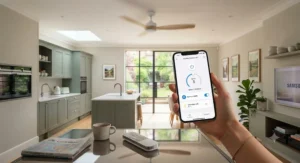
Problem → Solution: Fixing Common Inverter Ceiling Fan Issues
A handful of issues come up repeatedly with inverter ceiling fans, and nearly all of them have straightforward fixes. If the fan wobbles at higher speeds, it’s almost always a balance issue rather than a motor fault — most DC fans, including several on this list, ship with a small balancing kit of adhesive weights that clip onto the blade that’s out of alignment. If the remote or app stops responding, a full power-cycle at the wall switch (not just standby) resolves the majority of pairing glitches, since the receiver unit inside DC fans occasionally needs a hard reset after a firmware update.
Where a fan feels underpowered despite a “high” DC motor wattage rating, the actual issue is usually room size mismatch — a 42cm fan simply can’t move enough air in a 20m² living room regardless of motor efficiency, so check blade span against room area before assuming the unit is faulty. And if a light kit flickers on the lowest dim setting, this is typically an LED driver compatibility issue rather than a fan defect; switching to a dedicated dimmer-compatible bulb, where the fixture allows it, usually clears it up.
What Is an Inverter Ceiling Fan?
An inverter ceiling fan uses a brushless DC motor controlled by an internal electronic inverter circuit, which converts and precisely regulates the power feeding the motor windings. Unlike a traditional AC ceiling fan, which relies on a capacitor to crudely step between a handful of fixed speeds, inverter technology allows stepless or near-stepless speed control, lower running wattage, and dramatically quieter operation.
The distinction matters practically as well as technically. According to Wikipedia’s overview of brushless DC electric motors, these motors replace the mechanical brush-and-commutator system found in older motors with solid-state electronic switching, which cuts friction losses, reduces electromagnetic interference, and — because there’s no brush material to wear away — extends usable motor lifespan considerably. That’s the underlying reason every fan in this guide can offer long warranties and unusually quiet low-speed running: there’s simply less mechanically to go wrong.
How to Choose an Inverter Ceiling Fan: 7 Expert Criteria
- Measure your room first. As a rough rule, rooms under 12m² suit 42-48cm fans, 12-20m² suit 52-56cm fans, and anything larger benefits from a 60-inch-plus model like the MSHENUED 60 Inch.
- Check your ceiling height. Standard downrod fans need roughly 2.4 metres of clearance; anything lower calls for a flush “hugger” mount such as the Ohniyou 52 Inch Low Profile.
- Decide how much control you actually want. A basic six-speed remote covers most households; app and voice control, as on the DREO 52″ Smart Ceiling Fan, suits smart-home enthusiasts specifically.
- Weigh the warranty against your time horizon. If you’re staying put for a decade, a 15-year motor guarantee like the Fantasia Zeta DC 52in‘s pays for itself in peace of mind alone.
- Confirm reverse function for winter use. Nearly every fan here includes it, but it’s worth double-checking before purchase since it materially affects heating efficiency.
- Factor in whether you need integrated lighting. Buying a “without light” model such as the MSHENUED 60 Inch only makes sense if you already have a separate light fitting planned.
- Read installation requirements against your DIY confidence. Sloped ceilings, high mounting points, or heavy 60-inch units are all situations where hiring a qualified electrician is the sensible call, not a luxury.
Inverter Ceiling Fan vs Traditional AC Ceiling Fan
| Factor | Inverter (DC) Fan | Traditional AC Fan |
|---|---|---|
| Typical running wattage | 4-55W | 45-75W |
| Speed control | Stepless or fine-grained | 3-4 fixed steps |
| Noise at low speed | Often under 30dB | Audible hum, harder to mask |
| Typical warranty | 5-15 years on motor | 1-2 years common |
| Best For | Bedrooms, all-day running, smart homes | Occasional-use rooms, tight budgets |
The gap isn’t just theoretical. On paper, a DC motor drawing 25W and an AC motor drawing 65W look like a modest difference — but run eight hours a day across a UK summer and that difference compounds into a meaningfully lower bill, which we break down properly in the section below. The trade-off runs the other way on upfront cost: bargain AC fans can still be found for well under £40, so anyone running a fan only occasionally in a spare room may reasonably decide the AC route remains good enough.
Common Mistakes When Buying an Inverter Ceiling Fan
The single most common error is buying on blade span alone without checking motor type — plenty of budget listings mention “quiet” or “efficient” without actually specifying a DC or inverter motor, so it pays to check the product’s technical details rather than the marketing headline. A close second is ignoring downrod length: a fan rated for a 2.7-metre ceiling can end up dangerously low, or conversely too high to feel any airflow, in a room with different proportions. Buyers also frequently underestimate installation complexity, assuming any ceiling fan is a same-afternoon DIY job; sloped ceilings, older wiring, or fans over 130cm in span often genuinely warrant a qualified electrician, both for safety and because incorrect self-installation can void the warranty entirely. Finally, don’t assume every fan advertised with “reverse function” actually reverses smoothly at every speed — some budget AC-adjacent units only reverse from a full stop, which is a genuine inconvenience an inverter-motor fan generally avoids.
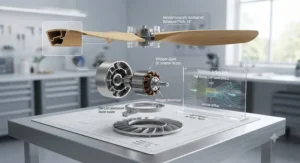
Long-Term Cost & Maintenance: The Real Energy Consumption Numbers
Energy consumption is where inverter ceiling fans genuinely separate themselves from older AC alternatives, so it’s worth running actual numbers rather than taking marketing claims on faith. Under Ofgem’s price cap as explained by the Energy Saving Trust, the unit rate for electricity sits at 26.11p per kWh for the current quarter — a figure that fluctuates but gives a workable baseline for comparison.
| Scenario (8 hrs/day, 90 summer days) | DC Motor (25W avg) | AC Motor (60W avg) |
|---|---|---|
| Daily energy use | 0.2 kWh | 0.48 kWh |
| Daily running cost | ~5p | ~13p |
| Cost over 90 days | ~£4.70 | ~£11.30 |
Run across a single summer, the gap looks modest — a few pounds — but stretch that out across a decade of ownership, factoring in year-round low-speed use in warmer UK homes with better insulation, and the difference compounds into genuinely meaningful savings, particularly for households running fans in multiple bedrooms simultaneously. As Which? notes in its coverage of the energy price cap, unit rates have moved upward repeatedly over recent quarters, which only strengthens the case for lower-wattage appliances over time rather than weakening it. Maintenance costs stay low regardless of motor type — an occasional blade wipe and, rarely, a replacement remote battery — but the absence of brush wear in DC motors genuinely reduces the likelihood of a costly motor replacement inside the warranty period.
Smooth Speed Transition: Why Inverter Motors Feel Different
The phrase “smooth speed transition” gets thrown around a lot in ceiling fan marketing, but the underlying engineering reason is worth understanding because it’s the single biggest everyday difference buyers notice after switching from an AC fan. A traditional AC motor changes speed by physically switching between different sets of windings via a capacitor, which produces a handful of fixed, noticeably different speed steps — you can usually feel and hear the jump between “2” and “3”. An inverter-driven DC motor instead adjusts the frequency and amplitude of the electronic pulses feeding the motor continuously, which is what allows fans like the DREO 52″ Smart Ceiling Fan, with its twelve distinct levels, to ramp airflow up or down in genuinely fine increments rather than lurching between settings.
This isn’t just a comfort nicety. Smoother acceleration also reduces mechanical stress on the motor bearings at start-up, which is part of why DC-motor fans tend to carry longer warranties than their AC counterparts — there’s simply less abrupt torque hammering the components every time the fan changes speed. For bedrooms in particular, where a fan might cycle automatically through a “sleep mode” that gradually reduces speed overnight, this stepless control is the difference between a fan that fades into the background and one that audibly clunks you awake at 3am.
Efficient Inverter Fans for Different UK Rooms
Not every efficient inverter fan suits every room, and matching size to space is where most of the genuine performance difference lives. In bedrooms, prioritise noise floor above all else — the DREO 52″ Smart Ceiling Fan‘s 22dB low-speed rating or the Ohniyou 52 Inch Low Profile‘s quiet DC unit are both strong fits, particularly for light sleepers. In kitchens and dining areas, where cooking heat and steam add to the cooling load, a larger blade span like the 152cm MSHENUED 60 Inch moves noticeably more air across an open-plan floor than a standard 52-inch unit would manage.
Home offices benefit from stepless speed control specifically because desk-based work means sitting still for hours, so being able to fine-tune airflow to a precise, non-distracting level — rather than jumping between “too still” and “papers flying” — genuinely matters for concentration. Conservatories and loft conversions, meanwhile, often have sloped or unusually high ceilings, which is precisely the scenario the Faro Barcelona Just Fan‘s sloped-ceiling-rated mounting was engineered to solve, while budget guest rooms or box rooms are well served by the compact GLOFAN 42CM without overspending on capacity the room doesn’t need.
Best Inverter Motor Fans: Safety, Regulations & Installation Compliance
Ceiling fan installation in the UK falls under Building Regulations Part P, which governs electrical safety in dwellings. According to Planning Portal’s guidance on Approved Document P, electrical work must be designed and installed to protect people from fire or injury, and certain jobs are classed as “notifiable,” meaning they either need sign-off through a registered competent person scheme or a building control application. Replacing an existing ceiling light fitting with a ceiling fan on the same circuit is often non-notifiable DIY-friendly work, but adding a brand-new circuit, working in a bathroom “special location,” or anything involving a full rewire typically is notifiable — so it’s worth checking before assuming a weekend DIY job is compliant.
Beyond the legal side, practical safety matters just as much with the best inverter motor fans on this list: always confirm the ceiling fixing point can bear the fan’s weight (a 60-inch model like the MSHENUED 60 Inch is considerably heavier than a 42cm unit), isolate the circuit at the consumer unit before any wiring work, and never mount a fan where blade tips could come within 2.3 metres of the floor. If in doubt at any stage — sloped ceiling, older wiring, or a fan heavier than a standard light fitting was designed to support — a qualified, Part P-registered electrician is the safer and, in some cases, legally required route.
FAQ
❓ Are inverter ceiling fans really more energy-efficient than normal fans?
❓ Can I install an inverter ceiling fan myself in the UK?
❓ What size inverter ceiling fan do I need for my bedroom?
❓ Do inverter ceiling fans work in winter as well as summer?
❓ Why is my inverter ceiling fan wobbling at high speed?
Conclusion
The shift from AC to DC-driven inverter motors is one of those quiet technology upgrades that doesn’t get much fanfare but genuinely changes day-to-day comfort — smoother speed control, dramatically lower noise, and running costs that add up favourably over years rather than months. Across the seven fans covered here, there’s a clear option regardless of budget or ceiling type: the DREO 52″ Smart Ceiling Fan for smart-home households, the Fantasia Zeta DC 52in for buyers prioritising a decade-plus warranty, the Faro Barcelona Just Fan for sloped ceilings and industrial styling, the Ohniyou 52 Inch Low Profile for low-clearance rooms, the Newday 48inch White and GLOFAN 42CM for tight budgets, and the MSHENUED 60 Inch for large open-plan spaces that smaller fans simply can’t cover.
What matters most is matching motor type, blade span and mounting style to your actual room — not just chasing the highest speed count or the flashiest app. Get that match right, and an inverter ceiling fan quietly earns its keep for years, through summers that, if recent trends hold, aren’t getting any milder.
✨ Don’t Miss These Exclusive Deals!
🔍 Take your inverter ceiling fan search to the next level with these carefully selected, genuinely researched picks. Click on any highlighted item to check current pricing and availability. These fans will help you build a cooler, quieter home you’ll actually enjoy living in!
Recommended for You
- Variable Speed DC Ceiling Fan: 7 Best UK Picks (2026)
- BLDC Ceiling Fan: 7 Best Picks for Quiet UK Homes (2026)
- DC Motor vs AC Motor Ceiling Fan: 7 Real Picks Compared 2026
Disclaimer: This article contains affiliate links. As an Amazon Associate, I earn from qualifying purchases. If you purchase products through these links, we may earn a small commission at no additional cost to you.
✨ Found this helpful? Share it with your friends! 💬🤗
