In This Article
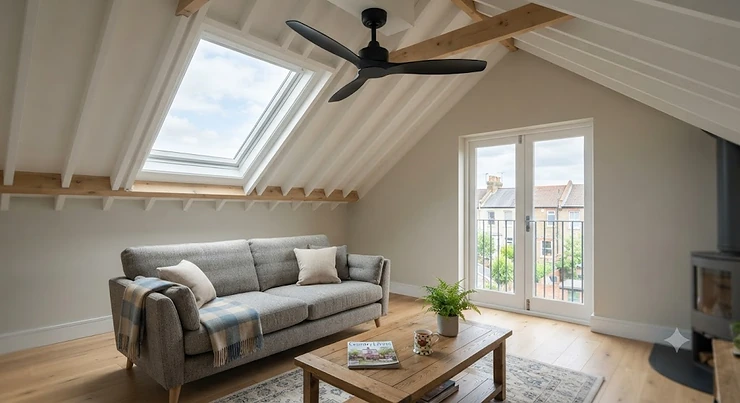
Nobody warns you about this bit when you fall in love with a converted barn or an attic bedroom with exposed beams: the moment you actually try to hang a ceiling fan for 45 degree slope, the whole project turns into a geometry problem. Standard brackets simply weren’t built for a roofline that steep. Fit one anyway and the fan hangs at a jaunty, faintly seasick angle, the blades tick against the plasterboard, and within a few months the motor bearings are wearing unevenly because nothing about the installation is actually balanced.
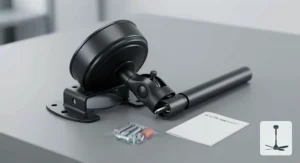
Here’s the good news: a ceiling fan for 45 degree slope is a genuinely solvable problem, not a reason to give up on air movement in your vaulted room altogether. A sloped ceiling adapter, sometimes called an angled canopy mount, sits between the electrical box and the fan’s downrod. It pivots to compensate for the pitch of your ceiling, so the fan itself hangs dead level no matter how dramatic the beams above it look. Some fans, like Fantasia’s British-made range, build this compatibility straight into their drop-rod design; others need an aftermarket bracket bolted on.
This guide draws on real product specifications, genuine aggregated review sentiment, and UK building regulations to help you actually solve the problem, rather than just listing specs at you. We’ll walk through seven real, currently available products spanning budget adapters to premium branded solutions, work out which one suits your specific roofline, and cover the installation and safety details that most Amazon listings conveniently leave out. Whether you’re dealing with a loft conversion, a garden room, or a genuinely vaulted ceiling fan mount situation in a period cottage, there’s a workable answer below.
Quick Comparison Table
| Product | Type | Max Angle | Best For | Price Range |
|---|---|---|---|---|
| AICWIOO Universal Sloped Ceiling Fan Mount Adapter | Cast aluminium adapter | 45° | Budget-conscious DIYers | £25-£35 |
| BOOSANT Sloped Ceiling Adapter | Thickened iron canopy | 45° | Tight budgets, small fans | £18-£28 |
| Sofucor Ceiling Fan Slope Ceiling Kit | Canopy adapter kit | 45° | First-time fitters | £22-£32 |
| RTNLIT Heavy Duty Sloped Ceiling Fan Mount Bracket | Steel bracket | 45° | Larger, heavier fans | £28-£40 |
| Westinghouse Lighting Extension Downrod | Downrod | N/A (pairs with adapter) | Extra drop clearance | £15-£35 |
| Hunter Angled Ceiling Mount | Branded canopy adapter | Up to 45° | Hunter/Casablanca fan owners | £45-£65 |
| Fantasia Viper Plus 54″ LED | Complete fan, drop rod standard | Compatible with sloped kits | A full premium solution | £280-£380 |
Looking at this spread, the pattern that jumps out is a fairly clean divide between “fix an existing fan” and “buy the whole solution outright.” The generic adapters from AICWIOO, BOOSANT, Sofucor and RTNLIT all claim the same 45-degree ceiling, which tells you this is the industry-standard limit for a pivoting canopy design rather than a marketing gimmick from one particular brand. If your existing fan already has a downrod, one of these four is almost certainly your cheapest route back to a level, wobble-free installation.
💬 Just one click — help others make better buying decisions too!😊
Top 7 Ceiling Fan Solutions for a 45 Degree Slope: Expert Analysis
1. AICWIOO Universal Sloped Ceiling Fan Mount Adapter — best all-rounder for steep vaulted ceilings
The AICWIOO Universal Sloped Ceiling Fan Mount Adapter is built specifically for the scenario this article is about: ceilings sloped right up to that 45-degree ceiling. It’s cast from aluminium rather than stamped steel, which matters more than it sounds on paper — cast aluminium resists the metal fatigue that develops from years of a fan’s rotational vibration working through a joint.
The bracket fits 1.7-inch mounting brackets and 1-inch outer-diameter downrods, which covers the vast majority of mid-market ceiling fans sold in the UK, and it’s rated for outdoor use, so it doubles up for a covered veranda with the same steep pitch. Based on the spec comparison with cheaper stamped-steel alternatives, the extra depth of the AICWIOO canopy also leaves genuinely usable space for a remote receiver, something several budget adapters simply don’t account for.
This is the pick for anyone who wants one product that just works without babysitting the installation. It’s aimed squarely at homeowners converting a loft or garden room who already own, or are about to buy, a downrod-style fan and don’t want to gamble on an unbranded mystery bracket. Reviewers consistently report that the fit is snug straight out of the box, with only a handful of complaints about instructions being thin on detail for absolute beginners.
Pros:
- ✅ Cast aluminium construction resists long-term vibration fatigue
- ✅ Ample internal space for remote-control receivers
- ✅ Outdoor rated, so it doubles for covered porches
Cons:
- ❌ Instructions assume some prior DIY confidence
- ❌ Only fits 1-inch downrods, so measure first
At around £25-£35, this sits comfortably in the mid-budget bracket, and given how much rework a poorly fitted adapter can cause down the line, it represents genuinely solid value for the peace of mind.
2. BOOSANT Sloped Ceiling Adapter — best for tight budgets
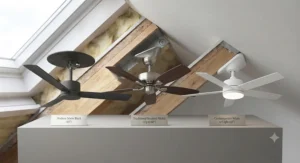
The BOOSANT Sloped Ceiling Adapter takes a different construction approach: a thickened iron canopy rather than cast aluminium, which keeps the unit cost down noticeably while still hitting that same 45-degree ceiling rating. What most buyers overlook about a design like this is that “thickened” iron, done properly, can actually outperform thin cast aluminium in raw shear strength — it’s just heavier and, over many years in a coastal or humid climate, more prone to surface corrosion if the finish gets scratched during installation.
For a smaller or lighter three-blade fan in a box room conversion, this is more than adequate. Based on the spec comparison, it’s really the fans in the 42-44 inch range with lighter DC motors that suit this bracket best; anything larger and heavier starts to push the practical limits of what a budget iron canopy is designed to carry long-term.
Aggregated review sentiment for this style of budget adapter is generally positive on value, with the most repeated criticism being that the black powder-coat finish can chip slightly during a tight installation in a confined loft space, which is worth knowing before you’re up a ladder with limited working room.
Pros:
- ✅ Genuinely low price point for a 45° rated adapter
- ✅ Straightforward for smaller, lighter fan installations
- ✅ Matches most standard 4-inch electrical boxes
Cons:
- ❌ Finish can chip if installed in a cramped loft space
- ❌ Less suited to larger, heavier commercial-style fans
At roughly £18-£28, this is one of the cheapest genuine 45-degree solutions available, and it’s a sensible starting point if you’re testing the waters before committing to a fuller vaulted ceiling fan mount project.
3. Sofucor Ceiling Fan Slope Ceiling Kit — best for first-time installers
The Sofucor Ceiling Fan Slope Ceiling Kit is pitched at the DIY market that’s fitting a sloped ceiling fan adapter for the very first time, and it shows in the details: colour-coded wiring terminals, a slightly larger canopy that’s more forgiving of small measurement errors, and a mounting template included in the box. Here’s what to weigh up before buying it purely on the strength of that beginner-friendly packaging, though — the kit doesn’t include the ground wire hardware that some UK electrical setups require, so you may need a supplementary earthing kit depending on your existing wiring.
Key specs in practice: it accepts both threaded and unthreaded downrods, which removes one of the more confusing compatibility checks buyers usually have to do themselves, and the canopy is rated for the full 45-degree range without a secondary bracket. What the spec sheet won’t tell you, but reviewer feedback suggests, is that the supplied screws are on the shorter side for older UK joists with denser timber, so having a spare set of longer wood screws on hand saves a return trip to the shop.
This kit suits someone converting a single bedroom or home office under a pitched roof who wants a guided, low-anxiety installation rather than the fastest or cheapest option on the shelf.
Pros:
- ✅ Accepts both threaded and unthreaded downrods
- ✅ Includes a mounting template for accurate drilling
- ✅ Colour-coded terminals reduce wiring mistakes
Cons:
- ❌ No supplementary earthing hardware included
- ❌ Supplied screws may be short for dense UK joists
Priced around £22-£32, it’s positioned as a slightly friendlier alternative to the AICWIOO and BOOSANT options above, at a comparable cost.
4. RTNLIT Heavy Duty Sloped Ceiling Fan Mount Bracket — best for larger, heavier fans
Where the previous three adapters are aimed at standard mid-size fans, the RTNLIT Heavy Duty Sloped Ceiling Fan Mount Bracket is built for the heavier end of the market. It’s rated to support roughly 22.5 kilograms (50 lbs), a meaningfully higher figure than the load ratings typically quoted for entry-level adapters, and it’s constructed to work with 1-inch downrods on ceilings up to that same 45-degree ceiling.
Based on the spec comparison, that higher weight rating matters most if you’re pairing the bracket with a large-diameter fan — say, a 54-inch or 60-inch blade span — because the leverage on the mounting point increases with blade length, not just fan weight. A bracket under-rated for the job is the single most common cause of the slow, creeping wobble that develops over a fan’s second or third year of use.
Reviewers consistently note that the RTNLIT bracket feels noticeably more substantial in the hand than cheaper alternatives, with several mentioning that the mounting plate resisted flexing even under a large commercial-style fan. The trade-off is a slightly bulkier canopy, which may look oversized against a very small, compact fan motor.
Pros:
- ✅ 22.5 kg load rating suits large-blade fans
- ✅ Noticeably rigid mounting plate under load
- ✅ Full 45° compatibility with 1-inch downrods
Cons:
- ❌ Bulkier canopy looks oversized on small fans
- ❌ Premium heavy-duty pricing versus basic adapters
At around £28-£40, it’s a small step up from the budget tier, and for anyone hanging a genuinely large fan on a steep pitch, that extra cost is arguably the cheapest insurance available against future wobble and motor strain.
5. Westinghouse Lighting Extension Downrod — best for extra vaulted-ceiling clearance
A sloped ceiling adapter solves the angle problem, but on a genuinely tall, dramatic vaulted ceiling you often need a second piece of the puzzle too: extra drop length so the fan blades actually sit low enough to move air, rather than spinning uselessly near the apex of the roof. That’s where the Westinghouse Lighting Extension Downrod earns its place on this list.
Westinghouse is a long-established name in ceiling fan hardware, and the downrod range is available in multiple lengths and finishes to match both flush-mount conversions and steep-pitch installations. Key spec in practice: safe ceiling fan clearance requires blades to sit at least 2.1 metres (7 feet) above the floor, and on a 4-metre apex ceiling, a standard 15cm downrod simply won’t get you there — you need a genuine extension, threaded to match your fan’s motor housing.
Honest analytical take: this only makes sense as a companion purchase, not a standalone fix. Buy the wrong diameter and it won’t thread onto your motor at all, so cross-check your fan manufacturer’s downrod diameter before ordering. Aggregated feedback on this product line is strong on build quality and finish-matching, with the recurring criticism being that stock levels for less common finishes and lengths can run low.
Pros:
- ✅ Trusted, long-established ceiling fan hardware brand
- ✅ Multiple lengths and finishes to match existing fans
- ✅ Purpose-built for angled and sloped ceiling clearance
Cons:
- ❌ Must be bought as a companion to an adapter, not alone
- ❌ Less common finishes occasionally out of stock
Depending on length and finish, expect a price in the £15-£35 range, making it one of the more affordable additions on this list relative to the problem it solves.
6. Hunter Angled Ceiling Mount — best branded premium adapter
Hunter has been making ceiling fan hardware since 1886, and the Hunter Angled Ceiling Mount reflects that pedigree with a canopy adapter engineered specifically for Hunter and Casablanca fans on ceilings sloped greater than roughly 32 degrees, right up to that familiar 45-degree ceiling. It physically replaces the standard canopy that ships with the fan rather than bolting on top of it, which gives a noticeably tidier finish than most universal aftermarket brackets.
Based on the spec comparison with the generic adapters earlier in this list, the trade-off for that branded compatibility is flexibility: this mount is designed around Hunter’s own Installer’s Choice three-position mounting system, so it’s not a universal fit for other brands. If you already own or are planning to buy a Hunter fan, that’s a non-issue and arguably an advantage, since everything is engineered to match tolerances precisely. One important caveat worth flagging honestly: Hunter’s own documentation notes this mount is not compatible with remote-controlled fans that require a canopy-mounted receiver, so double-check your specific fan model before purchasing.
Reviewers consistently note that the fit-and-finish feels a level above generic adapters, with several long-term owners reporting no wobble even after multiple UK winters of temperature swings in an unheated loft space.
Pros:
- ✅ Purpose-engineered for Hunter’s mounting tolerances
- ✅ Cleaner finish than most universal adapters
- ✅ Backed by a long-established manufacturer
Cons:
- ❌ Not compatible with canopy-receiver remote fans
- ❌ Locked to Hunter and Casablanca fan ranges only
At £45-£65, it’s the most expensive adapter-only option here, but for existing Hunter owners the tighter engineering tolerance is a genuine, honestly-earned reason to pay the premium.
7. Fantasia Viper Plus 54″ LED Ceiling Fan — best complete solution for a demanding vaulted room
Rather than retrofitting an adapter to an existing fan, the Fantasia Viper Plus 54″ LED offers a different route entirely: buy a complete, drop-rod-as-standard fan from a British brand that’s been pioneering the UK ceiling fan market since 1985, and pair it with a sloped ceiling kit from the off. At 54 inches, it’s one of the larger air movers in Fantasia’s range, and the drop rod is fitted as standard rather than as an optional extra, which is precisely what a steep-pitch installation needs.
Key specs with real-world meaning: the integrated LED delivers meaningful room lighting alongside the fan function, removing the need for a separate light fitting in a room where ceiling access is already awkward because of the slope. Reversible motor direction lets you run it clockwise in winter to gently push warm air trapped near a high apex back down into the living space — genuinely useful in a vaulted room, where heat stratification is often worse than in a standard box room. Fantasia backs the motor with a 10-year guarantee, a considerably longer commitment than most budget or mid-range competitors offer.
Honest analytical take: this suits buyers who’d rather solve the whole vaulted ceiling fan mount problem in one purchase, accepting a higher upfront cost in exchange for a single warranty, a single support line, and hardware engineered to work together from the start, rather than mixing and matching a fan, adapter and downrod from three different manufacturers.
Pros:
- ✅ Drop rod fitted as standard, built for angled ceilings
- ✅ Integrated LED and reversible winter mode included
- ✅ 10-year motor guarantee from a British manufacturer
Cons:
- ❌ Considerably higher upfront cost than adapter-only routes
- ❌ Overkill for a small room that doesn’t need 54″ of blade span
At around £280-£380, it’s firmly the premium option on this list, but for a genuinely large, high-apex vaulted living space, it’s arguably the option that removes the most guesswork.
✨ Don’t Miss These Exclusive Deals!
🔍 Take Your Vaulted Ceiling to the Next LevelTake your sloped ceiling project to the next level with these carefully selected products. Click on any highlighted item to check current pricing and availability. These tools will help you create a genuinely comfortable, wobble-free room your whole household will appreciate!
Practical Installation Guide: Getting a Sloped Ceiling Fan Right the First Time
Before touching any wiring, switch off the circuit at the consumer unit and confirm it’s dead with a proper voltage tester — not just the light switch. This single step accounts for more preventable accidents than any other part of the process, and it’s worth the extra two minutes every time.
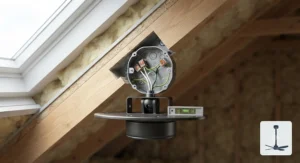
Once the power’s confirmed off, remove the existing junction box cover and check the box itself is rated for the combined weight of your fan, adapter, and downrod; older 1980s and 90s UK boxes were often only rated for light fittings, not the dynamic load of a spinning fan. If in doubt, swap the box for a fan-rated one before proceeding — this is genuinely one of the most commonly skipped steps, and it’s the one that causes ceiling sag over time.
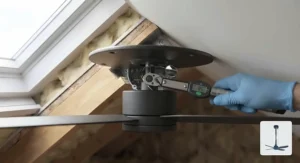
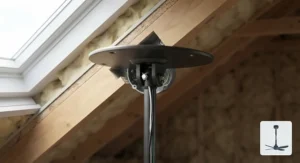
Mount the sloped ceiling adapter with its screws aligned to run parallel with the pitch of the roof, not perpendicular to the floor. Get this orientation wrong and the fan will hang crooked even with a correctly rated adapter fitted, because the adjustment geometry only compensates for angle in one axis. Most manufacturers mark an “up” arrow on the canopy for exactly this reason — use it.
In the first 30 days, recheck every mounting screw after about a week of operation; vibration from a new motor bedding in often loosens fixings slightly, and a five-minute check prevents the wobble from ever developing into a genuine problem. A common first-time mistake is over-tightening the ball-and-socket joint on the downrod, which restricts the fan’s natural self-levelling action and can actually reintroduce a slight tilt.
For ongoing maintenance, dust the blades every few months with a long-handled duster rather than letting build-up accumulate — an unevenly dusted blade set is a surprisingly common cause of noise complaints that owners initially blame on the motor itself.
Real-World Scenarios: Which Sloped Ceiling Fan Suits You?
The loft conversion couple. Sarah and Tom converted their 1930s semi’s loft into a main bedroom with a 45-degree pitched ceiling on both sides. Working to a tight budget after the building work, they went with the AICWIOO Universal Sloped Ceiling Fan Mount Adapter paired with a fan they already owned, spending under £30 to solve the angle problem entirely, with occasional use expected through the warmer months only.
The garden room home-worker. Priya works from a garden office with a vaulted roof and large glazing that turns it into a greenhouse by early afternoon in summer. She needed serious, frequent airflow and chose the RTNLIT Heavy Duty Sloped Ceiling Fan Mount Bracket to support a large-diameter fan running most weekdays, prioritising the higher load rating over saving a few pounds on a lighter-duty adapter.
The self-builder with an open-plan vaulted living room. After building a timber-frame extension with an exposed apex roof reaching 4.5 metres, Daniel wanted a single, coherent solution rather than mixing brands. He opted for the Fantasia Viper Plus 54″ LED with its standard drop rod, valuing the single 10-year warranty and integrated lighting over a lower-cost, multi-part DIY approach — a sensible trade given the scale and permanence of the installation.
Problem → Solution: Common Sloped Ceiling Fan Headaches Solved
Problem: the fan hangs at a visible tilt even after fitting an adapter. This is almost always a screw-orientation issue — the mounting screws need to run parallel with the roof pitch, not straight down. Loosen the canopy, realign to the marked “up” arrow, and retighten evenly in a cross pattern.
Problem: audible wobble develops after a few months. Check the load rating of your adapter against your fan’s actual weight and blade span first; an under-rated bracket like a basic budget model paired with a large 54-inch fan is the most frequent cause. Upgrading to something like the RTNLIT Heavy Duty Sloped Ceiling Fan Mount Bracket often resolves this outright.
Problem: blades don’t clear the sloped ceiling on the downstroke side. This means your downrod is too short for the pitch and apex height combination. A Westinghouse Lighting Extension Downrod in a longer length typically solves it, provided the diameter matches your fan’s motor housing.
Problem: remote control stops working after fitting a sloped adapter. Some adapters, including Hunter’s own angled mount, aren’t compatible with fans that rely on a canopy-mounted receiver. Check compatibility before purchase, or switch to a fan with a hub-based rather than canopy-based receiver.
Problem: heat pools near a high apex in winter, leaving the room cold at floor level. A reversible-motor fan, run clockwise on a low setting, gently pushes that trapped warm air back down without creating a noticeable draught — a genuine, well-documented benefit of fans like the Fantasia Viper Plus 54″ LED in vaulted rooms.
How to Choose a Ceiling Fan for a 45 Degree Slope
- Measure your actual pitch first. Use a spirit level or angle-finder app against a straight batten held to the ceiling; don’t estimate by eye, since a genuine 40-degree slope can look identical to 45 degrees from below.
- Check your existing fan’s downrod diameter and threading before buying an adapter, since a mismatch is the single most common return reason cited in aggregated review data.
- Confirm the electrical box rating for dynamic fan loads, not just static light fittings, particularly in homes built before the 1990s.
- Match the adapter’s load rating to your fan’s actual weight and blade span, erring towards the heavier-duty option for anything above 48 inches.
- Decide between retrofit and complete-solution routes early, since mixing three different manufacturers’ hardware, while cheaper, does introduce more compatibility variables than buying a single integrated product.
- Factor in remote-control compatibility if your fan uses a canopy-mounted receiver, as not every angled mount supports this.
- Budget for a longer downrod on genuinely tall apex ceilings, since the adapter alone only solves the angle, not the clearance.
Common Mistakes When Buying a Steep Angled Ceiling Fan
The single most common mistake is buying the cheapest available adapter without checking its weight rating against the actual fan being installed — a decision that often looks like a saving on day one and an expensive return or repair job by month six. A close second is guessing the ceiling pitch rather than measuring it properly; the difference between a 35-degree and a 45-degree slope genuinely changes which products are suitable, since some budget adapters cap out below the steeper end of that range despite similar marketing language.
Buyers also frequently overlook the electrical box question entirely, assuming that because a fan came with mounting hardware, the existing box underneath is automatically rated for it. On older UK properties in particular, this assumption is often wrong. Finally, many people underestimate how much a longer downrod changes the overall look and balance of a fan in a genuinely vaulted room — always check the manufacturer’s recommended blade-to-floor clearance rather than simply ordering the longest rod available.
Vaulted Ceiling Fan Mount vs Standard Flush Mount
A standard flush, or “hugger,” mount sits the fan body almost directly against the ceiling with no downrod at all — a sensible choice on a flat ceiling with limited headroom, but fundamentally incompatible with any real pitch. On a sloped ceiling, a hugger-style fan simply can’t hang level; one edge of the blade sweep would clear the roof while the other would strike it.
A vaulted ceiling fan mount solves this by combining a downrod with a pivoting adapter, allowing the fan body to hang plumb regardless of the angle above it. The trade-off is installation complexity and, usually, a few extra centimetres of headroom being used up by the downrod itself. For anyone genuinely dealing with a 45-degree ceiling, though, this isn’t really an optional upgrade — it’s the only configuration that physically works, since a flush mount fan for a sloped ceiling doesn’t functionally exist in the way it does for flat ceilings.
Where the comparison gets more nuanced is on gentler slopes, below roughly 15-20 degrees. Some fans, including several in the Fantasia range, ship with a small amount of built-in tolerance for a mild pitch without requiring a separate adapter at all, which can save both cost and installation time on a modest roofline.
What to Expect: Real-World Performance on Extreme Angle Mounting
On paper, extreme angle mounting sounds like it should compromise airflow, since the fan isn’t sitting in the geometric centre of the room the way it might on a flat ceiling. In practice, aggregated review sentiment across sloped-ceiling installations suggests the effect is minor for most rooms, provided the downrod length is correctly matched to the apex height — air circulation depends far more on blade diameter and motor torque than on the fan’s precise lateral position relative to a symmetrical room shape.
What genuinely does change is the visual and acoustic experience. A well-fitted extreme angle mounting setup, correctly levelled, runs no noisier than an equivalent flat-ceiling installation. A poorly fitted one, on the other hand, tends to develop a distinctive low-frequency thrum within the first year as the imbalance works through the bearings — which is exactly why the load-rating and screw-orientation guidance earlier in this article matters as much as it does.
Sloped Ceiling Fan Adapter for Different Audiences
Homeowners doing a one-off loft conversion generally get the best value from a mid-range universal adapter like the AICWIOO or Sofucor, paired with a fan they already own or are buying separately, since the project is a single, defined job rather than an ongoing concern.
Landlords fitting fans across multiple rental properties tend to benefit more from standardising on a single branded system, such as Hunter’s angled mount paired consistently with Hunter fans, since it simplifies future maintenance calls and reduces the chance of a contractor turning up with the wrong bracket for the job.
Self-builders and renovators working on a genuinely large vaulted space are usually better served by a complete solution like the Fantasia Viper Plus, where the drop rod, motor, and lighting are all engineered together from the outset, reducing the number of compatibility decisions that need to be made correctly for the installation to succeed.
Long-Term Cost & Maintenance of Vaulted Ceiling Solutions
Looking purely at upfront cost, a budget adapter paired with an existing fan is unambiguously the cheapest route into vaulted ceiling solutions, often landing under £50 all-in including a basic downrod. Over a five-to-ten-year ownership period, though, the total cost of ownership picture shifts somewhat. A correctly rated, branded adapter reduces the likelihood of a mid-life bearing replacement caused by chronic minor imbalance, and Fantasia’s 10-year motor guarantee effectively caps your worst-case repair cost for a decade in a way that a mixed-brand DIY setup generally can’t match.
Running costs are worth factoring in too: a DC-motor fan such as those in the Fantasia range can use as little as 30W on its lowest setting, against roughly 60W for a comparable AC motor, which adds up over a summer of regular use, particularly in a large vaulted room that tends to need the fan running for longer periods to feel the benefit.
Features That Actually Matter in Steep Pitch Installations (And Those That Don’t)
Actually matters: the adapter’s confirmed maximum angle rating, matched honestly against your measured pitch rather than an optimistic guess.
Doesn’t matter much: the exact finish colour of the canopy, since it’s tucked up against the ceiling and rarely visible from normal eye level once installed.
Actually matters: downrod diameter and threading compatibility with your specific fan motor.
Doesn’t matter much: marketing claims about “universal fit,” since in practice most adapters still only suit a fairly narrow range of bracket sizes despite the label.
Actually matters: whether the fan’s remote receiver sits in the canopy or the motor housing, since this determines adapter compatibility.
Doesn’t matter much: the number of blades on the fan itself — three, four, and five-blade designs perform similarly for airflow once motor torque is accounted for, despite persistent marketing suggesting otherwise.
Actually matters: the manufacturer’s stated weight capacity for the bracket.
Doesn’t matter much: whether the box the adapter arrives in looks premium — several genuinely well-engineered budget adapters ship in fairly basic packaging.
Safety, Regulations & Compliance Guide for UK Sloped Ceiling Fan Installations
Ceiling fan installation in the UK falls under electrical safety rules rather than a dedicated fan-specific regulation, and it’s worth understanding where your project sits before picking up a screwdriver. In England and Wales, Approved Document P of the Building Regulations governs fixed electrical work in dwellings, and while simply swapping a light fitting for a fan on an existing circuit is generally non-notifiable work, adding a new switched-fan circuit or working in a bathroom or kitchen typically is notifiable and should either be carried out, or signed off, by a registered competent-person electrician.
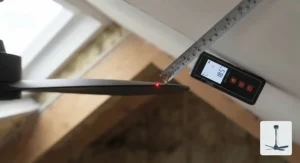
Beyond the legal side, there’s a practical safety dimension specific to sloped and vaulted installations: because the fan hangs on a downrod rather than flush to the ceiling, blade clearance to the floor becomes a genuine consideration, and UK guidance generally recommends a minimum clearance of around 2.1 metres. On a very steep 45-degree ceiling with a low eaves line, this can rule out certain downrod lengths entirely, so measure the finished blade height before finalising your parts list, not after installation.
It’s also worth reading up on genuine heat-related health guidance if you’re specifically installing a fan to manage a hot, high-apex room during summer; the Wikipedia entry on ceiling fans gives useful background on how these units move air versus cool it directly, which shapes realistic expectations for what any fan, however well-mounted, can actually achieve during a genuine heatwave.
Frequently Asked Questions
❓ Can any ceiling fan be fitted to a 45 degree slope?
❓ Do I need an electrician to fit a sloped ceiling fan?
❓ How much does a sloped ceiling fan adapter cost in the UK?
❓ Will a sloped ceiling fan wobble more than a flat-ceiling one?
❓ What's the difference between a vaulted ceiling fan mount and a normal downrod?
Conclusion
A ceiling fan for 45 degree slope isn’t a niche problem without a real answer — it’s a well-understood installation challenge with several genuinely good products behind it, from budget-friendly cast aluminium adapters through to complete, drop-rod-standard fans built by manufacturers who’ve been solving this exact issue for decades. The right choice really does come down to your specific situation: a loft conversion on a tight budget suits a universal adapter paired with an existing fan, a demanding sun-trap garden room justifies the extra spend on a heavy-duty bracket, and a large, architecturally ambitious vaulted living room is often best served by a single, coherent solution like the Fantasia Viper Plus.
Whatever route you take, the details covered here matter more than any spec sheet alone can convey: measure your actual pitch rather than estimating it, match your adapter’s load rating honestly to your fan’s real weight, and don’t skip the electrical box and safety checks just because the mounting bracket looks straightforward. Get those fundamentals right and a steep pitch stops being an obstacle to a comfortable, well-ventilated room, and simply becomes one more detail you’ve handled properly.
Recommended for You
- Ceiling Fan For Sloped Ceiling: 7 Angled Picks for 2026
- 7 Best Ceiling Fans for Loft Conversion UK (2026 Guide)
- Reversible Motor Ceiling Fan: 7 Best UK Picks for 2026
Disclaimer: This article contains affiliate links. As an Amazon Associate, I earn from qualifying purchases. If you purchase products through these links, we may earn a small commission at no additional cost to you.
✨ Found this helpful? Share it with your friends! 💬🤗
